

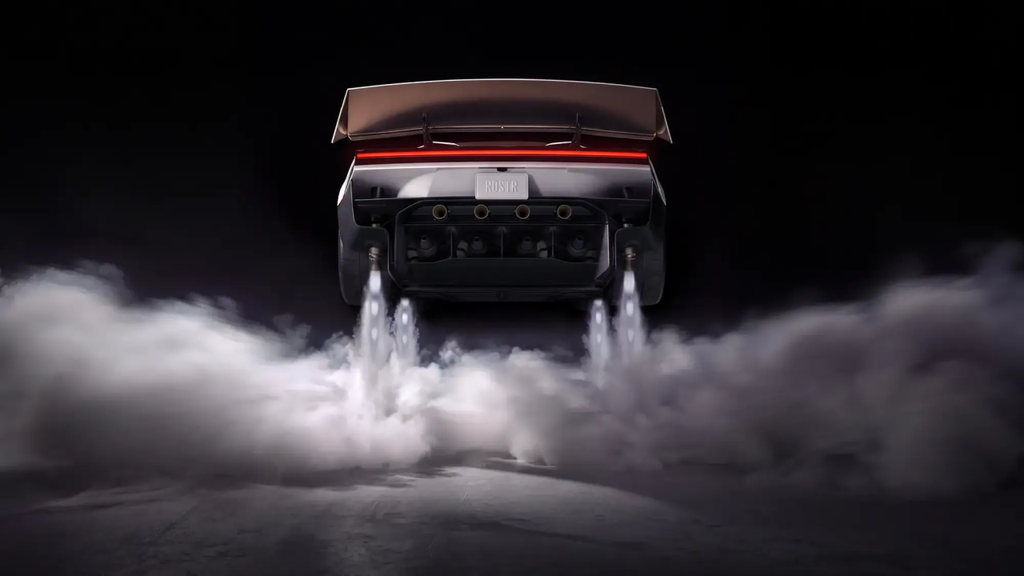
Tesla has unveiled a radically redesigned Roadster with three configurations that promise to take electric-car performance into unusual territory. The Performance model is designed for road driving, the Thrust package adds propulsion hardware for more aggressive acceleration, while the range-topping Rocket configuration introduces a system intended to enable airborne manoeuvres.
The new electric sports car was revealed on October 15, 2026, at a SpaceX facility in Texas, nearly nine years after Tesla first showcased its next-generation Roadster in 2017. During the demonstration, the prototype drove upside down along a specially designed ramp, performed an aerial manoeuvre and landed using its thruster system.
Tesla is targeting production in 2028. However, the vehicle remains in the pre-production stage, and important specifications, including final battery capacity, powertrain details and kerb weight, have yet to be confirmed.
Tesla Roadster Performance: The road-focused option
The Performance configuration serves as the foundation for the new Roadster and retains a two-seat layout. It is designed primarily for conventional road use, with active aerodynamics and an underbody suction system intended to increase grip.
Tesla says the suction system can generate up to 2G of grip, helping hold the car against the driving surface. The company claims the Performance model can accelerate from zero to 97 km/h in under 1.6 seconds.
Unlike the more specialised configurations, Performance does not include the additional thruster hardware used for the most extreme demonstrations. Its emphasis is on combining rapid acceleration with conventional electric-car driving dynamics.
Tesla has not yet disclosed the final production battery specifications, motor output or official test conditions behind its acceleration claim.
Tesla Roadster Thrust: Additional propulsion for acceleration
The Thrust configuration builds on the Performance model by adding rear-mounted cold-gas thrusters. These units expel pressurised gas to generate additional thrust, supplementing the force produced by the car’s electric drivetrain and tyres.
Tesla claims that the Thrust-equipped Roadster can accelerate from zero to 97 km/h in less than 0.9 seconds. The system is intended to push acceleration beyond the limits of a conventional road car relying solely on tyre grip.
The configuration retains seating for two and includes the Performance model’s suction system. Its additional propulsion equipment makes it more specialised than the entry-level version.
However, the claimed acceleration figure remains a manufacturer target rather than an independently verified production-car result. The real-world performance will depend on the final engineering, operating conditions and how the propulsion system is integrated into a road-legal vehicle.
Tesla Roadster Rocket: The single-seat configuration
The Rocket configuration sits at the top of the new Roadster range and is designed around a more extensive propulsion system.
Tesla describes it as a single-seat model fitted with 10 cold-gas thrusters arranged around the vehicle. The configuration is intended to control movement in multiple directions, including upward and rotational motion, enabling the type of airborne manoeuvres shown during the unveiling.
The company claims a zero-to-97-km/h acceleration time of under 0.59 seconds. It has also advertised a top speed exceeding 370 km/h for the new Roadster, although the complete production specifications have not yet been published.
The extensive thruster hardware occupies space that would otherwise be available to a passenger, explaining the move to a single-seat layout.
Unlike the other configurations, Rocket is being offered through an invitation-only programme. Its specialised hardware and unusual capabilities distinguish it from a conventional high-performance electric sports car.
The demonstration showed what the system could do under controlled conditions. It does not yet establish how frequently the airborne manoeuvres could be performed, what operational restrictions would apply or whether every demonstrated capability will be available in the final customer vehicle.
Tesla Roadster variants compared
| Feature | Performance | Thrust | Rocket |
|---|---|---|---|
| Positioning | Road-focused | Enhanced acceleration | Airborne manoeuvres |
| Seating | Two seats | Two seats | One seat |
| Suction system | Yes | Yes | Yes |
| Additional thrusters | No specialised thruster package | Rear-mounted cold-gas thrusters | 10 thrusters |
| Claimed 0-97 km/h time | Under 1.6 seconds | Under 0.9 seconds | Under 0.59 seconds |
| Availability | Reservations offered | Reservations offered | Invitation-only |
| Production target | 2028 | 2028 target | 2028 target, subject to development |
These are Tesla’s advertised configurations and performance claims. The company has not yet released a complete set of independently verified production specifications for each version.
How do the suction system and thrusters work?
The redesigned Roadster combines two different technologies. The underbody suction system is intended to pull the vehicle towards the driving surface, increasing grip and helping it maintain contact during high-performance driving.
The cold-gas thrusters work differently. They expel stored pressurised gas through nozzles to generate force in a chosen direction. Rather than relying entirely on the tyres to transfer power to the road, the system can produce additional thrust and help control the vehicle’s movement during brief airborne manoeuvres.
Tesla developed the Roadster’s thruster technology in collaboration with SpaceX. The approach draws on aerospace engineering, although the system described for the car uses pressurised gas rather than a conventional combustion-powered rocket engine.
The technology is central to the difference between the three configurations. Performance focuses on grip and road driving, Thrust adds propulsion for acceleration, and Rocket uses a more extensive system designed to control movement beyond the road surface.
Aerospace-inspired design and lightweight interior
The redesigned Roadster features angular exterior styling influenced by aerospace engineering. Tesla has highlighted design cues associated with aircraft such as the SR-71 and F-35, including concealed headlights, flush surfaces and a wide rear light.
The prototype shown at the event also featured thin-spoke wheels, an Ano White finish, gold-tinted glass and titanium accents.
Inside, the cabin uses an ultrawhite theme with grey microsuede detailing and supportive seat bolsters. Tesla has also highlighted the use of lightweight materials, including magnesium, titanium and carbon fibre, although a confirmed kerb weight has not been announced.
The Rocket configuration’s single-seat layout reflects its more specialised design, while Performance and Thrust retain space for a passenger.
Range, top speed and production timeline
Tesla has advertised a range exceeding 483 km on a charge and a top speed above 370 km/h. The acceleration claims vary by configuration, with the Rocket version carrying the most aggressive advertised figure.
These numbers should be treated as manufacturer claims until final production specifications and independent tests become available. Tesla has not provided enough information to establish the exact range of each configuration or the test cycle used for the advertised estimate.
Production is targeted for 2028, following years of delays since the second-generation Roadster was first revealed in 2017. Tesla has opened reservations for Performance and Thrust, while Rocket remains invitation-only. In India, the reservation process has also been reported to be open for the Performance and Thrust configurations.
The company has not yet confirmed a final retail price or delivery schedule. Buyers will need to wait for more detailed specifications before making a meaningful comparison of cost, range and real-world performance.
Which Tesla Roadster configuration is different?
The three configurations serve distinct purposes. Performance is the conventional two-seat option, with a focus on grip and acceleration. Thrust adds rear-mounted thrusters for more extreme acceleration while retaining two seats. Rocket moves further towards experimental performance, with 10 thrusters, a single-seat cabin and a system designed for airborne manoeuvres.
The most important qualification is that the new Roadster remains a pre-production vehicle. Tesla’s demonstration offered a preview of its engineering ambitions, but the final capabilities, safety requirements, road legality and specifications will need to be established before customer deliveries begin.