


TL;DR:
Amazon Leo—formerly Project Kuiper—is Amazon’s multibillion-dollar satellite-internet initiative designed to rival Elon Musk’s Starlink. With thousands of satellites planned in low-Earth orbit, Amazon aims to deliver affordable, high-speed connectivity to underserved regions worldwide. The system relies on a large constellation, advanced ground infrastructure, and multiple user terminals that offer speeds up to 1 Gbps. Enterprise rollout begins in late 2025, with broader availability in 2026.
What is Amazon Leo?
Amazon Leo is Amazon’s low-Earth-orbit (LEO) satellite internet network created to expand high-speed connectivity to communities and businesses lacking reliable broadband. The initiative targets regions where terrain, cost, or poor infrastructure have historically slowed internet rollout.
Formerly known as Project Kuiper, Amazon rebranded it as Amazon Leo to emphasize its alignment with LEO satellite architecture—positioned roughly 590–630 km above Earth. At this altitude, signals travel faster, latency drops significantly, and performance can resemble terrestrial broadband.
Amazon’s ambition is global scale. The company plans to launch over 3,000 satellites, aiming to cover most countries and reach billions of people currently underserved by traditional networks.
Why Amazon Leo matters in the global connectivity race
The world still has more than 2.6 billion people with limited or no access to reliable internet. Even in developed nations, rural communities often rely on ageing copper lines or expensive mobile broadband options.
Amazon Leo directly targets these gaps.
Here’s why it matters:
- Digital inclusion: Low-cost terminals have the potential to bridge the digital divide in remote areas.
- Economic boost for rural regions: Stable internet unlocks e-learning, telemedicine, remote work, e-commerce, and IoT opportunities.
- Enterprise-grade connectivity: Amazon plans dedicated solutions for businesses, logistics, maritime, aviation, and government customers.
- Resilience: Satellite networks diversify the global internet ecosystem—critical during natural disasters or infrastructure failures.
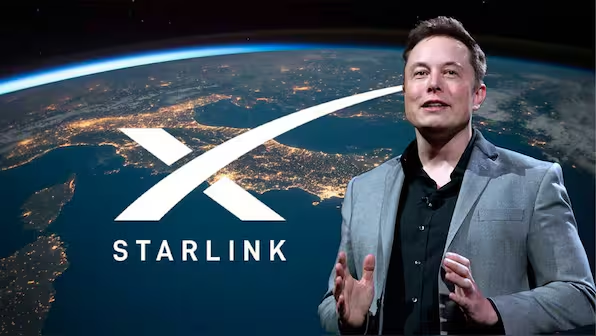
This positioning puts Amazon in direct competition with Starlink, which already dominates the LEO satellite market with thousands of active satellites. Amazon’s aggressive launch plan—more than 80 launches already booked—signals long-term commitment.
How Amazon Leo works
Amazon Leo’s architecture relies on three core components: satellites, ground infrastructure, and user terminals. Each part plays a distinct role in delivering broadband from space to a customer’s device.
Satellites in low Earth orbit
Amazon plans to deploy over 3,000 satellites at altitudes between 590 km and 630 km.
This low-orbit configuration enables:
- Lower latency (targeting 20–40 ms range)
- Rapid signal relay
- Better performance for bandwidth-intensive tasks like streaming, cloud computing, and video calling
Amazon currently operates 153 test satellites and is scaling up production.
High-capacity ground stations
The ground network consists of two major systems:
- Gateway antennas: Facilitate high-speed, secure data movement between the internet backbone and the satellite network.
- TT&C antennas (Telemetry, Tracking, and Command): Responsible for monitoring satellite health and performance.
Ground stations also play a critical role in reducing congestion, improving uptime, and ensuring seamless switching between satellites as they move rapidly across the sky.
Customer terminals built for different needs
Amazon Leo offers three types of terminals, each designed for specific use cases:
- Leo Nano: Up to 100 Mbps for everyday users, small homes, and community centers
- Leo Pro: Up to 400 Mbps for families and small businesses
- Leo Ultra: Up to 1 Gbps for enterprises, industrial sites, or high-bandwidth applications
The company’s focus is affordability—using cost-efficient manufacturing to broaden access.
How Amazon plans to deploy the constellation
Amazon’s satellite production is centered in Redmond, Washington, while a dedicated satellite manufacturing plant in Kirkland can produce up to five satellites per day.
A major processing center at NASA’s Kennedy Space Center supports integration and launch operations.
Launch partners
Amazon has booked more than 80 launches—the largest commercial launch purchase in history—through:
- Blue Origin
- SpaceX
- United Launch Alliance (ULA)
This multi-partner strategy minimizes delays and accelerates constellation deployment.
When will Amazon Leo be available?
Amazon plans the following rollout timeline:
- Late 2025: Enterprise service begins
- 2026: Broader consumer availability as satellite coverage expands
The company is expected to target large markets first—North America, Europe, India, and parts of Africa—before widening global service availability.
How Amazon Leo compares to Starlink
Starlink currently leads the sector with thousands of active satellites, established consumer terminals, and broad global availability. Amazon enters the market later but with several strategic advantages:
Amazon’s potential advantages
- Large-scale manufacturing capacity
- Deep cloud integration via AWS (crucial for enterprise clients)
- Extensive e-commerce and logistics networks for distributing terminals
- Multi-launch partnerships to accelerate deployment
Starlink’s current strengths
- First-mover advantage
- Established customer base in more than 70+ countries
- Proven performance in disaster response, aviation, maritime, and military use cases
Amazon aims not to replicate Starlink but to compete on affordability, performance stability, and integration with Amazon’s broader ecosystem.
What to watch next
As Amazon moves from testing to large-scale deployment, key areas to watch include:
- Production speed at Kirkland facility
- Launch cadence in 2025–2026
- Regulatory approvals across various markets
- Terminal pricing
- Early enterprise partnerships (maritime, aviation, defense)
Amazon Leo’s success will hinge on cost, reliability, and how quickly it can scale to match Starlink’s constellation density.