Quick Summary
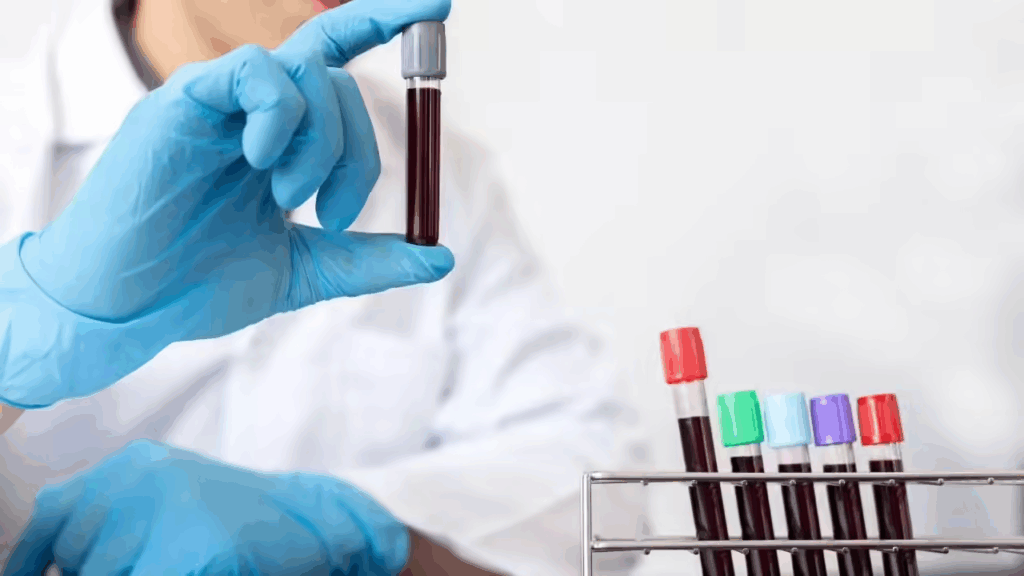
A groundbreaking medical discovery in Bengaluru, India, has revealed the existence of a new, ultra-rare blood group known as the CRIB blood group. Found in a 38-year-old woman, this unique blood type is the first of its kind in the world, lacking a key antigen within the Cromer blood group system. CRIB belongs to the INRA (Indian Rare Antigen) classification and is so rare that no donor match has been found—even among the woman’s close relatives.
What is the CRIB blood group?
The CRIB blood group, recently discovered in a woman from Kolar, near Bengaluru, does not belong to the commonly known ABO or Rh systems. Instead, it falls under a blood group classification known as INRA (Indian Rare Antigen), officially recognized by the International Society of Blood Transfusion (ISBT) in 2022.
The name CRIB is an acronym:
- CR: Cromer blood group system
- IB: India, Bengaluru: the place of discovery
What makes CRIB exceptional is that the woman’s red blood cells lack a common antigen found in virtually all human blood. This missing antigen alters how her body would react to most donor blood, making transfusions incredibly complex and risky.
How rare is the CRIB blood type?
According to Dr. C. Shivaram from Manipal Hospital, CRIB is so rare that the woman is likely the only known person in the world with this blood type. After testing blood from 20 family members, doctors still couldn’t find a compatible donor.
The rarity lies in the absence of an unidentified antigen in her red blood cells—a marker used by the immune system to recognize compatible blood. Without it, her immune system flags nearly all donor blood as foreign, leading to dangerous immune responses during transfusions.
Why does it matter?
This discovery is medically significant because it:
- Enhances our understanding of hidden blood group systems
- Could improve pregnancy care, particularly in Rh-negative cases or hemolytic disease
- Encourages the development of better-matched donor registries
- Highlights the need for genetic screening and customized transfusion protocols
What is the Cromer blood group system?
The Cromer blood group system is one of 47 recognized blood group systems globally. It’s based on the presence or absence of specific glycoproteins on the surface of red blood cells.
Here’s what makes Cromer blood groups distinct:
- They’re linked to the decay-accelerating factor (DAF), which plays a role in immune regulation.
- Some Cromer antigens are high-frequency, meaning they appear in almost everyone.
- Others, like the one missing in the CRIB case, are low-frequency or novel, making them difficult to detect and understand.
A person lacking these high-frequency antigens may develop strong antibodies if exposed to them through pregnancy, transfusions, or organ transplants, causing serious complications.
How does CRIB blood group affect medical care and blood donation?
1. Blood transfusions
For individuals with rare blood groups like CRIB blood group:
- Standard blood banks are ineffective.
- Compatible donors must be genetically screened.
- Emergency care becomes logistically complex, requiring pre-planned storage of matched blood.
2. Pregnancy risks
Pregnant individuals with rare antigens—or those lacking them—may develop antibodies against the fetus’s blood, potentially leading to:
- Hemolytic disease of the newborn (HDN)
- Miscarriages or stillbirths in subsequent pregnancies
Close antigen matching is crucial for maternal-fetal compatibility.
3. Global blood bank systems
This discovery underscores the limitations of current systems. It makes the case for:
- A global rare donor registry
- Expanded genotyping of donors, not just ABO/Rh typing
- Increased funding for research in transfusion immunohematology
What is the INRA classification?
INRA stands for Indian Rare Antigen, a classification introduced to acknowledge blood types discovered in Indian populations that don’t fit into existing categories.
Key points about INRA:
- Created in 2022, approved by ISBT
- Includes CRIB as its first documented case
- Represents India’s contribution to global hematology research
Given India’s genetic diversity, it’s likely that other rare antigens will emerge—prompting medical systems to adapt.
What’s next after the CRIB discovery?
For the patient:
Doctors must develop personalized transfusion protocols in case of injury or surgery. Her rare status also necessitates long-term medical monitoring.
For research:
The discovery will prompt:
- Studies into other undocumented antigens
- Broader population screenings in genetically diverse regions
- Enhanced AI-driven matching tools for donor-recipient compatibility
For policy:
India may push for:
- National rare blood donor registries
- Funding for blood group research in public hospitals
- International collaboration with ISBT and other rare blood networks
Why the CRIB discovery is a global breakthrough
The CRIB blood group challenges assumptions that the human blood classification system is complete. It reveals how much remains undiscovered—especially in under-studied populations.
This single case:
- Could save lives by redefining blood compatibility
- Encourages personalized medicine
- Reinforces the value of genomic diversity in healthcare
As India continues to invest in cutting-edge medical research, the world benefits from findings that reshape how we approach everything from blood transfusions to prenatal care.