
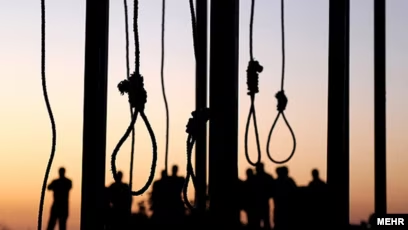
Iran’s use of the charge “corruption on Earth” has once again drawn international attention after the execution of a man identified as Mehdi Farid, who authorities say had links to Mossad. The phrase may sound abstract, but in Iran’s legal system, it carries a precise and severe meaning, often tied to national security, espionage, and threats to the state. Understanding the term is key to understanding how Iran prosecutes high-profile cases, especially during periods of geopolitical tension.
What does “corruption on Earth” mean in Iran’s legal system?
The charge, often translated from the Persian and Arabic term “Mofsed-e-filarz,” is among the most serious offenses under Iranian law.
A broad and powerful legal category
“Corruption on Earth” originates from Islamic jurisprudence and is embedded in Iran’s interpretation of Sharia law. In modern Iranian law, it is used to describe acts that:
- Threaten national security
- Undermine public order or stability
- Harm the political or moral fabric of society
- Involve large-scale criminal or subversive activity
Because the definition is broad, it allows authorities significant discretion in how the charge is applied.
Why it carries the death penalty
The offense is classified as a capital crime, meaning it can result in execution. Iranian courts typically apply it in cases involving:
- Espionage or intelligence cooperation with foreign entities
- Armed insurgency or terrorism
- Major economic crimes or sabotage
In Farid’s case, authorities linked the charge to alleged cooperation with Mossad, framing it as a direct threat to the state.
Why is this charge controversial internationally?
The controversy lies not just in the severity of the punishment but in how the law is interpreted and enforced.
Concerns about legal scope and due process
Human rights organizations have long argued that:
- The definition of “corruption on Earth” is too vague
- It can be applied to a wide range of activities, including political dissent
- Trials in such cases may lack transparency
In many instances, details about the accused’s actions, evidence, or trial proceedings are limited or not publicly disclosed.
Historical evolution of the charge
Scholars such as Reza Afshari have argued that the concept was expanded after the 1979 Islamic Revolution under Ayatollah Ruhollah Khomeini. What was once a religious concept tied to social disorder became a legal tool used by the state to address perceived threats. This evolution is central to understanding why the charge appears frequently in politically sensitive cases.
What are the alleged Mossad links in this case?
Iranian authorities claimed that Mehdi Farid had engaged in “extensive cooperation” with Mossad, though publicly available details remain limited.
What is known and what is unclear
According to official statements:
- Farid was accused of espionage and intelligence cooperation
- The judiciary approved the final verdict before execution
However, key details are missing: - The specific nature of his alleged activities
- The timeline of events
- Evidence presented during the trial
This lack of transparency is typical in national security cases, but it also fuels skepticism outside Iran.
How does this fit into the current geopolitical context?
The timing of the execution is significant.
Rising tensions in West Asia
Iran’s actions come amid heightened tensions involving Israel and the United States. Iranian authorities have repeatedly accused foreign powers of:
- Supporting protests inside the country
- Conducting intelligence operations
- Destabilizing the regime through indirect means
Executions linked to espionage are often framed as deterrence in this context.
Link to internal unrest
In recent months, Iran has also carried out executions tied to domestic protests. Authorities have claimed that some unrest was influenced by foreign actors, including Israel and opposition groups. This dual narrative, external threat and internal instability, shapes how charges like “corruption on Earth” are deployed.
How often is this charge used?
While exact numbers vary, the charge appears regularly in Iran’s judicial system, particularly in high-profile cases.
Common applications
- Espionage and intelligence cases
- Anti-government protests or alleged insurgency
- Large-scale financial or corruption scandals
Why it persists
The flexibility of the charge makes it a powerful legal instrument. It allows authorities to address a wide range of perceived threats under a single framework, especially when national security is invoked.
What does this mean for international observers?
For global audiences, the phrase “corruption on Earth” can be misleading without context.
Key takeaways for readers
- It is not a metaphor but a formal legal charge
- It carries the death penalty under Iranian law
- It is often used in cases involving national security or political sensitivity
- Its broad definition is a major source of international criticism
Understanding this helps separate the legal reality from the rhetorical framing often seen in headlines.
TL;DR
- Iran executed a man accused of links to Mossad under the charge of “corruption on Earth.”
- The charge is a broad capital offense under Sharia-based law
- It is commonly used in cases involving espionage, security threats, or unrest
- Critics say the definition is vague and lacks transparency
- The case comes amid heightened geopolitical tensions in the region