U.S. President Donald Trump has voiced strong support for the India-Middle East-Europe Economic Corridor (IMEC), a proposed trade and infrastructure network designed to connect India with the Gulf and European markets.
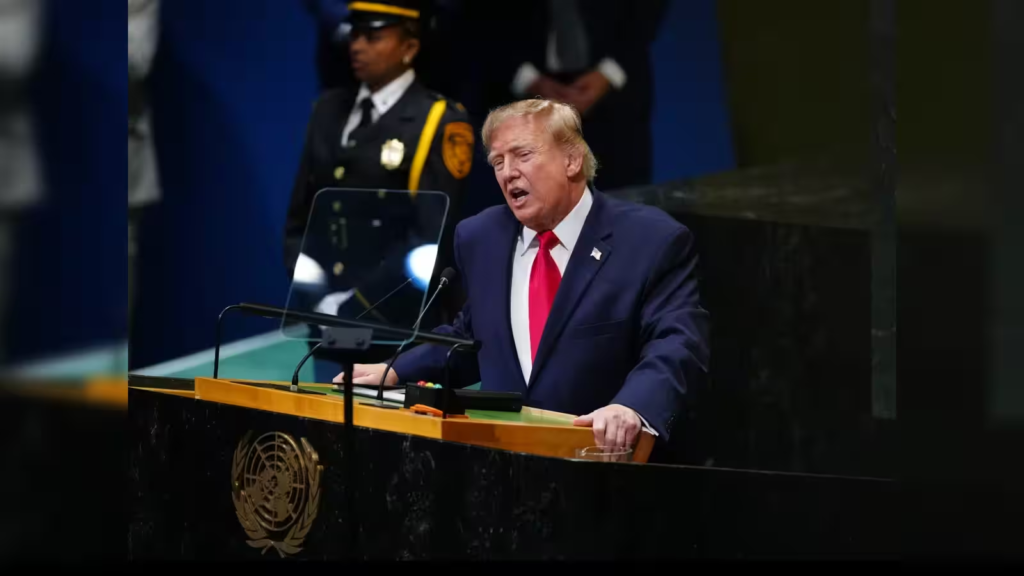
Speaking at a meeting with Gulf Cooperation Council (GCC) and Arab leaders on the sidelines of the United Nations General Assembly in New York on Tuesday, Trump emphasized the need to move critical Middle Eastern energy infrastructure away from vulnerable shipping routes.
“That’s why my administration strongly supports the India-Middle East-Europe Economic Corridor,” he said.
The endorsement comes as the war involving Iran has disrupted regional shipping and energy flows, with the reported closure of the Strait of Hormuz highlighting the risks of relying heavily on a narrow set of maritime routes.
Against that backdrop, IMEC has gained renewed attention as a potential alternative for moving goods, connecting infrastructure and supporting energy trade between Asia, the Middle East and Europe.
However, the corridor remains a long-term infrastructure proposal. Its ability to deliver faster, more reliable trade will depend on construction, regional cooperation, security conditions and the resolution of outstanding logistical challenges.
What Is the India-Middle East-Europe Economic Corridor?
IMEC is a proposed multimodal transportation and infrastructure network intended to connect India, the Arabian Gulf and Europe through a combination of sea routes, railways and supporting infrastructure.
The initiative was announced during the 2023 G20 Summit in New Delhi. Its original participants included:
- India
- The United States
- Saudi Arabia
- The United Arab Emirates (UAE)
- The European Union
- France
- Germany
- Italy
The project’s central idea is to create a connected trade route that combines maritime shipping with rail transportation across parts of the Middle East.
Rather than depending entirely on a continuous sea journey, goods could move between ships and trains at designated points along the corridor. The network is also intended to support energy and digital connections, making it broader than a conventional freight route.
How Is IMEC Supposed to Work?
The proposed corridor consists of two main sections: an eastern corridor connecting India to the Arabian Gulf and a northern corridor linking the Gulf region with Europe.
The plan combines maritime transportation with rail and other infrastructure to create a connected route for goods, energy and digital services.
1. The eastern corridor: India to the Gulf
The eastern section would connect India to the UAE through maritime shipping.
Indian goods would travel by sea to the Gulf, where they could be transferred to rail and other transportation networks for onward movement.
2. The northern corridor: The Gulf to Europe
From the UAE, the proposed route would extend through Saudi Arabia and Jordan toward Israel and the Mediterranean.
Goods could then be transported by sea to European markets.
This ship-to-rail-to-ship arrangement is intended to supplement existing maritime routes rather than necessarily replace them.
3. Energy and digital infrastructure
The original memorandum of understanding also envisaged infrastructure beyond freight transportation.
Its proposed components include:
- Electricity cables: Connections along the railway route to support regional electricity connectivity.
- Digital cables: Infrastructure intended to improve digital links between participating regions.
- Clean hydrogen pipelines: Infrastructure designed to facilitate the export of clean hydrogen.
- Railway infrastructure: A cross-border network intended to make cargo transportation more efficient.
The memorandum also identifies goals such as improving trade facilitation, strengthening supply chains, creating jobs and supporting environmental objectives. These are intended benefits, not outcomes that have already been demonstrated.
Why Does Trump’s IMEC Endorsement Matter Now?
The renewed attention to IMEC comes amid serious disruption to shipping and energy transportation in the Middle East.
The Strait of Hormuz is a critical maritime passage for global energy supplies. Conflict-related restrictions and attacks on commercial shipping have exposed the risks associated with concentrated transportation routes.
Trump’s remarks connect the corridor to a broader objective: reducing dependence on vulnerable infrastructure and creating alternative ways to move energy and goods.
In his September 22 remarks, Trump also referred to other ways of transporting oil, including pipelines. This suggests that his administration’s stated interest extends beyond the railway component of IMEC to the wider question of how energy can reach international markets during regional disruptions.
However, IMEC should not be mistaken for an immediately available substitute for the Strait of Hormuz. Its proposed route involves several countries, multiple transportation modes and infrastructure that must be developed and coordinated.
Even if completed, the corridor would serve different transportation needs and would not automatically eliminate the strategic importance of existing maritime chokepoints.
What the endorsement does—and does not—mean
Trump’s statement is a public expression of U.S. support for the initiative.
It does not, by itself, establish that the entire corridor has been financed, that construction is complete or that commercial operations can begin immediately.
The distinction matters because large cross-border infrastructure projects require more than political backing. They also depend on financing, agreements between participating countries, technical standards, customs arrangements and sustained cooperation.
The endorsement may reinforce the project’s political visibility, but its practical consequences will depend on the decisions and commitments that follow.
What Could IMEC Mean for India?
For India, the corridor represents a proposed additional connection to major markets in the Gulf and Europe.
The country’s interest in the project extends beyond simply finding another way to ship products. The network could also create opportunities in logistics, energy cooperation and digital infrastructure.
1. An alternative route to European markets
India’s exporters could potentially gain another transportation option for reaching Europe.
A multimodal network could offer greater flexibility by allowing goods to move between ships and trains instead of relying exclusively on a sea journey.
The practical value would depend on the route’s total cost, transit times, reliability and ability to handle different types of cargo.
2. Potential reductions in shipping time and cost
The corridor has been discussed as a way to improve transportation efficiency between India, the Middle East and Europe.
The Middle East Institute has identified the potential for significant reductions in shipping times, with estimates of up to 40% cited in discussions of the project.
That figure should be treated as a potential benefit rather than a guaranteed result. Actual savings would depend on the infrastructure completed, border procedures, transfer times and the corridor’s operating performance.
For businesses, a shorter journey is not automatically a cheaper one. Rail charges, port handling, customs procedures and other expenses would all affect the final cost of transporting goods.
3. Stronger trade and investment links
The corridor could deepen India’s economic connections with participating Gulf countries and European markets.
Improved transportation links may create opportunities for exporters, logistics companies, infrastructure developers and businesses seeking more integrated regional supply chains.
However, those opportunities would depend on commercial demand and the development of infrastructure that businesses can use reliably.
4. Opportunities in energy and technology
The proposed electricity, digital and clean hydrogen infrastructure could broaden India’s engagement with participating countries.
Potential areas of cooperation include:
- Energy transportation and electricity connectivity.
- Clean hydrogen production, transportation and exports.
- Digital infrastructure and cross-border connectivity.
- Logistics technology and supply-chain services.
These are areas identified in the project’s plans. Their commercial significance will depend on investment, technical feasibility and the development of functioning networks.
Why Has IMEC Faced Delays?
Despite its ambitions, IMEC has encountered significant geopolitical obstacles since its announcement in 2023.
The Israel-Hamas war and the subsequent conflict involving the United States, Israel and Iran have complicated the regional environment through which the corridor is intended to pass.
These developments matter because the proposed route requires cooperation among countries with different political interests and security concerns.
Regional security and political cooperation
A transportation network crossing several countries depends on stable cross-border arrangements.
Conflict can disrupt construction plans, increase security risks and make governments and investors more cautious about committing resources to long-term infrastructure.
The route’s proposed passage through Saudi Arabia, Jordan and Israel also means that regional political relations will be relevant to its development.
Financing and construction
IMEC involves more than a single railway line. Its plans encompass ports, rail connections, logistics facilities and supporting energy and digital infrastructure.
Developing these components requires substantial investment and coordination.
Participating countries and other stakeholders would need to address questions such as:
- Which infrastructure projects should be built first?
- How will construction and operating costs be divided?
- Who will finance individual sections?
- How will customs, cargo transfers and technical standards be coordinated?
- What arrangements will ensure the security and reliability of the route?
The answers will help determine whether the corridor can operate as an integrated network rather than a collection of separate infrastructure projects.
A project with a long implementation horizon
The original memorandum established a framework for cooperation, but it did not mean that every proposed component was ready for construction.
Its implementation requires further technical, financial, legal and regulatory work.
The project’s progress should therefore be assessed through concrete milestones—including financing agreements, construction contracts, completed connections and operational arrangements—rather than political endorsements alone.