
The idea of a swift end to the Iran war sounds like a reset button for global energy markets. But reality behaves less like a switch and more like a long, creaking lever. Even if fighting stops within two weeks, the aftershocks could ripple through oil supply chains, shipping routes, and prices for months.
Recent remarks by Donald Trump suggest a rapid resolution may be possible, even without a deal to reopen the critical Strait of Hormuz. Analysts, however, paint a more complex picture. Ending the war is one milestone. Restoring normalcy is another journey entirely.
Why the Strait of Hormuz matters so much
Roughly 20–25 percent of the world’s seaborne crude oil flows through the Strait of Hormuz, making it one of the most strategically vital waterways on Earth.
When Iran blockaded this narrow passage, the effects were immediate:
- Oil tankers stalled or rerouted
- Global crude prices surged past $100 per barrel
- Fuel prices climbed sharply across major economies
Even if hostilities end quickly, reopening the strait is not as simple as flipping a sign from “closed” to “open.”
How long before oil flows return to normal?
The lag effect no one sees coming
Energy systems don’t rebound instantly. Analysts estimate:
- 2–4 weeks before normalization even begins
- 6–8 weeks to restore production and tanker traffic
This delay exists because disruptions take time to work through the system. Oil that should have been shipped weeks ago is still sitting in storage. Tankers are backed up. Contracts are in limbo.
As a result, the “pain” of earlier disruptions often hits after the war ends, not during it.
Restarting production is not instant
To bring the supply back online:
- Stored oil must be loaded onto ships
- Export terminals must resume operations
- Refinery schedules must be recalibrated
Even under ideal conditions, this process unfolds gradually.
Infrastructure damage could stretch recovery timelines
Airstrikes during the conflict have hit energy infrastructure across the Gulf, including facilities in Saudi Arabia, Iraq, and beyond.
The recovery timeline depends heavily on what was damaged:
- Minor drone damage: repaired in days or weeks
- Critical processing units: may take months or longer
- Custom-built components: could require up to a year
This uncertainty creates a wide range of possible outcomes, even in a best-case ceasefire scenario.
Repair timelines for damage in the Strait of Hormuz vary widely. “Some will be quick, drone strikes, like those in Ukraine, can often be fixed in days to weeks. For larger damage… it’s less certain,” he noted in a Yahoo Finance interview. “A major process unit might require a custom rebuild, taking months—or even a year.”
Post-War Mine Clearance Hurdles
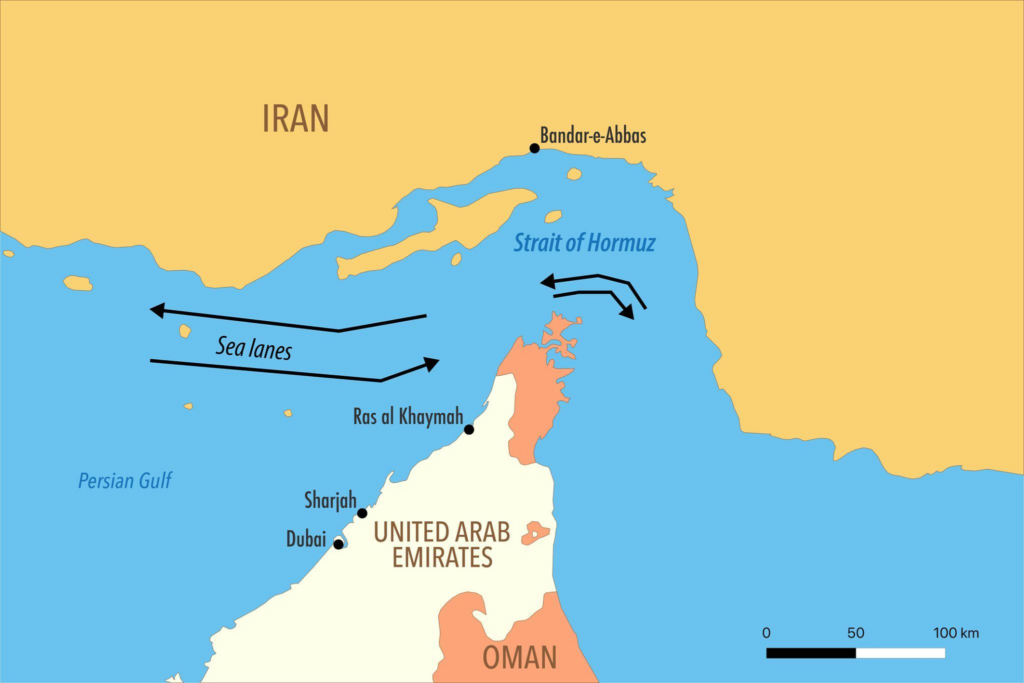
These timelines could stretch further due to challenges like mine removal, a hazardous and lengthy operation. Reuters reported in early March that Iran deployed several Maham-3 and Maham-7 mines in the strait, only 33 km wide at its narrowest, with two shipping lanes (each 3.2–3.7 km) separated by a buffer. Debris from attacked vessels would add further delays.
The hidden obstacle: mines and maritime cleanup
Before oil can flow freely, the sea itself must be made safe.
Reports indicate the deployment of naval mines in the Strait of Hormuz, particularly in its narrow shipping lanes. Clearing them is:
- Technically complex
- Dangerous for naval crews
- Time-consuming, often taking weeks
In addition, damaged or abandoned vessels must be cleared, and navigation routes verified as safe.
Without this step, insurers and shipping companies will hesitate to resume operations at scale.
Why shipping costs won’t fall overnight
The VLCC bottleneck
Very Large Crude Carriers (VLCCs), the giants that transport oil across oceans, have seen charter rates skyrocket during the conflict:
- Typical “strong market” rate: around $100,000 per day
- Wartime spike: over $400,000 per day
- Extreme cases: up to $770,000 per day
These costs don’t just vanish when fighting stops.
What needs to normalize
For shipping prices to stabilize:
- Safe passage through Hormuz must be demonstrated
- Insurance premiums must drop
- Port operations must return to full capacity
Analysts estimate:
- 2–4 weeks minimum for rate stabilization
- Up to 6 weeks in more cautious scenarios
Even then, residual risk keeps costs elevated.
What if the war doesn’t actually end?
The two-week timeline is an optimistic scenario. If fighting continues, recovery becomes a moving target.
Compounding delays
Data suggests:
- Each additional week of conflict adds 1–2 weeks of recovery time
- A 13-week disruption could require up to 8 weeks to normalize
- A 26-week crisis could extend recovery to 3–4 months
This is due to compounding effects:
- Larger stockpiles of unsold oil
- More disrupted shipping schedules
- Increased market volatility
The Houthi factor: a second chokepoint risk
The conflict could widen beyond Hormuz.
Yemen-based Houthi forces have signaled potential involvement, threatening the Bab al-Mandab Strait, another critical shipping route.
If both chokepoints are disrupted:
- Oil flows face a dual bottleneck
- Shipping must reroute around Africa’s Cape of Good Hope
- Costs and delays multiply significantly
Analysts warn that such a scenario could add 2–3 months of recovery time for each month of extended conflict.
How global markets and countries are coping
Price shocks and economic strain
The war has already:
- Pushed Brent crude near $120 per barrel at peak
- Raised gasoline prices above $4 per gallon in the US
- Increased fuel costs across Europe by 15–17 percent
Uneven global impact
Some countries are better positioned than others:
- India: cushioned by diversified imports and strategic reserves
- China: facing price increases due to reliance on Iranian oil
- Smaller Asian economies: struggling with shortages and rationing
This uneven impact highlights how energy security varies dramatically across regions.
Why ending the war isn’t the end of the crisis
The central takeaway is simple but counterintuitive.
Ending the war stops the bleeding. It doesn’t heal the wound.
The global oil system is deeply interconnected:
- Production depends on infrastructure
- Shipping depends on security and insurance
- Prices depend on confidence as much as supply
Each layer takes time to reset.
TL;DR
- Even if the Iran war ends in two weeks, oil markets won’t recover immediately
- It may take 6–8 weeks to normalize supply and shipping
- Infrastructure damage, mines, and logistics delays could extend timelines
- Shipping costs and insurance rates will remain elevated in the short term
- A wider conflict involving additional chokepoints could significantly worsen recovery