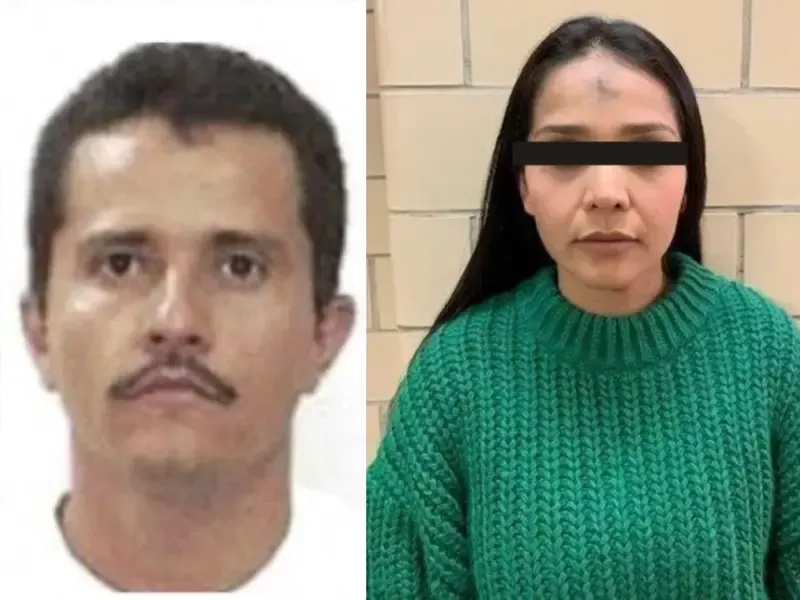
The death of El Mencho has left a power vacuum at the top of one of the world’s most violent drug trafficking organizations. Now, attention is turning to his inner circle and family, especially his US-born daughter, Jessica Johanna Oseguera González.
With the Jalisco New Generation Cartel facing retaliation, internal pressure, and global scrutiny, the question is no longer just who El Mencho was. It is who will run CJNG next.
Who was El Mencho, and why does his succession matter?
El Mencho, born Nemesio Rubén Oseguera Cervantes, founded the Jalisco New Generation Cartel, widely known as CJNG. Under his leadership, the cartel evolved into a global trafficking network supplying fentanyl, methamphetamine, and cocaine to the United States and other markets.
The US State Department had offered a $15 million reward for his capture, reflecting his significance in cross-border drug enforcement efforts. His killing in a Mexican Army operation, supported by US intelligence, has triggered violent retaliation in several regions.
When a cartel leader of this scale is removed, history shows two possibilities: fragmentation or consolidation under a new strongman or strongwoman. That is why succession matters.
Who is Jessica Johanna Oseguera?
Jessica Johanna Oseguera González, often referred to as “La Negra,” is one of El Mencho’s three children and is seen by some analysts as a potential successor.
What is her background?
She was born in San Francisco, California, making her a US citizen. She later moved to Mexico and studied at a university in Guadalajara.
In February 2020, she was arrested in Washington, DC, after arriving to attend her brother’s criminal hearing. US authorities charged her with engaging in financial transactions tied to a designated foreign narcotics trafficker.
She pleaded guilty to five counts related to dealings in properties of a designated foreign person. She was sentenced to 30 months in prison and released in 2022 after serving roughly 25 months.
Her current whereabouts are not publicly known.
Because she holds dual US and Mexican citizenship, any move into a leadership role would carry diplomatic and legal complications.
Why is she considered a possible successor?
Jessica Oseguera is believed to have played a role in the cartel’s financial structure. Leadership in modern cartels is not only about commanding gunmen. It is about managing money flows, front companies, and international networks.
If CJNG chooses continuity over chaos, a family member with financial experience could represent stability within the organization.
However, there is no confirmed evidence that she currently commands armed factions or has operational control over cartel security forces. That distinction matters. Cartels often rely on leaders with battlefield credibility.
Who else could take over CJNG?
Jessica Oseguera is not the only name in circulation. Several figures are considered possible successors.
Rubén Oseguera González, known as El Menchito
Rubén Oseguera González, El Mencho’s son, was once viewed as the heir apparent. But he is serving a life sentence in a US federal prison, making his direct leadership unlikely in the near term.
His imprisonment significantly reshapes the succession equation.
Juan Carlos Valencia González
El Mencho’s stepson, Juan Carlos Valencia González, is frequently described in security reporting as a senior CJNG figure. Some analysts consider him effectively second in command.
If true, he may have stronger operational control than family members without active field roles.
Gonzalo Mendoza Gaytán, known as El Sapo
Gonzalo Mendoza Gaytán is often described as a trusted lieutenant and right-hand man. His reputation as an enforcer could make him a viable candidate if CJNG prioritizes military strength over family continuity.
What about Rosalinda González Valencia?
Rosalinda González Valencia, El Mencho’s wife, is a member of the Valencia family, which founded Los Cuinis, the financial arm linked to CJNG.
Often referred to as “La Jefa,” she has faced multiple arrests, most recently in 2021, before being released in 2025 after early release was granted.
Her influence historically centered on financial operations rather than frontline command. While she maintains a lower profile, her connections within the Valencia network remain significant.
What is happening in Mexico after El Mencho’s killing?
Following El Mencho’s death, violence has surged across parts of Mexico.
Reports indicate:
• Streets blocked by armed men
• Dozens of vehicles, buses, and trucks torched
• Supermarkets and gas stations set ablaze
• At least 18 Banco del Bienestar branches attacked
• Multiple National Guard casualties
Mexican President Claudia Sheinbaum has appealed for calm as security forces attempt to regain control.
Will CJNG fragment or consolidate?
Cartel history offers clues but no guarantees.
When leaders such as Joaquín “El Chapo” Guzmán were removed, their organizations fractured but survived. In some cases, fragmentation led to more violence as splinter groups competed for territory.
CJNG’s future could follow one of three paths:
• Consolidation under a single strong successor
• Power struggle among family and lieutenants
• Regional fragmentation into semi-autonomous factions
The next several months will likely reveal which path emerges.
Why does Jessica Oseguera’s US citizenship matter?
Her US birth introduces complex legal and political questions.
If she assumes a leadership role, US authorities could pursue aggressive legal action, including sanctions and asset freezes. Extradition dynamics would also become central.
Her case could test the limits of cross-border enforcement cooperation between Mexico and the United States.
TL;DR
El Mencho’s death has opened a leadership battle within CJNG.
His US-born daughter Jessica Johanna Oseguera González is seen as a possible successor, though her operational role is unclear.
Other contenders include his imprisoned son El Menchito, stepson Juan Carlos Valencia González, and lieutenant Gonzalo Mendoza Gaytán.
Violence has surged across Mexico as CJNG members retaliate.
The cartel’s next move will shape both domestic stability in Mexico and cross-border drug enforcement efforts.