
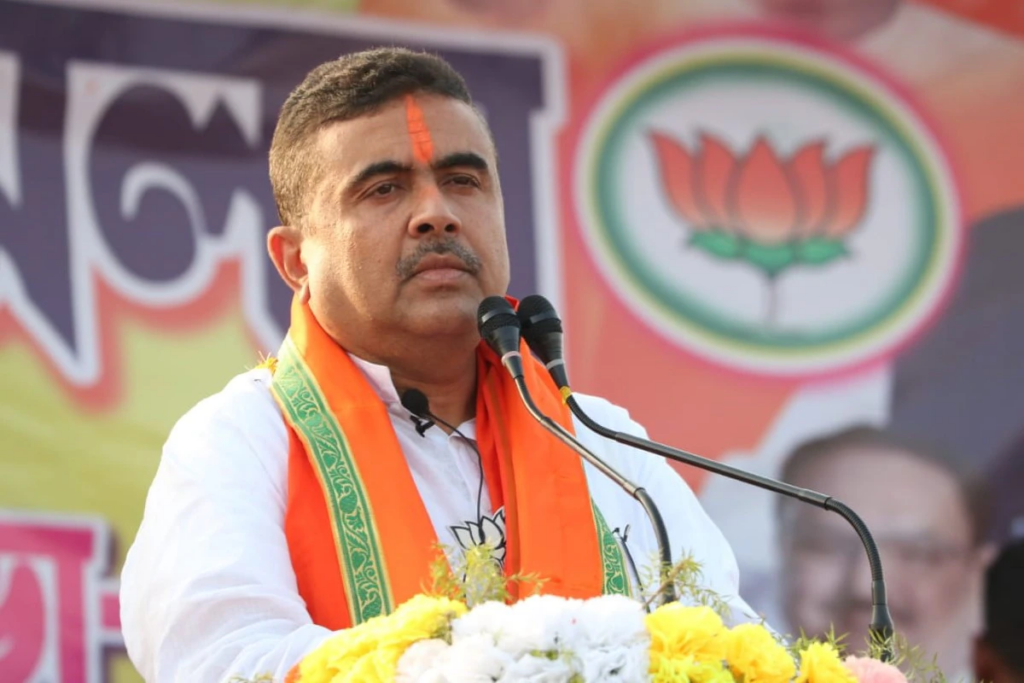
Suvendu Adhikari has completed one of the most dramatic political journeys in modern Indian politics, going from a grassroots Congress worker to the first-ever Bharatiya Janata Party chief minister of West Bengal.
After the BJP’s sweeping victory in the 2026 West Bengal Assembly elections, Adhikari was officially announced as chief minister on May 8, marking the end of Mamata Banerjee’s 15-year rule and rewriting the state’s political map.
For years, West Bengal seemed like the final frontier the BJP could not cross. Adhikari changed that equation.
Why Suvendu Adhikari matters in West Bengal politics
Adhikari is not just another regional politician elevated by a national party. He became the BJP’s most effective Bengali face at a time when the party struggled to build local credibility in the state.
His rise reflects three major political shifts:
- The collapse of the Left Front’s dominance
- The weakening of the Trinamool Congress’ monopoly
- The BJP’s transformation from outsider to ruling force in Bengal
Few politicians in India have switched parties and then successfully defeated their former political mentor twice in high-profile contests. Adhikari did exactly that.
Suvendu Adhikari’s early life and political background
Born on December 15, 1970, in Karkuli near Contai in Purba Medinipur district, Adhikari comes from one of Bengal’s most influential political families.
He belongs to the Mahishya community, a socially and politically influential group in parts of southern Bengal.
His father, Sisir Kumar Adhikari, served as a union minister and member of Parliament. Politics, for the Adhikaris, was less a profession and more a full-family operating system.
His brothers, Dibyendu Adhikari and Soumendu Adhikari, are also active in politics.
Unlike many modern political leaders who cultivate celebrity-style personal branding, Adhikari has maintained a relatively austere public image. He is unmarried and has often been described as deeply influenced by Indian freedom fighters and nationalist figures.
What is Suvendu Adhikari’s educational background?
Adhikari earned a master’s degree from Rabindra Bharati University.
While his academic background rarely dominates headlines, his political education came from Bengal’s intense street-level political culture, where rallies, agitations, cadre networks, and ideological battles often matter more than television appearances.
How Suvendu Adhikari entered politics
Adhikari began his political career with the Indian National Congress in 1995 as a municipal councilor in Contai.
But Bengal politics was rapidly changing during the late 1990s.
When Mamata Banerjee broke away from Congress and founded the All India Trinamool Congress in 1998, Adhikari and his father joined her new movement.
That decision would define the next two decades of Bengal politics.
The Singur and Nandigram movements changed his career
Adhikari’s real breakthrough came during the Singur and Nandigram anti-land acquisition protests in 2006 and 2007.
Those movements reshaped West Bengal politics permanently.
At the time, the ruling Left Front government faced widespread anger over land acquisition policies linked to industrial projects. The protests became symbols of rural resistance and anti-establishment politics.
Adhikari emerged as one of the most visible leaders during the Nandigram agitation.
The movement accomplished two things simultaneously:
- It weakened the Left Front’s decades-long grip on Bengal
- It transformed the TMC into a mass political force
Many political analysts believe the protests laid the foundation for Mamata Banerjee’s eventual rise to power in 2011.
Ironically, they also laid the groundwork for Adhikari’s future political independence.
Suvendu Adhikari’s electoral journey
Adhikari’s political rise was backed by consistent electoral victories.
His key wins include:
- MLA from Kanthi Dakshin in 2006
- MP from Tamluk in 2009
- Re-elected MP in 2014
- MLA from Nandigram in 2016 under the TMC
- BJP MLA from Nandigram in 2021
- Victory again in 2026
The 2021 Nandigram contest became one of India’s most closely watched elections.
Adhikari defeated Mamata Banerjee in her own political battleground, delivering a symbolic blow that instantly elevated him from regional heavyweight to national political figure.
In 2026, he reportedly defeated Banerjee again, this time from Bhawanipur, further cementing his dominance over Bengal’s political narrative.
Why Suvendu Adhikari left the TMC
By 2020, tensions between Adhikari and the TMC leadership had become increasingly visible.
Political observers pointed to the following:
- Internal power struggles
- Strategic disagreements
- Rivalries within the party
- Growing friction with Mamata Banerjee’s inner circle
In late 2020, Adhikari resigned from the TMC and joined the Bharatiya Janata Party.
At the time, the move was seen as a political earthquake in Bengal.
The BJP gained not only a major leader but also a powerful grassroots organizer with deep influence across large parts of the state.
How Adhikari became the BJP’s Bengal face
For years, the BJP struggled in West Bengal because it lacked strong regional leadership and local organizational depth.
Adhikari filled both gaps.
He brought:
- A strong district-level network
- Organizational experience
- Rural voter outreach
- Knowledge of Bengal’s political culture
- Anti-TMC credibility
As Leader of the Opposition from 2021 to 2026, he became the BJP’s most aggressive voice inside and outside the assembly.
His politics combined Bengali regional identity with the BJP’s broader national messaging, helping the party expand beyond urban pockets.
BJP’s historic 2026 victory in West Bengal
The 2026 election marked a historic turning point.
The BJP reportedly surged to 207 seats, ending the TMC’s 15-year rule and forming its first government in the state.
The victory carries national significance because West Bengal has long been considered a politically resistant terrain for the BJP.
For the party, the result represents the following:
- Expansion in eastern India
- A breakthrough in Bengali politics
- A major symbolic victory over the TMC
- Consolidation after years of organizational growth
For Adhikari personally, it completes a full political circle.
He helped build the TMC’s rise against the Left Front, later broke from the party, and eventually led the BJP to defeat the very political structure he once helped create.
What challenges Suvendu Adhikari now faces
Winning power in Bengal may prove easier than governing it.
Adhikari now faces several major challenges:
Managing political polarization
West Bengal remains deeply politically polarized after years of intense rivalry between the BJP and TMC.
Delivering governance
The BJP’s campaign focused heavily on political change. Voters will now expect visible improvements in:
- Employment
- Infrastructure
- Industry
- Law and order
- Welfare delivery
Balancing Delhi and Bengal
Adhikari must also balance regional Bengali political expectations with the BJP’s national leadership priorities.
That balancing act has historically been difficult for many state leaders.
Why this political moment is bigger than one leader
Adhikari’s rise reflects how rapidly Indian politics can evolve.
A politician who once helped Mamata Banerjee dismantle the Left Front eventually became the leader who ended her own government.
Bengal’s political pendulum has swung from Left dominance to TMC populism to BJP expansion within two decades.
That volatility makes West Bengal one of India’s most politically fascinating states.
And now, at the center of that story stands Suvendu Adhikari.
TL;DR
Suvendu Adhikari has become the first BJP chief minister of West Bengal after the party’s landslide 2026 election victory. A former TMC leader and key figure in the Singur and Nandigram movements, Adhikari rose from grassroots politics to become the BJP’s most influential face in Bengal, defeating Mamata Banerjee twice and leading the saffron party to a historic breakthrough in the state.