
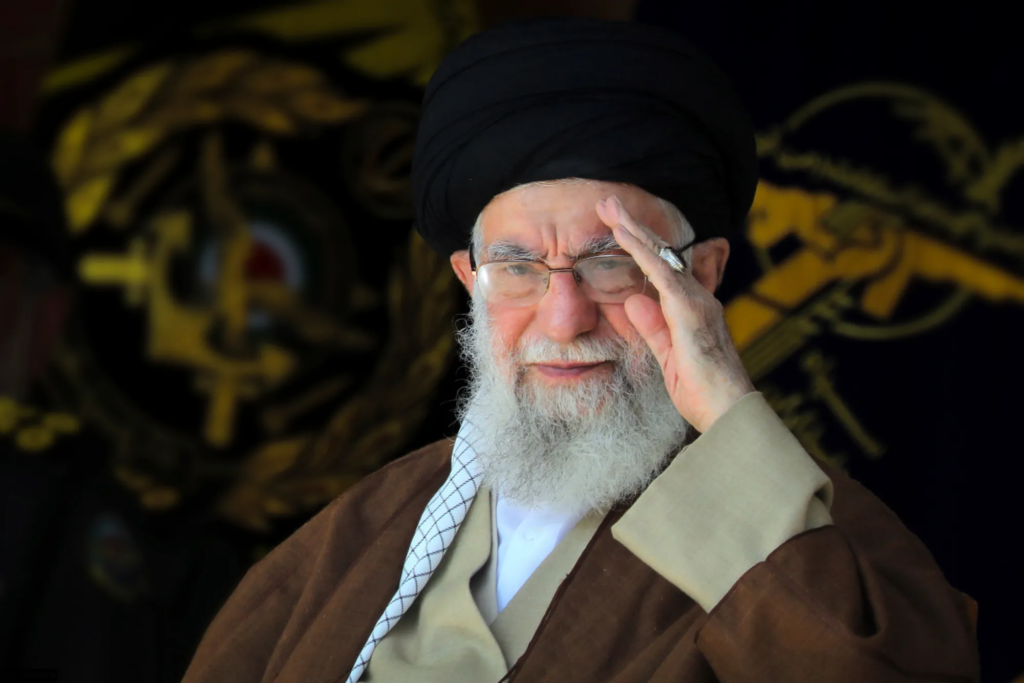
Ayatollah Ali Khamenei, the Supreme Leader of Iran who held an iron grip over the country for nearly four decades, has been killed in a massive joint US-Israeli military operation. He was 86 years old.
His death, confirmed on Saturday, February 28, 2026, marks the abrupt end of an era for the Islamic Republic and sends unprecedented shockwaves across the Middle East. US President Donald Trump announced the assassination on social media, stating that Khamenei was unable to evade advanced US-Israeli intelligence and tracking systems. According to Israel’s Channel 12, approximately 30 bombs were dropped on Khamenei’s secure compound in Tehran. Following the strikes, Iranian state media confirmed his death, declaring 40 days of national mourning.
As the world braces for the fallout of this massive geopolitical shift, here is a look back at the life, rise, and ruthless legacy of one of the Middle East’s most powerful figures.
From Cleric to President: Early Life and the 1979 Revolution
Ali Hosseini Khamenei was born on April 19, 1939, into a clerical family in the northeastern city of Mashhad. He studied Islamic theology in Qom, where he became heavily influenced by Ruhollah Khomeini, the revolutionary cleric who would eventually architect the 1979 Islamic Revolution.
During his early years, Khamenei was a fierce opponent of Iran’s US-backed monarch, Shah Mohammad Reza Pahlavi. His political activism led to multiple arrests by the Shah’s secret police (SAVAK) and periods of exile.
Following the collapse of the monarchy in 1979, Khamenei quickly ascended the ranks of the newly established Islamic Republic.
- The Presidency: During the brutal Iran-Iraq War, Khamenei was elected President of Iran in 1981.
- Assassination Attempt: That same year, he survived a bomb blast hidden inside a tape recorder during a press conference. The assassination attempt left his right arm permanently paralyzed.
The Ultimate Authority: Rise to Supreme Leader
When the founder of the Islamic Republic, Ayatollah Ruhollah Khomeini, died in 1989, the Assembly of Experts appointed Khamenei as his successor. At 50 years old, Khamenei did not hold the highest clerical rank, and many viewed him as a “compromise” candidate.
However, Khamenei proved to be highly cunning. Over the next three decades, he consolidated absolute authority over Iran under the doctrine of Velayat-e Faqih (guardianship of the Islamic jurist).
- Military Control: He aligned himself closely with the powerful Islamic Revolutionary Guard Corps (IRGC), allowing the military to build a vast commercial empire that controlled large sectors of the Iranian economy.
- The Final Word: As Supreme Leader, Khamenei commanded the armed forces, appointed the heads of the judiciary, and held veto power over all major domestic and foreign policies.
A Legacy of Defiance and Brutal Crackdowns
Khamenei’s 36-year rule was defined by intense hostility toward the West, the expansion of proxy militias, and severe domestic repression.
- Regional Proxies: He built a “Ring of Fire” around Israel by funding and arming militant proxy groups, including Hezbollah in Lebanon, Hamas in Gaza, and the Houthis in Yemen.
- The Nuclear Standoff: He cautiously backed the 2015 nuclear deal (JCPOA) under President Hassan Rouhani to ease crippling economic sanctions. However, his deep-seated distrust of Washington was validated in his eyes when the US withdrew from the agreement in 2018. Under his watch, Iran pushed its uranium enrichment closer to weapons-grade levels.
- Crushing Dissent: Domestically, Khamenei ruthlessly suppressed any threat to his regime. He authorized violent crackdowns on mass protests, notably the 2009 Green Movement, the 2019 fuel protests, and the nationwide 2022 Women, Life, Freedom movement, resulting in the deaths of thousands of Iranian citizens over the years.
The Strike and the Succession Crisis
Khamenei’s death in the February 2026 US-Israeli strikes leaves a massive power vacuum in Tehran. Reports indicate that several of his family members, including his daughter and son-in-law, also perished in the targeted bombings of his compound.
According to Iran’s constitution, the Assembly of Experts is tasked with selecting a new Supreme Leader. While his son, Mojtaba Khamenei, is a highly influential figure within the IRGC, his succession is heavily debated, as hereditary leadership directly contradicts the foundational principles of the 1979 Islamic Revolution.
With the nation’s military infrastructure severely damaged and its leadership decapitated, Iran faces its most volatile transition of power in modern history.