
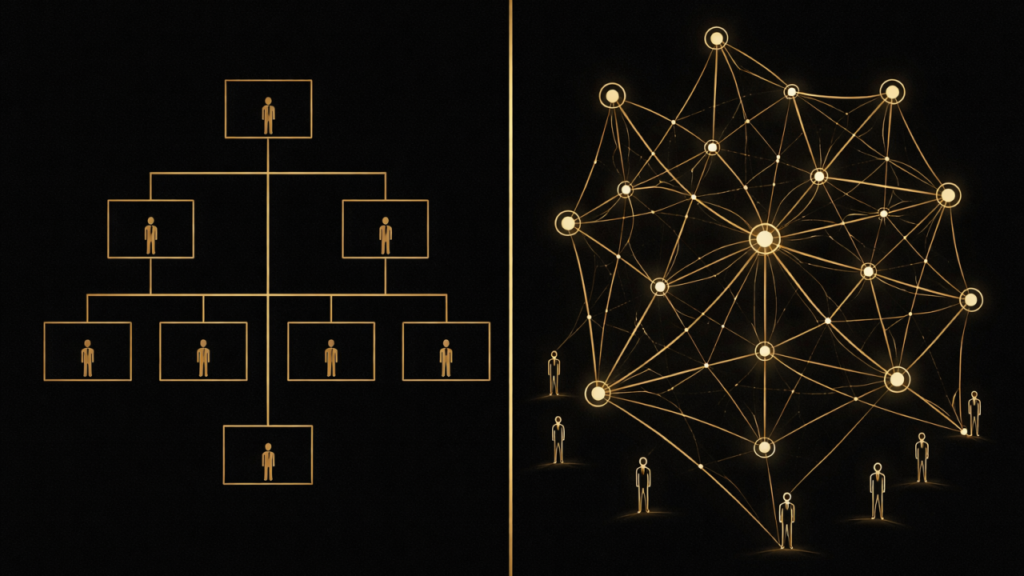
Google reshaped the leadership of its AI laboratory on August 5, but the organisational chart tells only part of the story.
The bigger change is where authority now sits — and what Google expects its AI division to prioritise as the race for artificial intelligence shifts from breakthrough research to the speed and reliability of getting models into users’ hands.
Demis Hassabis, the co-founder of DeepMind, has become chairman of the lab and chief scientist of Alphabet. Koray Kavukcuoglu, previously Google’s chief technology officer and chief AI architect, has taken over day-to-day leadership as senior vice president.
Meanwhile, Jeff Dean, one of Google’s most influential engineers and a 27-year veteran of the company, has departed to launch an AI startup.
The geography is striking. Hassabis remains based in London. Kavukcuoglu works from Mountain View, California, where Google is headquartered.
That roughly 6,000-mile separation is more than a logistical detail. It reflects a broader shift in how Google is managing one of the most important parts of its business.
What changed at Google’s AI lab?
The new structure separates long-term scientific direction from operational control.
Hassabis, whose career is closely tied to frontier AI research, will focus more heavily on scientific strategy and longer-term goals. Kavukcuoglu takes responsibility for the day-to-day operation of the lab, including execution, product development and the pace at which research becomes usable technology.
That distinction matters.
A research leader can spend years pursuing a potentially transformative scientific breakthrough. An operational leader is judged more immediately: Can the team deliver? Can models ship on schedule? Can engineering problems be solved quickly enough to keep pace with competitors?
Google appears to be putting those responsibilities in different hands.
The end of DeepMind’s old center of gravity
DeepMind was founded in London in 2010 by Hassabis, Shane Legg and Mustafa Suleyman. Google acquired the company in 2014, but DeepMind retained a considerable degree of independence for years.
That independence helped create a distinctive research culture and made London a major center for frontier AI work.
The 2023 merger between DeepMind and Google Brain formally brought Google’s major AI research operations together under Google DeepMind.
But organizational integration did not immediately erase the geographical and cultural influence of DeepMind’s London headquarters.
The latest leadership change may mark a more meaningful shift.
Operational authority is now concentrated in Mountain View, alongside Google’s core product organization, while Hassabis moves into a role focused on scientific direction.
Why does Koray Kavukcuoglu’s appointment matter?
Kavukcuoglu’s background makes him a logical choice for a company increasingly focused on execution.
He has held senior technical positions across Google’s AI organization, including chief technology officer and chief AI architect. His new role places him closer to the practical question facing Google: How quickly can its research translate into products that compete with OpenAI, Anthropic and other AI companies?
That is a different problem from proving that a model can perform well in a laboratory.
Google has enormous research capabilities, computing infrastructure and access to data. The competitive challenge is increasingly about turning those advantages into products that users can access quickly, affordably and reliably.
The new job is essentially about execution
Kavukcuoglu’s operational brief can be understood through a few straightforward measures:
- How quickly new models move from research to release.
- How consistently Google meets internal development targets.
- How rapidly new capabilities reach developers.
- How efficiently models can be trained and served.
- How well engineering teams coordinate across research and product groups.
Those factors increasingly determine whether a technically impressive model actually matters in the marketplace.
A model that arrives months after a competitor may still be scientifically strong, but the commercial advantage can disappear before users ever see it.
What does Jeff Dean’s departure mean for Google?
Jeff Dean’s departure may be the most consequential personnel change in the reshuffle.
Dean joined Google in 1999 and became one of the company’s most important technical figures. He played a central role in building the computing systems and infrastructure that allowed Google to operate at enormous scale.
His decision to leave after 27 years to start an AI company is therefore more significant than the departure of an ordinary senior executive.
It also comes at a sensitive moment for Google’s AI organization.
The company needs to retain researchers and engineers capable of building frontier models at a time when those employees have extraordinary opportunities elsewhere.
Why frontier AI talent is difficult to replace
The pool of people with experience training the most advanced AI systems at scale remains relatively small.
These researchers understand highly specialized problems involving:
- Large-scale model training
- Distributed computing
- AI accelerator infrastructure
- Data pipelines
- Model architecture
- Reinforcement learning
- Post-training and evaluation
They are also highly mobile.
A senior AI researcher can move from Google to a rival laboratory, join a startup or raise money to build a company of their own.
That makes retention a strategic issue, not simply an HR problem.
Dean’s departure also sends a symbolic message. After almost three decades at Google, he is choosing to build something outside the company at a time when the AI industry is attracting enormous amounts of capital and talent.
What happened to Google DeepMind before the leadership reset?
The leadership restructuring follows months of reported pressure inside the organization.
Reports have described concerns around morale, employee departures, model delays and missed internal targets.
Some of the tension reflects a broader problem facing established technology companies: the difficulty of operating a frontier research organization while simultaneously meeting the demands of a fast-moving consumer technology business.
DeepMind was originally built around a research-first model.
Google now needs that research organization to operate at the speed of a product company.
Those objectives can conflict.
Research requires freedom to explore ideas that may fail. Product organizations need predictable deadlines, clear priorities and measurable outcomes.
Google’s new leadership structure appears designed to address that tension without completely abandoning Hassabis’s role in setting the scientific direction.
Why does London matter to Google DeepMind?
The London issue is bigger than office geography.
DeepMind helped establish London as one of the world’s leading AI research hubs. Its presence created a network of researchers, engineers, university partnerships and former employees who went on to launch or join other AI companies.
That ecosystem has become one of London’s strongest arguments for remaining competitive in frontier artificial intelligence.
The city’s AI cluster is supported by institutions including University College London, Imperial College London and the wider British university system, alongside a growing technology and venture-capital ecosystem.
DeepMind’s success demonstrated that cutting-edge AI research did not have to be concentrated exclusively in Silicon Valley.
Mountain View changes the equation
Putting operational leadership in Mountain View does not mean Google is abandoning London.
But it does change the balance.
If the teams responsible for shipping models, coordinating engineering and setting operational priorities are increasingly centered in California, London’s role could gradually become more focused on research rather than overall organizational authority.
That distinction matters for the wider British technology sector.
DeepMind’s value to the UK has never been limited to the number of people it employs in London. Its larger contribution has been its ability to attract talent, generate companies and reinforce the idea that Britain can produce globally significant AI research.
Is Google moving away from AI research?
Not exactly.
The leadership change should not be interpreted as Google deciding that fundamental research no longer matters.
Hassabis remains one of the world’s most prominent AI scientists and retains a major role at Alphabet. He will have greater room to focus on long-term scientific questions, including the company’s ambitions around artificial general intelligence.
He also continues to lead Isomorphic Labs, Alphabet’s AI-powered drug-discovery company.
The change is better understood as a division of labor.
Hassabis can focus on where AI is going.
Kavukcuoglu is responsible for getting Google there faster.
That may actually strengthen the company’s ability to pursue both long-term research and near-term products — provided the two sides remain closely connected.
Why is AI competition shifting from research to shipping?
The AI race initially centered heavily on capability.
Companies competed over questions such as:
- Which model could reason better?
- Which system could write better code?
- Which model could understand longer contexts?
- Which system could perform better on benchmarks?
Those comparisons still matter.
But as models have become increasingly capable, other factors have gained importance.
Speed, cost and availability are now part of the competition.
A model can be technically superior and still lose users if it is expensive to operate, difficult to access or slow to reach the market.
That changes the management problem for companies like Google.
The question is no longer simply whether its researchers can develop an impressive model. It is whether Google can repeatedly turn that capability into products before competitors catch up.
What does the reshuffle tell us about Google’s AI strategy?
The clearest message is that Google wants to preserve its scientific advantage while tightening execution.
The company has several structural advantages that newer AI firms cannot easily replicate:
- Massive computing infrastructure
- Deep AI research expertise
- Its own AI accelerator technology
- A global consumer-product ecosystem
- Search and advertising businesses
- A large developer platform
- Years of experience in machine learning
The challenge is coordination.
Google has historically been a research powerhouse. But frontier AI has compressed the time between scientific discovery and commercial competition.
The companies that succeed may not simply be those with the best researchers. They may be those capable of moving the entire organization from research breakthrough to global deployment fastest.
That is where Kavukcuoglu’s appointment becomes significant.
What happens next for Google DeepMind?
The immediate test will not be the new org chart. It will be Google’s release cadence and ability to retain senior talent.
Watch for three indicators:
- Model releases: Does Google begin delivering major updates more consistently?
- Talent retention: Can the company stop the loss of senior researchers and engineers?
- Research-to-product execution: Can Google shorten the distance between an internal breakthrough and a product developers and consumers can actually use?
If those improve, the restructuring may prove effective.
If departures continue and product timelines remain uneven, the leadership change will look more like a response to deeper organizational problems.
For now, the most important part of Google’s August 5 restructuring is not that one executive moved from one box on an organizational chart to another.
It is that scientific leadership and operational power have been deliberately separated.
DeepMind was built on the idea that exceptional research needs room to operate independently.
Google’s latest move suggests that the company now believes exceptional research also needs something else: a faster path to the market.
And that is a very different kind of AI race.