
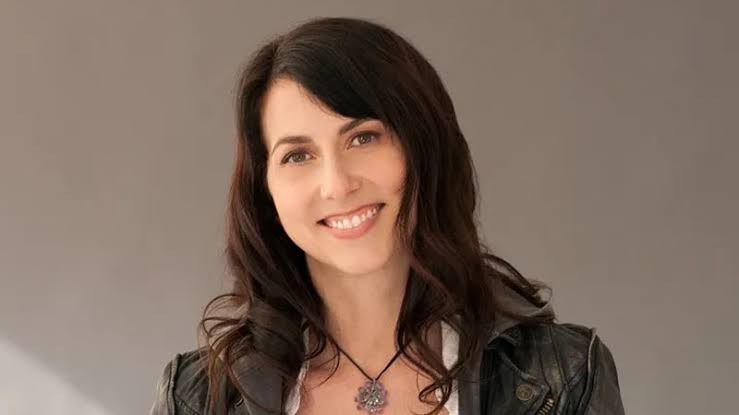
MacKenzie Scott has made another major philanthropic commitment, donating $20 million to Active Minds, a U.S.-based nonprofit focused on youth mental health. The unrestricted gift is the largest donation in the organization’s history and comes as Scott continues to direct billions of dollars toward education, healthcare, and community initiatives after reducing her stake in Amazon.
The latest contribution gives Active Minds the flexibility to expand mental health programs, strengthen youth leadership, and respond to emerging community needs at a time when concerns about young people’s mental well-being continue to rise across the United States.
Why did MacKenzie Scott donate to Active Minds?
Active Minds works to empower high school and college students to promote mental health awareness, reduce stigma surrounding mental illness, and encourage early intervention.
Unlike many philanthropic grants that come with strict conditions, Scott’s $20 million contribution is unrestricted. That means the nonprofit can decide where the funding will have the greatest impact rather than spending it on pre-approved projects.
According to the organization, the funding will help:
- Expand youth-led mental health initiatives.
- Strengthen its national network of student chapters.
- Increase advocacy programs in schools and colleges.
- Build long-term organizational capacity.
- Respond quickly to changing community mental health needs.
Active Minds founder and executive director Alison Malmon described the donation as transformative, saying it recognizes young people as key drivers of change in improving mental health awareness.
Why is youth mental health becoming a bigger priority?
Scott’s donation comes as youth mental health continues to be a growing public health concern in the United States.
Recent national surveys have shown increasing levels of anxiety, depression, loneliness, and emotional distress among teenagers and young adults.
Data cited by Fortune indicates that approximately one in five U.S. high school students seriously considered suicide in 2023, highlighting the scale of the challenge facing schools, families, and healthcare providers.
Organizations like Active Minds focus on prevention by encouraging peer support, reducing stigma, and making conversations about mental health more accessible before crises develop.
MacKenzie Scott’s approach to philanthropy
Since announcing her philanthropic commitment in 2019, Scott has become one of the world’s most influential charitable donors.
Her giving strategy differs from many traditional foundations in several ways:
Unrestricted funding
Rather than limiting how grants can be spent, Scott typically allows nonprofits to determine their own priorities.
Many nonprofit leaders have praised this model because it lets organizations:
- Hire staff.
- Invest in infrastructure.
- Expand successful programs.
- Build financial stability.
Fast distribution
Instead of making multi-year funding commitments tied to extensive reporting requirements, Scott often distributes large donations quickly after evaluating organizations.
Focus on community organizations
Her philanthropy spans a wide range of sectors, including:
- Education
- Public health
- Food security
- Climate initiatives
- Racial equity
- Community development
- Women’s organizations
- Mental health
How much has MacKenzie Scott donated?
Scott has donated roughly $26 billion since 2020, making her one of the largest individual philanthropists in modern history.
Some of her recent donations include:
- $70 million to Meals on Wheels America.
- $72 million to Red Lake Nation College.
- $42 million to Elizabeth City State University.
- $20 million to Active Minds.
Her donations have benefited hundreds of nonprofit organizations across the United States.
Why unrestricted donations matter
Many charities operate under restricted grants that can only be used for specific projects.
While those grants fund important programs, they often cannot be used for:
- Employee salaries.
- Technology upgrades.
- Administrative costs.
- Emergency expenses.
- Organizational growth.
Unrestricted funding gives nonprofit leaders the flexibility to allocate resources where they are needed most, improving long-term sustainability rather than funding only individual initiatives.
For organizations working in rapidly evolving fields such as mental health, that flexibility can make it easier to respond to changing community needs.
The growing focus on youth mental health
Youth mental health has become an increasing policy priority following rising reports of anxiety, depression, self-harm, and suicide among adolescents.
Experts point to several contributing factors, including:
- Social media pressures.
- Academic stress.
- Social isolation.
- Economic uncertainty.
- Reduced access to mental health services.
Nonprofits like Active Minds aim to address these issues through peer-led education, campus programs, advocacy, and early intervention initiatives.
Scott’s latest donation is expected to help expand those efforts nationwide.
Key takeaways
- MacKenzie Scott has donated $20 million to Active Minds.
- The donation is the largest in the nonprofit’s history.
- The funding is unrestricted, allowing the organization to decide how best to use it.
- Active Minds supports youth mental health through education, advocacy, and student leadership.
- Scott has donated approximately $26 billion to charitable causes since 2020.
- Youth mental health remains a growing concern across the United States, making investments in prevention and awareness increasingly important.