
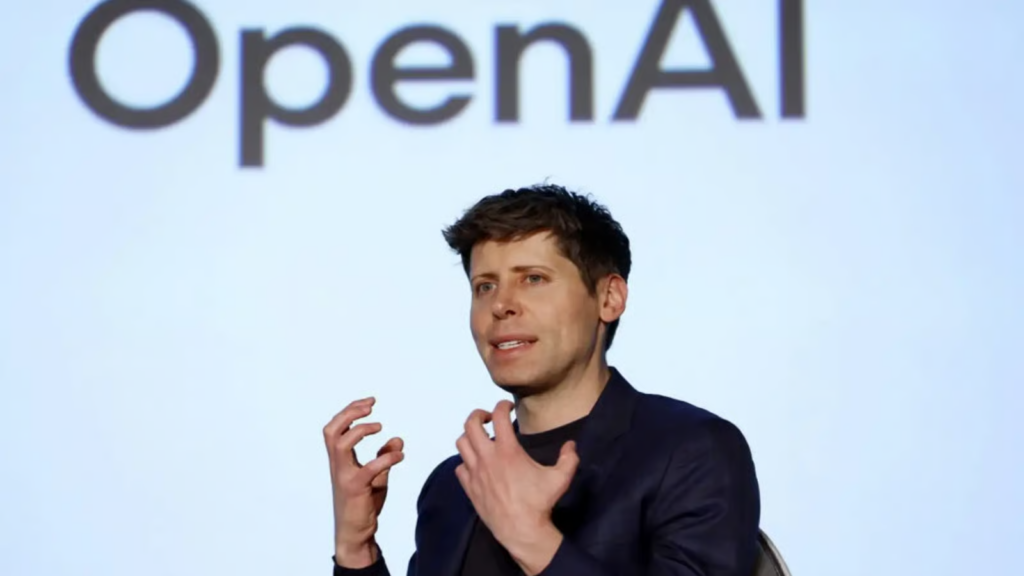
The artificial intelligence gold rush minted a new class of tech millionaires almost overnight last year, as more than 600 employees linked to OpenAI reportedly cashed out billions of dollars worth of company shares in one of Silicon Valley’s largest-ever employee liquidity events.
According to a report by The Wall Street Journal, current and former OpenAI employees sold a combined $6.6 billion in stock during a tender offer in October 2025, with many individuals walking away with life-changing sums.
The numbers are almost surreal, even by tech-industry standards:
- More than 600 employees reportedly became millionaires
- Each received roughly $11 million on average
- Around 75 employees reportedly sold the maximum allowed amount of $30 million
- Early employee shares allegedly increased more than 100-fold in value over seven years
For a sector already known for astronomical valuations, the OpenAI payout illustrated how artificial intelligence has accelerated wealth creation at a pace rarely seen outside the dot-com boom or crypto mania.
Only this time, the money is arriving before an IPO.
How OpenAI’s stock sale worked
Unlike publicly traded companies, where employees can freely sell stock on the open market, private firms like OpenAI typically control when workers can cash out equity.
That is where tender offers come in.
What is a tender offer?
A tender offer allows employees and early investors to sell shares directly to approved buyers, usually major investment firms, without the company going public.
In OpenAI’s case:
- Investors purchased employee shares privately
- Workers gained liquidity without waiting for an IPO
- The company maintained private ownership
- Employees could finally realize the paper wealth accumulated over the years
The October 2025 event reportedly marked the first major opportunity for many OpenAI employees to sell stock since the launch of ChatGPT transformed the company into one of the most influential players in AI.
For many workers, it was the financial equivalent of watching lottery numbers materialize in a Slack notification.
Why OpenAI increased the employee share-sale cap
According to reports, OpenAI significantly increased the maximum amount employees could sell.
The internal cap reportedly rose:
- From $10 million
- To as high as $30 million per person
The increase was driven largely by investor demand.
Private investors eager for exposure to OpenAI reportedly viewed employee shares as one of the few available entry points into the company, especially as major AI firms continue delaying public listings.
That trend reflects a broader shift in Silicon Valley.
Why tech companies are delaying IPOs
For decades, tech workers depended on IPOs to unlock wealth from stock options.
Today, many elite startups stay private far longer.
Companies increasingly prefer the following:
- Private fundraising rounds
- Tender offers
- Secondary share sales
- Controlled liquidity programs
This approach gives firms access to massive capital without the following:
- Quarterly earnings pressure
- Public-market volatility
- Regulatory scrutiny tied to public listings
The result is a new version of Silicon Valley wealth creation happening behind closed doors.
By the time some AI companies eventually go public, thousands of employees may already be wealthy.
A useful infographic here could compare the following:
- Traditional IPO-era wealth creation
- Modern tender-offer liquidity structures
- Valuation growth of major AI firms
OpenAI salaries and stock compensation are reshaping tech pay
The reported stock windfall also underscores how aggressively AI companies are competing for elite engineering talent.
According to reports, OpenAI offers the following:
- Salaries exceeding $500,000 for some technical roles
- Large stock-based compensation packages
- Multi-million-dollar retention bonuses
- Significant equity incentives
In 2025, the company reportedly issued one-time bonuses worth millions of dollars to select employees.
That compensation arms race has intensified competition across the AI industry, where companies battle for a relatively small pool of researchers capable of building advanced foundation models.
Recruiting in AI increasingly resembles a hybrid of professional sports free agency and geopolitical talent acquisition.
Why AI wealth generation is happening faster than previous tech booms
The OpenAI payouts stand out not just because of their size but because of their speed.
According to reports, shares issued to some employees seven years ago increased more than 100 times in value.
For comparison:
- The Nasdaq Composite roughly tripled during the same period
- Traditional tech companies rarely produced comparable employee returns in such a compressed timeframe
- Many unicorn startups still fail to provide meaningful liquidity before stagnating or collapsing
AI, by contrast, has attracted enormous capital inflows at breathtaking velocity.
Part of the reason is that investors increasingly view advanced AI not as another software category but as foundational infrastructure capable of reshaping the following:
- Search engines
- Productivity software
- Healthcare
- Defense
- Education
- Finance
- Scientific research
That belief has inflated valuations across the sector to historic levels.
Sam Altman reportedly owns no OpenAI equity
One of the more unusual details surrounding OpenAI’s structure is that CEO Sam Altman reportedly does not personally hold equity in the company.
That arrangement stems from OpenAI’s unusual governance structure, which began as a nonprofit organization before evolving into a capped-profit model.
Meanwhile, some executives reportedly hold enormous equity stakes.
According to the report:
- Greg Brockman may hold equity worth tens of billions of dollars
- Other early leaders and employees also possess substantial ownership stakes
The structure has long fueled debate about whether OpenAI still reflects its original mission of broadly benefiting humanity or has evolved into a conventional hyper-growth tech giant wrapped in nonprofit architecture.
Not all employees kept the money
Interestingly, many employees reportedly did not simply pocket their entire windfall.
According to the report, some workers transferred portions of their proceeds into donor-advised funds.
What are donor-advised funds?
These are charitable investment accounts that:
- Allow money to be invested over time
- Provide immediate tax deductions
- Support philanthropic causes later
The move suggests at least some OpenAI employees used the liquidity event not only for personal wealth but also for tax planning and charitable giving.
In Silicon Valley, philanthropy often arrives wearing the same hoodie as venture capital.
What the OpenAI payout says about the future of AI
The broader significance of the OpenAI stock sale extends beyond one company.
It signals how AI may reshape:
- Labor markets
- Corporate structures
- Wealth concentration
- Venture capital
- Public markets
Critics argue the AI boom risks concentrating extraordinary wealth among a relatively small number of engineers, founders, and investors.
Supporters counter that transformative technologies have historically created enormous economic expansion before broader benefits spread through industries.
Either way, the OpenAI tender offer offered a glimpse into the economic scale now orbiting the AI sector.
And if the current trajectory continues, October 2025 may eventually look less like an outlier and more like the opening bell of the AI billionaire era.
TL;DR
More than 600 current and former OpenAI employees reportedly became millionaires during a massive $6.6 billion share sale in October 2025. The tender offer allowed workers to cash out stock without the company going public, highlighting the extraordinary pace of wealth creation in the AI industry. Some employees reportedly earned up to $30 million, while early OpenAI shares increased more than 100-fold in value over seven years.