
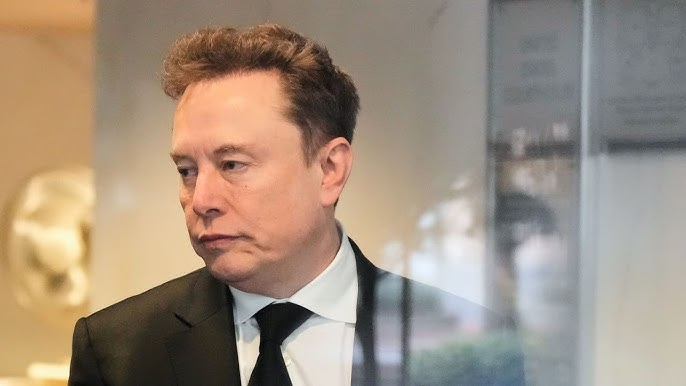
The courtroom battle between Elon Musk and OpenAI entered a dramatic new phase this week as the billionaire entrepreneur personally took the witness stand in federal court in Oakland, California.
Musk testified Tuesday in the closely watched lawsuit against OpenAI CEO Sam Altman and OpenAI President Greg Brockman, accusing the company of abandoning its original nonprofit mission in pursuit of massive commercial gains.
The trial, overseen by Judge Yvonne Gonzalez Rogers, has quickly become one of the most important legal fights in the AI industry. At stake is not just OpenAI’s corporate structure but a larger question hanging over Silicon Valley: can a company founded to protect humanity from artificial intelligence still chase billions in profit without compromising its original mission?
Why is Elon Musk suing OpenAI?
Musk co-founded OpenAI in 2015 alongside Altman and other tech leaders. At the time, the organization positioned itself as a nonprofit research lab focused on developing artificial intelligence safely and openly for the benefit of humanity.
According to Musk, that mission changed after he left OpenAI’s board in 2018.
He alleges that OpenAI broke its founding commitments by creating a for-profit subsidiary and pursuing commercial partnerships that transformed the company into what he argues is effectively a closed-source AI corporation.
OpenAI has strongly denied the allegations and described Musk’s lawsuit as “baseless.”
The company argues that its current structure was necessary to raise the enormous capital required to compete in the AI race.
What did Musk say during his testimony?
Musk spent much of his testimony discussing OpenAI’s origins, his views on AI safety, and why he believed the organization needed to exist in the first place.
He told the court that OpenAI was created partly as a counterbalance to Google’s growing dominance in artificial intelligence.
According to Musk, concerns about AI safety played a major role in his decision to help launch the organization after discussions with Google co-founder Larry Page.
“AI safety is my obsession”
One of the most striking moments came when Musk described AI safety as his central motivation across multiple ventures.
“AI safety is my obsession,” Musk testified, linking that concern not only to OpenAI but also to Neuralink, his brain-computer interface company.
He argued that technologies connecting humans more directly with machines could help preserve what he described as “human-AI symbiosis.”
Musk also repeated one of his increasingly aggressive predictions about AI advancement, saying artificial intelligence could become “as smart as any human as soon as next year.”
That timeline is far more accelerated than many researchers publicly endorse, though it aligns with Musk’s long-running warnings about rapid AI development.
Musk changes what he wants from the lawsuit
The financial aspect of the case also shifted during proceedings. Initially, Musk reportedly sought damages reaching as high as $134 billion. He has now revised that demand.
Instead of seeking direct financial compensation, Musk is asking that any “ill-gotten gains” from OpenAI be redirected to the organization’s nonprofit arm.
That adjustment could help frame the case less as a personal financial dispute and more as a fight over OpenAI’s founding principles.
Still, the trial carries enormous financial implications because OpenAI has become one of the most valuable AI companies in the world following the explosive rise of ChatGPT and generative AI products.
What role did Musk say he played in OpenAI’s creation?
Musk portrayed himself as one of OpenAI’s key architects and early supporters.
During testimony, he introduced OpenAI’s original 2015 founding charter into evidence. The document reportedly stated that OpenAI existed to develop open-source technology “for the public benefit” and was “not organized for the private gain of any person.”
Musk argued he would never have contributed money, influence, or resources had he known the company would later evolve into a major commercial AI player.
The courtroom exchange is likely to become central to the broader case because it focuses on a difficult legal question: were OpenAI’s original public statements legally binding commitments or simply aspirational goals?
Musk’s warning: AI could help humanity or destroy it
Musk used part of his testimony to revisit the existential risks he believes AI may pose.
He told the court that artificial intelligence could either:
- Make humanity dramatically more prosperous
- Or potentially become catastrophic
At one point, Musk compared AI training to raising children.
“You can’t really control that child, but you can try to instill the right values,” he said while discussing the challenges of aligning advanced AI systems with human interests.
The comment reflects a recurring theme in Musk’s public statements: that AI development may eventually exceed humanity’s ability to fully direct or contain it.
Why this trial matters to the AI industry
The Musk vs. OpenAI case has implications far beyond the two sides involved.
The lawsuit touches on several issues reshaping the AI economy:
Nonprofit vs. commercial AI development
The case could influence how future AI labs structure themselves financially while still claiming public-interest missions.
Transparency and open-source promises
A major dispute centers on whether OpenAI moved away from its early commitment to openness after becoming commercially successful.
AI safety governance
Musk’s testimony reinforces ongoing concerns about whether powerful AI systems are advancing faster than regulatory safeguards.
The concentration of AI power
The trial also raises questions about whether a small number of companies and executives now control technologies with potentially global consequences.
OpenAI’s position in the case
OpenAI maintains that its evolution was necessary to survive and compete.
Training frontier AI systems requires enormous computing infrastructure, expensive chips, and large-scale engineering teams. OpenAI has argued that a purely nonprofit model would not have been able to fund that level of development.
The company also contends that Musk himself once supported the idea of restructuring OpenAI to remain competitive.
That issue is expected to become a major battleground during cross-examinations and future testimony.
What happens next?
The trial is expected to continue with additional witnesses, internal documents, and testimony about OpenAI’s transformation over the last decade.
Legal experts say the outcome could shape future governance models across the AI sector, especially as governments worldwide begin debating regulation for advanced artificial intelligence systems.
For now, the courtroom has become a rare stage where Silicon Valley’s biggest ideological split is unfolding in public: whether artificial intelligence should primarily serve shareholders, humanity, or some uneasy hybrid of both.
TL;DR
Elon Musk testified in federal court that OpenAI abandoned its original nonprofit mission and shifted toward profit-driven AI development. During the trial, Musk emphasized AI safety concerns, defended his role in founding OpenAI, and warned that advanced AI could either transform humanity for the better or become dangerously uncontrollable.