
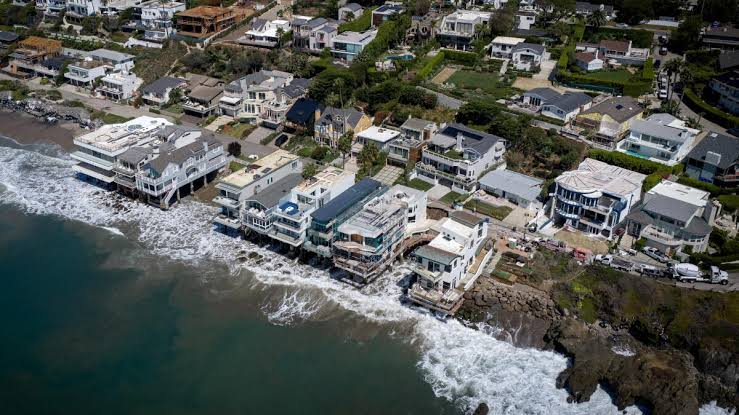
Hollywood actor Nicolas Cage is taking emergency measures to protect his $10.5 million beachfront property in Malibu, California, after a massive sinkhole expanded around the residence, threatening its driveway and surrounding structures.
The 62-year-old actor has secured three permits from local authorities to carry out protective and repair-related work, according to a report by Page Six published on October 14. The measures include placing sandbags along the beach and the exterior of the house to limit wave damage and further coastal erosion.
The sinkhole first appeared on September 8 and has since grown beyond its initial dimensions. The collapse has extended around the side of Cage’s property towards the front door, raising concerns about the stability of the surrounding area.
Nicolas Cage obtains permits for emergency work
According to Page Six, Cage obtained an emergency building permit allowing sandbags to be placed around vulnerable sections of the property. The aim is to reduce the impact of waves and help prevent further erosion along the beachfront.
Two additional permits cover the removal of asphalt debris and work associated with shoring installation and soil sample collection.
These steps are intended to support an assessment of the damaged ground and help determine how the affected area can be stabilised. The permits do not, by themselves, establish how much of the property can ultimately be saved or how long repairs will take.
Cage was reportedly spending most of his time in Nevada when the sinkhole emerged. There have been no reports of injuries connected to the initial collapse.
Sinkhole has expanded since September
The sinkhole was initially reported to measure approximately 30 feet by 30 feet. Subsequent coastal erosion has caused the damage to spread, affecting the driveway and portions of the area around the house.
The collapse also swallowed a portable toilet used at a construction site, ladders and sections of a privacy fence. The damage extended into the roadway, restricting access for residents and emergency services.
A gas leak was reported after the ground gave way, prompting firefighters and utility crews to respond. Southern California Gas Company shut off gas service as a precaution while the immediate danger was assessed.
The incident highlights the risks facing beachfront properties when waves, high tides and coastal erosion undermine the ground supporting buildings and access roads.
Malibu authorities ordered evacuations for 31 homes
The City of Malibu declared a local emergency following the collapse and ordered the evacuation of 31 properties on Sea Level Drive.
Authorities marked the properties unsafe because the damaged road left residents and emergency personnel without reliable vehicle access. The road was the only route in and out of the affected neighbourhood, making it difficult for fire and sheriff’s department crews to reach homes during an emergency.
In a September 11 update, the city said the evacuation order and red-tag designations would remain in force until conditions were considered safe. Repair work was being coordinated with the affected homeowners’ association, engineers and contractors.
The emergency response was not limited to Cage’s property. The wider neighbourhood was affected by the loss of safe access, leaving residents unable to return until officials determined that the area could be reached safely.
Coastal erosion poses a wider threat
The sinkhole developed amid strong surf and high tides along Southern California’s coast. Weather conditions associated with the remnants of Hurricane Marie added to concerns that further erosion could worsen the damage.
Coastal erosion can remove the soil and rock supporting driveways, roads and building foundations. On exposed beachfront plots, repeated wave action may undermine structures even when the buildings themselves initially appear intact.
Malibu officials have previously warned that coastal erosion is affecting multiple areas of the city. The damage at Sea Level Drive has renewed attention on the vulnerability of oceanfront properties and the difficulty of restoring access when the surrounding roadway becomes unstable.
Can Cage save his $10.5 million beachfront property?
The immediate priority is to stabilise the damaged ground, assess the soil and prevent further erosion while repair plans are developed.
The emergency permits allow protective work to proceed, but they do not guarantee that the sinkhole will stop expanding or that every damaged section of the property can be restored. The final outcome will depend on the condition of the ground, the effectiveness of stabilisation measures and the safety of the surrounding coastline.
For now, Cage’s efforts are focused on protecting the residence as crews and local authorities continue addressing the damage. The incident also serves as a reminder that even high-value beachfront homes can face substantial risks from changing coastal conditions.