
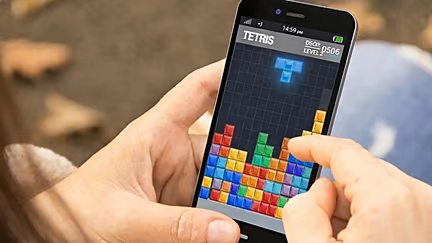
Scientists say Tetris may help rewire the brain after trauma, and the claim is not a gimmick. A new clinical trial suggests that a carefully structured version of the iconic puzzle game could significantly reduce intrusive memories in people exposed to traumatic events.
In a study involving frontline healthcare workers, researchers found that participants who played Tetris as part of a targeted psychological intervention reported far fewer flashbacks compared to those who received standard support. The findings, published in The Lancet Psychiatry, could signal a shift toward simple, scalable digital tools for trauma care.
What did the study find about Tetris and trauma?
The trial involved 99 NHS staff members who had experienced trauma during the COVID-19 pandemic, including witnessing deaths. Of those, 40 participants received a treatment called the imagery competing task intervention (ICTI), which incorporated Tetris.
Within four weeks, participants who used ICTI reported 10 times fewer flashbacks than those in comparison groups. At the six-month mark, about 70 percent said they no longer experienced intrusive memories. Researchers also noted improvements in symptoms associated with post-traumatic stress disorder.
How does the imagery competing task intervention work?
The intervention is more structured than casually playing a game on your phone.
Step 1: Briefly recall the traumatic memory
Participants are asked to bring a specific intrusive image to mind. The recall is short and controlled.
Step 2: Engage in a visuospatial task
They then play a slowed-down version of Tetris and visualize the game grid and falling blocks using their “mind’s eye.”
Step 3: Compete with the brain’s imagery system
The theory is that Tetris taxes the brain’s visuospatial working memory. Because intrusive trauma memories are often vivid and image-based, engaging that same neural system may reduce their intensity and frequency.
Professor Emily Holmes of Uppsala University, who led the study, explained that intrusive memories can hijack attention and trigger strong emotional reactions. By weakening the sensory imagery component, the intervention appears to reduce how often those memories force their way back into awareness.
Why Tetris specifically?
Tetris, first developed by Alexey Pajitnov in 1984 and later popularized worldwide, is visually demanding but emotionally neutral. The game requires players to rotate and position falling blocks in real time, activating spatial reasoning systems in the brain.
That cognitive load is central to the intervention. Trauma flashbacks often manifest as sensory images rather than verbal thoughts. ICTI targets imagery, not narrative processing.
Importantly, this is not about distraction alone. The intervention is designed to modify how the memory is stored and reactivated, not simply shift attention temporarily.
How did Tetris compare to other treatments in the trial?
The remaining participants in the study were assigned to other approaches:
• Listening to music by Mozart
• Listening to stress-related podcasts
• Receiving standard treatment
The ICTI group outperformed these alternatives in reducing flashbacks. The difference was measurable within weeks.
That said, researchers caution that ICTI complements existing trauma therapies. It is not positioned as a standalone cure for PTSD.
Why this matters for healthcare workers
Healthcare professionals face repeated exposure to traumatic events. During the COVID-19 pandemic, that exposure intensified dramatically.
Charlotte Summers, director of the Victor Phillip Dahdaleh Heart and Lung Research Institute at the University of Cambridge, emphasized that healthcare workers globally continue to operate under pressure. Scalable, digital interventions could help reduce barriers to care.
Traditional trauma therapies often require:
• Trained clinicians
• Extended sessions
• Verbal recounting of traumatic events
• Ongoing follow-up
ICTI, by contrast, is brief and does not require patients to describe their trauma in words. That feature may make it more accessible across languages and cultures.
Can Tetris really “rewire” the brain?
The phrase “rewire the brain” can sound dramatic. In scientific terms, the study points to neuroplasticity, the brain’s ability to adapt and reorganize in response to experience.
Intrusive memories rely on networks that link sensory imagery with emotional responses. By repeatedly engaging visuospatial working memory during memory recall, ICTI may weaken the intensity or accessibility of those neural connections.
This does not erase the memory. Instead, it appears to reduce how often it intrudes and how vividly it replays.
What are the limitations of the study?
The results are promising, but several caveats remain.
• The trial involved 99 participants, a modest sample size.
• Participants were healthcare workers, a specific population.
• The intervention was guided, not self-administered.
Researchers are now testing whether ICTI works in larger and more diverse groups. They are also exploring a non-guided digital version.
Wellcome, which funded the study, has expressed optimism about scalability. However, larger randomized trials will be needed before ICTI becomes standard practice.
Could this change trauma care?
If replicated at scale, the intervention could:
• Offer a low-cost digital add-on to therapy
• Reduce the burden on overstretched mental health services
• Provide immediate post-trauma support
• Improve access in low-resource settings
The appeal lies in simplicity. Tetris is widely known, easy to deploy, and technologically lightweight. Still, experts caution against overselling the findings. Trauma is complex, and no single intervention fits all cases.
TL;DR
• A new study found that playing Tetris as part of a structured intervention reduced flashbacks in healthcare workers exposed to trauma.
• Participants in the ICTI group reported 10 times fewer flashbacks within four weeks.
• About 70 percent had no intrusive memories after six months.
• The intervention targets visual memory systems, not verbal processing.
• Larger trials are underway to confirm whether results hold across broader populations.
The bottom line
Scientists say Tetris may help rewire the brain after trauma, and early evidence supports that claim within a controlled therapeutic framework. The key is not the game itself, but how it is used.
If future trials confirm these results, ICTI could become one of the most accessible digital mental health tools developed in recent years. For now, it represents a rare intersection of neuroscience, psychology, and a 1980s puzzle game that refuses to fade from relevance.