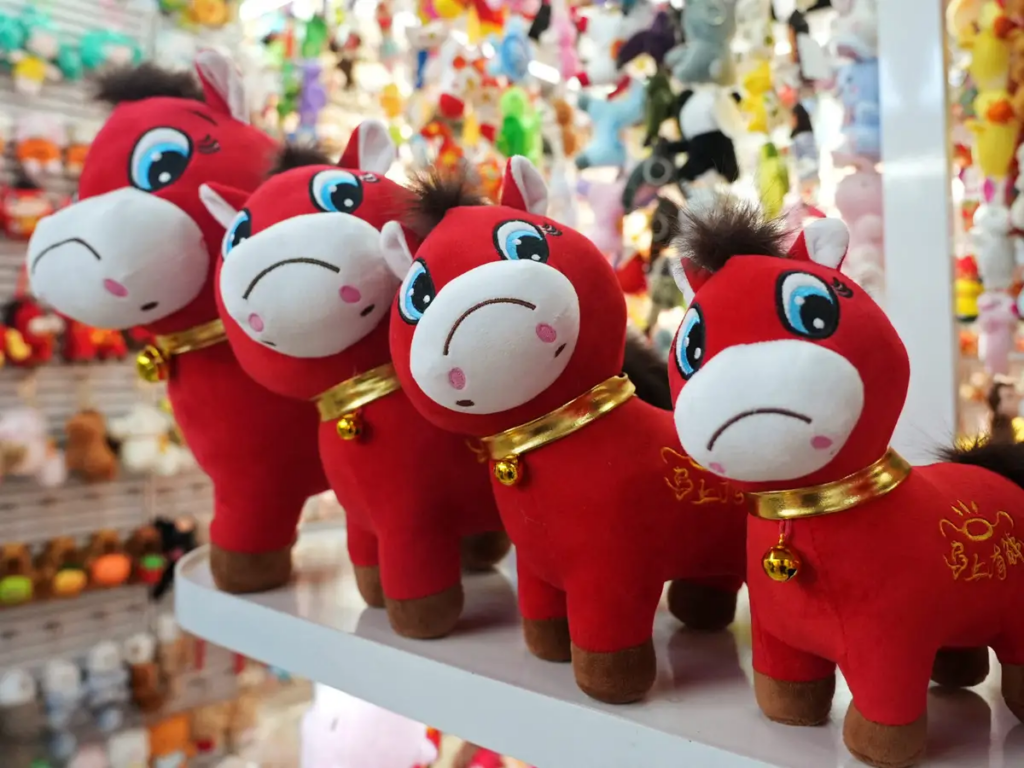
What began as a factory error has turned into one of the most unexpected viral hits ahead of Chinese New Year. A red horse plushie, meant to smile but stitched with a downturned mouth, has captured the internet’s attention, prompting shoppers across China to line up for what many are calling the “crying horse.”
The toy’s popularity comes as Chinese New Year approaches on February 17, 2026, ushering in the Year of the Horse. But among the flood of festive merchandise, it’s this flawed, frowning plush that’s stealing the spotlight.
What Is the ‘Crying Horse’ Everyone Wants?
The viral toy is a red horse plush with a gold bell around its neck, eyes cast slightly away, and a mouth stitched into a clear frown. Instead of looking cheerful and celebratory, it appears sad—almost exhausted.
That expression wasn’t intentional.
According to sellers, the plush ended up looking “crying” after a worker accidentally sewed the mouth upside down during production. The result was a batch of toys that didn’t match the original design brief but struck an unexpected emotional chord with buyers.
The plushies surfaced at Yiwu International Trade City, the country’s largest wholesale market, where retailers source everything from festive decorations to mass-market toys.
How a Manufacturing Error Became a Viral Sensation
At first, shop owners treated the upside-down mouth as a defect. Zhang Huoqing, who runs a Yiwu-based store called Happy Sister, said she offered refunds when she noticed the issue. One customer refused.
Soon after, images and videos of the frowning horse began circulating on Chinese social media platforms. Interest snowballed. Shoppers stopped asking for the standard smiling version and instead demanded the “crying” one—often treating it as a lucky find.
Within days, the toy went from the reject pile to a must-have item.
This kind of accidental virality isn’t new, but it’s rare to see it play out so quickly in the tightly scheduled, season-driven world of New Year merchandise.
Why the Crying Horse Resonates
The appeal isn’t just novelty. Many buyers say the toy reflects how they feel.
Online comments describe the horse as a mirror of modern working life, long hours, stress, and quiet burnout. One user wrote that the plush perfectly captured their emotional state at the end of a demanding workday.
That reaction places the toy squarely within the growing “ugly-cute” trend, where deliberately imperfect or awkward-looking characters outperform traditionally cute designs. Similar plush lines, including globally popular designer toys, have shown that relatability can matter more than polish.
Why 2026 Makes the Timing Even Better
The timing has amplified the craze. The Year of the Horse is already driving demand for horse-themed decorations, gifts, and collectibles. In 2026, that symbolism carries extra weight.
This year is associated with the Fire Horse, a combination that appears only once every 60 years. In Chinese zodiac traditions, the Horse represents energy, freedom, and independence. The Fire element adds intensity, passion, and speed, making 2026 a particularly charged year in popular belief systems.
That contrast—a high-energy zodiac symbol paired with a visibly weary plush, may be part of the toy’s ironic charm.
From Flaw to Feature: What Sellers Are Doing Now
Rather than correcting the mistake, vendors are leaning into it.
Given the surge in demand, the shop plans to continue selling the “flawed” version of the horse instead of fixing the design. For sellers, it’s a reminder that consumer sentiment can overturn even the most carefully planned product strategies.
For manufacturers, it’s also a lesson: perfection doesn’t always win. Sometimes, a small human—or mechanical—error creates something far more compelling than the original idea.
What the Crying Horse Says About Viral Culture
The crying horse phenomenon highlights how quickly meaning can be assigned to objects online. A single visual cue—a frown instead of a smile—was enough to turn a mass-produced plush into a symbol of shared emotion.
It also shows how modern consumers, especially younger ones, gravitate toward products that feel honest rather than aspirational. In a season traditionally filled with bright colors and forced cheer, a sad-looking horse feels strangely refreshing.
TL;DR
- A red horse plush with an accidental frown has gone viral in China
- The “crying” face was caused by a manufacturing error
- Shoppers now prefer the flawed version over the intended smiling one
- The toy resonates emotionally and fits the growing “ugly-cute” trend
- Sellers plan to keep producing the mistaken design due to high demand