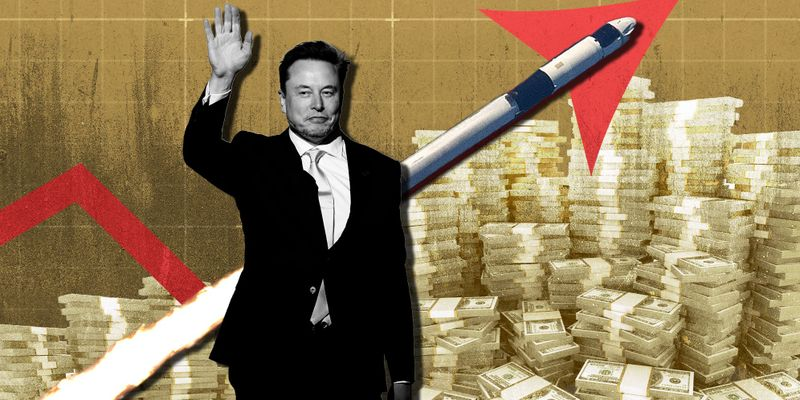
Elon Musk has reached a financial milestone once thought to exist only in science fiction. Following SpaceX’s blockbuster initial public offering (IPO), the entrepreneur behind Tesla, SpaceX, and X is poised to become the world’s first trillionaire, marking a turning point not only for financial markets but also for the broader conversation about wealth, political influence, and economic inequality.
The achievement comes after SpaceX debuted on the Nasdaq at a staggering valuation of approximately $1.77 trillion, instantly adding hundreds of billions of dollars to Musk’s net worth through his roughly 42 percent ownership stake in the company.
The number itself is almost impossible to comprehend. Yet the bigger story is not simply that Elon Musk has crossed the trillion-dollar threshold. It is what that milestone says about the modern economy, the power of technology companies, and the unprecedented concentration of wealth in the hands of a single individual.
TL;DR
- Elon Musk is expected to become the world’s first trillionaire after SpaceX’s historic IPO.
- SpaceX debuted with a valuation of about $1.77 trillion.
- Musk’s 42% ownership stake is estimated to be worth between $743 billion and $866 billion.
- Combined with his existing wealth from Tesla and other businesses, his fortune is expected to exceed $1 trillion.
- Economists say Musk may now be wealthier than any private individual in recorded modern history.
- The milestone is also renewing debates over wealth inequality, corporate power, taxation, and philanthropy.
Why is Elon Musk becoming the world’s first trillionaire?
The answer lies almost entirely in SpaceX’s explosive growth.
For years, SpaceX remained a privately held company, steadily increasing its valuation through funding rounds while dominating the commercial space launch industry. Investors also placed enormous value on Starlink, the company’s satellite internet business, along with its long-term ambitions in reusable rockets, deep-space transportation, artificial intelligence, and defense technologies.
When SpaceX finally entered the public market, investors assigned the company a valuation of approximately $1.77 trillion.
Because Musk owns around 42 percent of the company, the IPO instantly transformed his personal fortune.
Before the public listing, Bloomberg estimated Musk’s wealth at roughly $696 billion. The value unlocked through SpaceX’s IPO pushed his net worth beyond the trillion-dollar mark, assuming the stock maintained its opening valuation.
How big is $1 trillion? The numbers are almost unimaginable
One trillion dollars is difficult to visualize because it far exceeds everyday financial comparisons.
Consider these examples:
- Spending $1 million every single day would take roughly 2,740 years to exhaust $1 trillion.
- Musk’s estimated fortune would exceed the combined GDP of many developed nations.
- His wealth would be more than three times that of the world’s second-richest individual.
- A single percentage point movement in the value of SpaceX or Tesla could increase or erase tens of billions of dollars from his fortune in a matter of hours.
This highlights how modern billionaire wealth is primarily tied to company valuations rather than cash sitting in a bank account.
Why SpaceX became one of the world’s most valuable companies
SpaceX’s valuation reflects more than its rocket launches.
Reusable rocket technology
The company fundamentally changed the economics of spaceflight by developing rockets that can land and fly again, dramatically lowering launch costs.
Starlink’s global internet network
Starlink has become one of the world’s largest satellite internet providers, serving governments, businesses, military organizations, and consumers across dozens of countries.
National security partnerships
SpaceX has become a critical contractor for the U.S. government, launching military satellites, NASA missions, and national security payloads.
Long-term growth potential
Investors are also pricing in ambitious future projects, including Starship, Mars exploration, space transportation, and next-generation communications infrastructure.
These businesses extend far beyond traditional aerospace, making SpaceX part technology company, part telecommunications provider, and part defense contractor.
Is Elon Musk now the richest person in history?
Many economic historians believe so.
Comparing fortunes across centuries is challenging because inflation, purchasing power, population size, and national wealth have changed dramatically.
Still, researchers argue that Musk’s fortune surpasses that of famous industrialists such as:
John D. Rockefeller
Rockefeller built Standard Oil into one of history’s most dominant companies and was long considered America’s richest individual.
Andrew Carnegie
Carnegie transformed the steel industry before giving away most of his fortune during his lifetime.
John Jacob Astor
Astor became America’s first multimillionaire through fur trading and New York real estate.
Unlike those historical figures, Musk’s fortune represents roughly 3 percent of the current U.S. economy, giving him an economic footprint unmatched by nearly any private citizen in modern history.
Some historians note that only monarchs and emperors may have controlled greater wealth, although separating personal wealth from state resources makes those comparisons difficult.
How does Musk compare with the Gilded Age’s “Robber Barons”?
There are striking similarities.
Like the industrial titans of the late 19th century, Musk has built companies that reshaped entire industries while accumulating extraordinary personal wealth.
Common characteristics include:
- Dominating emerging industries
- Influencing government policy
- Becoming cultural and political figures
- Attracting both admiration and criticism
However, there are also important differences.
Today’s technology companies operate in global digital markets, allowing them to scale much faster than railroads, steel mills, or oil refineries ever could.
As a result, wealth can accumulate at unprecedented speed.
Why Musk’s fortune is fueling debate about inequality
The trillionaire milestone arrives during a period of growing concern over wealth concentration.
Critics argue that enormous fortunes provide outsized political influence, shape public debate, and widen the gap between the richest individuals and average workers.
Supporters counter that entrepreneurs like Musk create companies that generate innovation, employment, and economic growth while taking extraordinary financial risks.
The discussion extends beyond Musk himself and raises broader questions about:
- Corporate taxation
- Antitrust enforcement
- Executive compensation
- Stock-based wealth
- Wealth taxes
- Economic mobility
As fortunes continue to grow through rapidly appreciating technology stocks, policymakers are increasingly examining whether existing tax systems adequately address concentrated wealth.
What about philanthropy?
This is another area where Musk differs from many historical industrialists.
Andrew Carnegie famously argued in his “Gospel of Wealth” that the rich have a moral responsibility to give away their fortunes during their lifetimes. He ultimately donated roughly 90 percent of his wealth.
Similarly, Bill Gates and Warren Buffett launched the Giving Pledge to encourage billionaires to donate the majority of their wealth.
Musk signed the pledge in 2012.
However, much of his charitable giving has flowed through the Musk Foundation and donor-advised funds, with many donations supporting scientific research, education, renewable energy, and projects connected to his broader technological interests.
Critics argue that his philanthropic contributions have not matched the scale of his wealth. Supporters respond that many of his companies themselves are designed to address global challenges such as sustainable energy, internet access, and space exploration.
Could Elon Musk lose trillionaire status?
Absolutely.
Unlike traditional fortunes based largely on cash or physical assets, Musk’s wealth depends heavily on stock prices.
If SpaceX, Tesla, or his other holdings decline significantly, his net worth could fall by hundreds of billions of dollars.
Markets can change quickly.
Tesla itself lost more than 60 percent of its market value during 2022, demonstrating how rapidly paper wealth can disappear during market downturns.
That means Musk’s trillionaire status, while historic, is ultimately tied to investor confidence and corporate performance.
What this milestone means for the future
Elon Musk becoming the world’s first trillionaire represents more than a record-breaking fortune.
It illustrates how today’s technology companies can generate wealth at a scale unmatched in previous eras. It also reflects the growing importance of private companies in industries once dominated by governments, including space exploration, artificial intelligence, telecommunications, and defense.
Whether Musk’s wealth ultimately becomes a symbol of innovation or inequality will depend on how his companies evolve, how governments respond, and how society chooses to address the growing concentration of economic power.
One thing is already clear: the trillionaire era has begun, and it is likely to reshape debates about capitalism, taxation, philanthropy, and corporate influence for years to come.