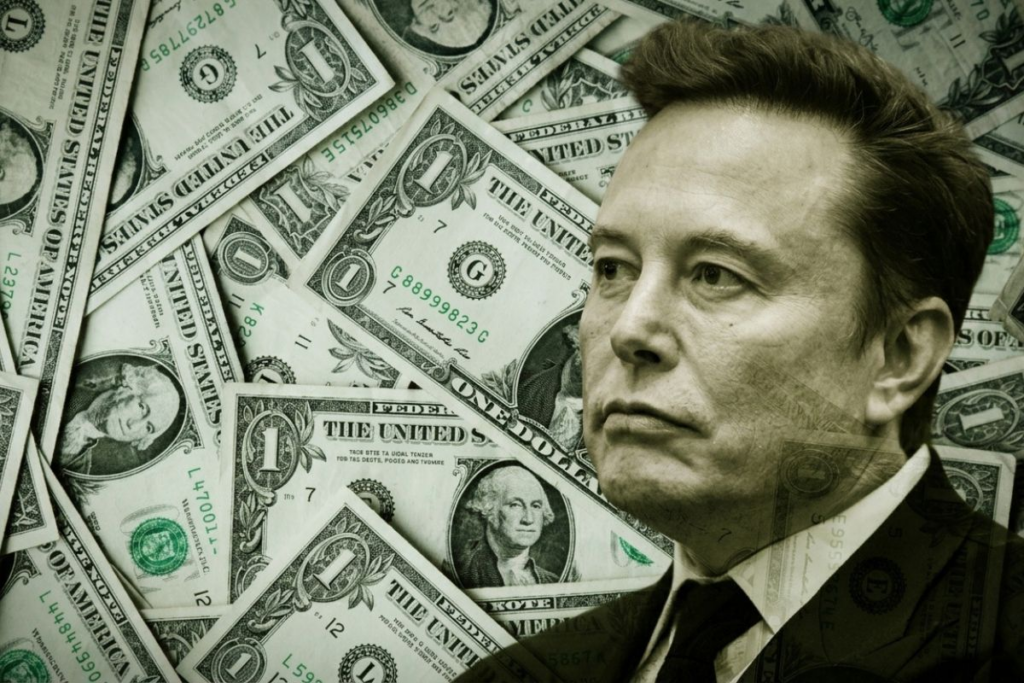
Elon Musk has entered uncharted financial territory. Following SpaceX’s blockbuster stock market debut, the Tesla and SpaceX CEO has become the world’s first trillionaire, with an estimated net worth of $1.1 trillion, according to Forbes.
A trillion dollars is a figure so large that it defies everyday understanding. It’s bigger than the annual economic output of most countries, enough to buy millions of homes, and more than enough to reshape entire industries.
Here’s what Musk’s historic fortune looks like when broken down into real-world numbers.
How did Elon Musk become the world’s first trillionaire?
The biggest catalyst behind Musk’s historic wealth milestone was SpaceX’s initial public offering (IPO).
The company debuted on the Nasdaq at an IPO price of $135 per share, but trading quickly pushed the stock to around $150, significantly increasing the value of Musk’s ownership stake.
Combined with his holdings in Tesla and other ventures, the rally pushed his estimated fortune to approximately $1.1 trillion, according to Forbes.
It’s important to note that Musk’s wealth is not held in cash. Most of it exists as the market value of shares in companies he owns or controls, meaning it can rise or fall dramatically with stock prices.
How big is $1.1 trillion?
Writing the number helps illustrate its scale:
$1,100,000,000,000
That’s 1 followed by 12 zeroes.
Even then, the figure remains difficult to comprehend.
One way to visualize it is through U.S. dollar bills.
According to estimates based on NASA’s Earth-Moon distance:
- One trillion $1 bills laid end to end would stretch roughly 97 million miles.
- That’s enough for more than 200 round trips between Earth and the Moon.
- The line would even extend beyond the average distance between the Earth and the Sun, approximately 93 million miles.
What could Elon Musk buy with $1.1 trillion?
To understand the purchasing power of Musk’s fortune, consider a few everyday comparisons.
Nearly 2.5 million homes
Using the median U.S. home price of roughly $403,200, a fortune of $1.1 trillion could purchase approximately the following:
- 2.7 million median-priced homes
That’s enough housing to accommodate millions of families.
Around 243 billion gallons of gasoline
At an average U.S. gasoline price of about $4.11 per gallon, one trillion dollars could buy approximately the following:
- 243 billion gallons of fuel
For perspective, Americans consumed roughly 137 billion gallons of finished motor gasoline during the entire recent year.
Enough money to give everyone cash
If Musk’s estimated fortune were distributed equally among the world’s 8.2 billion people:
- Every person would receive approximately $122.
While that amount would not eliminate global poverty, it illustrates the enormous scale of a trillion-dollar fortune.
Bigger than the economies of most countries
Musk’s personal wealth now exceeds the annual gross domestic product (GDP) of many nations.
According to International Monetary Fund (IMF) estimates:
- South Africa, Musk’s birth country, has an economy worth roughly $480 billion.
- Musk’s fortune is therefore more than double South Africa’s GDP.
Only around 20 to 25 countries currently produce more than $1 trillion in annual economic output.
Among the largest economies:
- United States: approximately $32.4 trillion
- China: approximately $20.9 trillion
Most nations fall well below the trillion-dollar threshold.
How much richer is Musk than other billionaires?
The gap between Musk and the rest of the world’s richest people has widened dramatically.
According to Forbes estimates:
| Billionaire | Estimated Net Worth |
|---|---|
| Elon Musk | $1.1 trillion |
| Larry Page | ~$293 billion |
| Sergey Brin | Below $300 billion |
| Jeff Bezos | Below $300 billion |
| Larry Ellison | Below $300 billion |
Remarkably, the combined fortunes of Larry Page, Sergey Brin, Jeff Bezos, and Larry Ellison total only slightly more than Musk’s personal wealth.
Why a trillion-dollar fortune isn’t the same as cash
Although headlines focus on Musk’s trillion-dollar net worth, the figure represents the estimated market value of his assets.
Most of his wealth consists of:
- SpaceX shares.
- Tesla stock.
- Ownership stakes in private companies.
- Other investments and holdings.
Selling even a small portion of those shares could affect market prices, meaning the full amount cannot simply be converted into cash overnight.
Likewise, market downturns can erase tens of billions of dollars from a billionaire’s net worth in a matter of days.
Why this milestone matters
Crossing the trillion-dollar mark is more than a personal achievement. It reflects the extraordinary rise in the value of technology companies, private space exploration, and artificial intelligence-driven businesses over the past decade.
It also highlights the growing concentration of wealth among the world’s richest entrepreneurs, renewing debates over inequality, taxation, corporate influence, and the role of billionaire-led innovation in the global economy.
Whether Musk remains above the trillion-dollar threshold will ultimately depend on market performance, but reaching the milestone marks a historic first in modern financial history.
TL;DR
- Elon Musk’s estimated net worth has crossed $1.1 trillion, making him the world’s first trillionaire.
- The milestone follows SpaceX’s Nasdaq debut, where shares surged above the IPO price.
- His fortune exceeds the GDP of most countries.
- It could buy approximately 2.5 million U.S. homes or 243 billion gallons of gasoline.
- If divided equally, every person on Earth would receive roughly $122.
- Despite its size, Musk’s wealth is largely tied to the value of his company shares and can fluctuate significantly.