
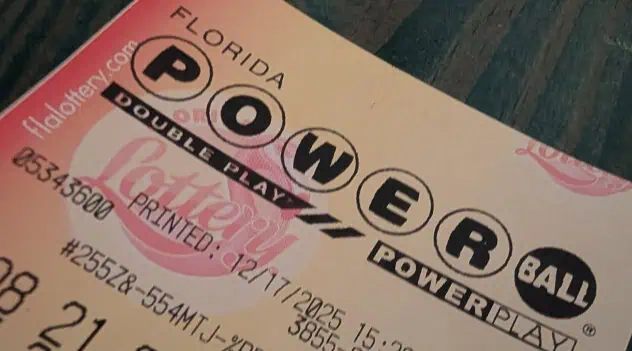
The Powerball jackpot has ballooned to an eye-popping $1.5 billion, cementing its place as the fifth-largest prize in the lottery’s history and turning the days before into a season of high-stakes hope. With no ticket matching all six numbers in Wednesday night’s drawing, the pot continues its relentless climb, fueled by weeks of rollovers and millions of $2 tickets sold nationwide.
For players, the question is simple: could this be the one? For everyone else, the surge raises a different set of questions about odds, money, and what these massive jackpots really mean.
Why has the Powerball jackpot reached $1.5 billion?
The current jackpot has grown the old-fashioned way: nobody has won it.
A record-breaking rollover streak
Wednesday’s drawing marked the 44th straight drawing without a jackpot winner, pushing Saturday’s draw to the 45th of this cycle. According to Powerball officials, that breaks the record for the most drawings in a single jackpot run.
The winning numbers for the estimated $1.27 billion prize on December 17 were
- 25
- 33
- 53
- 62
- 66
- Red Powerball: 17
No ticket matched all six numbers, triggering another rollover and sending the jackpot soaring to an estimated $1.5 billion, with a cash option of $686.5 million.
How ticket sales drive the jackpot higher
Powerball jackpots grow with each drawing that goes unwon, but ticket sales play an equally important role. Every $2 ticket contributes to the prize pool, creating a feedback loop: bigger jackpots attract more players, and more players push jackpots even higher.
“This jackpot is set to deliver the ultimate windfall,” said Matt Strawn, chair of the Powerball Product Group and CEO of the Iowa Lottery. He also emphasized that lottery revenue supports state-level public programs and services.
How big is this jackpot compared to past Powerball prizes?
At $1.5 billion, this jackpot sits comfortably among lottery royalty.
The five largest Powerball jackpots
If won, Saturday’s drawing would rank as the fifth-largest jackpot in Powerball history. For context:
- The largest Powerball jackpot ever was $2.04 billion, won by Edwin Castro in California in November 2022.
- The most recent jackpot win came on September 6, when two tickets in Missouri and Texas split a $1.787 billion prize.
- That September win marked only the second time Powerball produced back-to-back jackpots exceeding $1 billion.
The only other instance of consecutive billion-dollar jackpots occurred in 2023, when California players claimed prizes of $1.08 billion in July and $1.765 billion in October.
Who won prizes in the latest drawing?
While no one claimed the jackpot, several players walked away with life-changing sums.
Million-dollar winners across six states
Six tickets matched the five white balls, earning $1 million each. Those tickets were sold in:
- New York (three winners)
- Connecticut
- Pennsylvania
- Tennessee
In New York, the winning tickets were purchased at convenience stores in Elmont, Newburgh, and Astoria, Queens.
Two additional tickets sold in Arizona and Massachusetts also matched the five white balls. Thanks to the Power Play option, their prizes doubled to $2 million each.
What are the odds of winning Powerball?
This is where the dream collides with math.
Jackpot odds versus smaller prizes
The odds of winning the Powerball jackpot are approximately 1 in 292.2 million. To put that in perspective, you are statistically more likely to be struck by lightning in your lifetime than to hit the jackpot.
However, the odds of winning any Powerball prize are much better, at about 1 in 24.9. That includes smaller payouts for matching a few numbers or the Powerball alone.
For readers, a table comparing jackpot odds to other common risks could help frame these numbers in more relatable terms.
Cash option or annuity: what does $1.5 billion really mean?
The headline number grabs attention, but the actual payout depends on how a winner chooses to receive the prize.
Lump sum versus long-term payments
The advertised $1.5 billion reflects the annuity value, paid out over 30 years in annual installments. The cash option, which most winners choose, is estimated at $686.5 million before taxes.
After federal taxes and potentially state taxes, depending on where the ticket was purchased, the take-home amount could be significantly lower. Still, it would rank among the largest single cash payouts in U.S. lottery history.
Why do billion-dollar jackpots capture America’s attention?
These massive jackpots are not just about money. They are cultural events.
The psychology of the long shot
Behavioral economists often describe lottery tickets as a form of “hope purchase.” For $2, players buy a brief window of possibility, imagining a life free from financial stress.
As jackpots grow, the fantasy becomes more vivid. Office pools form. Convenience stores see lines stretch down the aisle. Even people who rarely play decide to take a chance.
That shared moment of anticipation is part of what keeps lotteries relevant, even when the odds are overwhelmingly against winning.
Where does the lottery money go?
Powerball officials regularly emphasize that ticket sales support public programs, but the details vary by state.
Funding schools, infrastructure, and more
In many states, lottery revenue helps fund:
- Public education
- Transportation projects
- Environmental conservation
- Veterans’ programs
Critics argue that lotteries function as a regressive form of revenue, disproportionately funded by lower-income players. Supporters counter that participation is voluntary and the funds support essential services.
A sidebar breaking down lottery spending in major states like New York, California, and Texas would add depth to this discussion.
What happens next if someone wins on Saturday?
If Saturday’s drawing produces a jackpot winner, the immediate aftermath will be intense.
The first steps for a new billionaire
Winners are typically advised to:
- Sign the ticket and store it securely.
- Consult a lawyer and financial advisor before claiming the prize.
- Take time to decide between the cash option and the annuity.
- Prepare for sudden public attention, depending on state disclosure laws.
If no one wins, the jackpot will continue to climb, potentially setting up another historic drawing before the end of the year.
TL;DR
- The Powerball jackpot has reached $1.5 billion after 44 consecutive drawings without a winner.
- Saturday’s draw will be the 45th of the cycle, a Powerball record.
- The cash option is estimated at $686.5 million before taxes.
- Jackpot odds remain 1 in 292.2 million, but smaller prizes are far more common.
- If won, this would be the fifth-largest Powerball jackpot ever.