
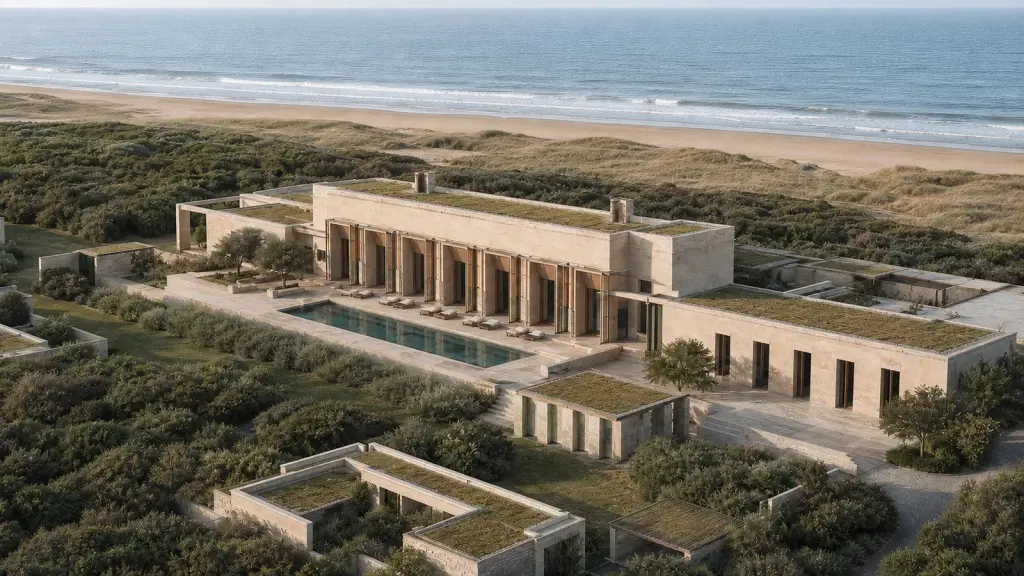
Praxis has announced plans to develop technology-focused communities in Uruguay, combining artificial intelligence (AI), cryptocurrency and a vision of an internet-native society. The initiative will begin at +Colonia, a waterfront development near Colonia del Sacramento, with the company planning to mobilize $1 billion in investment over the next three years.
The first residents are expected to arrive in mid-2027. According to the proposed vision, the community will feature homes, hospitality facilities and cultural institutions designed around a future shaped by artificial general intelligence (AGI).
The project places Praxis among a group of organizations seeking to establish physical communities built around technology, decentralized systems and shared principles rather than relying entirely on conventional municipal structures.
Its plans also raise broader questions about how AI could reshape cities, employment, investment and the relationship between digital communities and the countries in which they operate.
What is Praxis planning to build in Uruguay?
The initial phase of the initiative will focus on +Colonia, a waterfront urban development site adjoining Colonia del Sacramento.
Praxis plans to bring together international capital, technology-focused businesses and residents in a community that combines modern infrastructure with Uruguay’s existing cultural and economic environment.
The company expects the proposed $1 billion investment initiative to support several areas, including:
- Residential development and housing.
- Infrastructure needed to support the community.
- Hospitality facilities and services.
- Cultural institutions and venues.
- Commercial spaces and opportunities for businesses.
The first residents are expected to move in around mid-2027, although the project’s development schedule and the delivery of individual facilities will depend on how construction and planning progress.
Rather than presenting the development solely as a technology hub, Praxis has emphasized a broader residential vision. Its plans place architecture, hospitality, culture and the surrounding landscape alongside technology as central features of the community.
The project is intended to connect international investment and talent with Uruguay’s creative industries, local businesses and established communities.
Why did Praxis choose Uruguay?
Praxis says it selected Uruguay because of the country’s natural surroundings, political and economic stability, democratic institutions and the opportunity to work with an established development partner.
The location also offers a connection to the Río de la Plata region, including Buenos Aires across the water. That geography could make +Colonia accessible to international residents while keeping the development connected to an existing urban center.
The choice of Uruguay is significant because Praxis is not proposing to establish a community in a legal vacuum. Its stated approach is to build a technology-oriented community within an existing country’s institutions and regulatory framework.
The development’s relationship with local partners will therefore be important to its progress. Praxis has said it intends to work with Uruguayan construction companies, suppliers, architects, artists and cultural and educational organizations.
What role will local businesses play?
The company says the project is intended to create opportunities for local workers and enterprises as development advances.
Potential areas of participation include:
- Construction and infrastructure work.
- Hospitality, dining and wellness services.
- Architecture, landscaping and design.
- Cultural programming and creative projects.
- Partnerships with educational and cultural institutions.
These are proposed areas of engagement, rather than confirmed employment figures or finalized partnership programs. The scale of any local economic impact will depend on the development’s implementation and the extent to which planned investment becomes actual construction and operating activity.
What will life in the Praxis community look like?
Praxis describes a residential environment where architecture, hospitality, culture and the waterfront setting are central to everyday life.
The company says its vision draws on the privacy, service and architectural attention associated with high-end resorts, while seeking to make those features part of a permanent residential community.
Its proposed homes and shared spaces are expected to emphasize:
- Generous living spaces and natural materials.
- Landscaped surroundings and a close relationship with the waterfront.
- Dining, wellness and hospitality services.
- Cultural institutions and spaces for creative activity.
- Opportunities for residents to interact and build a community.
The intention is to create a place where residents do more than work in technology-related businesses. Praxis wants the physical environment and social institutions to help define the experience of living there.
However, the company has not provided a complete account of which facilities will be ready when the first residents arrive. The mid-2027 date is a stated expectation, not confirmation that every element of the proposed community will be completed by then.
How does artificial general intelligence fit into Praxis’s vision?
Praxis is building its long-term vision around the possibility that artificial general intelligence could fundamentally change how economies function and how people spend their time.
AGI generally refers to a hypothetical form of AI capable of performing a broad range of intellectual tasks at a level comparable to human capabilities. It remains a developing concept, and there is no guarantee that the economic transformation envisioned by Praxis will occur on the company’s preferred timeline.
The organization believes that increasingly capable AI systems could automate much of the economic work currently performed by people. In that scenario, traditional employment might become less important in determining where people live.
Praxis argues that other factors could consequently become more influential, including:
- The quality of the surrounding environment.
- Architecture and residential design.
- Access to culture, recreation and hospitality.
- Opportunities to form close-knit communities.
- The availability of institutions that give residents a sense of purpose.
The company wants to create a physical setting that reflects this anticipated shift. Its broader ambition is to channel some of the wealth generated by technological progress into lasting communities, cultural institutions and opportunities.
That vision remains a projection about the future rather than an established outcome of AI development. Whether AGI emerges in the form Praxis anticipates, and whether it produces the economic changes the company expects, are open questions.
Is Praxis trying to establish a new country?
Praxis describes its ambition in terms of creating an internet-native or digital nation: a community that begins online and seeks to establish a physical presence.
The model places an emphasis on decentralized coordination, technology and shared principles. Rather than starting with a conventional municipality, the organization seeks to bring together people who want to participate in a common project and build a physical community around it.
Cryptocurrency and blockchain technology are associated with this broader approach because they can provide tools for digital transactions and coordination. However, their presence does not, by itself, establish a separate sovereign state.
In Uruguay, the project is being developed within the country’s existing legal and institutional framework. Praxis’s stated plans should therefore be distinguished from the creation of an internationally recognized independent country.
The development’s practical governance arrangements, the powers available to its community and the relationship between private coordination systems and Uruguayan law will be important issues as the project advances.
What are the biggest questions surrounding the project?
Despite the scale of the announcement, several details remain to be established.
First, the investment is projected, not fully completed. The $1 billion figure describes the planned investment over the coming years. It should not be interpreted as money already spent or as a guarantee that the entire amount has been secured.
Second, the construction schedule remains important. The expected arrival of residents in mid-2027 will depend on housing availability, infrastructure and the progress of development.
Third, local economic benefits will depend on implementation. Construction jobs, supplier contracts and cultural partnerships are potential outcomes, but their scale cannot be determined from the announcement alone.
Finally, the project’s long-term technological assumptions remain uncertain. Praxis’s vision depends in part on a future in which AGI substantially changes work, wealth and urban life. That future has not yet been established.
These questions do not change what Praxis has announced, but they help distinguish its ambitions from the outcomes that have already been achieved.
What happens next?
The next stages will involve translating the announcement into property transactions, construction, infrastructure and resident arrivals.
The first residents are expected in mid-2027, while the broader investment plan is intended to unfold over three years. Further information about construction milestones, local partnerships, facilities and the project’s operating arrangements will help clarify how the vision develops.
For now, Praxis’s Uruguay initiative represents an attempt to turn an online technology community into a physical place to live and work. Its progress will depend not only on attracting residents and investment, but also on delivering housing, infrastructure and institutions within Uruguay’s existing legal framework.