
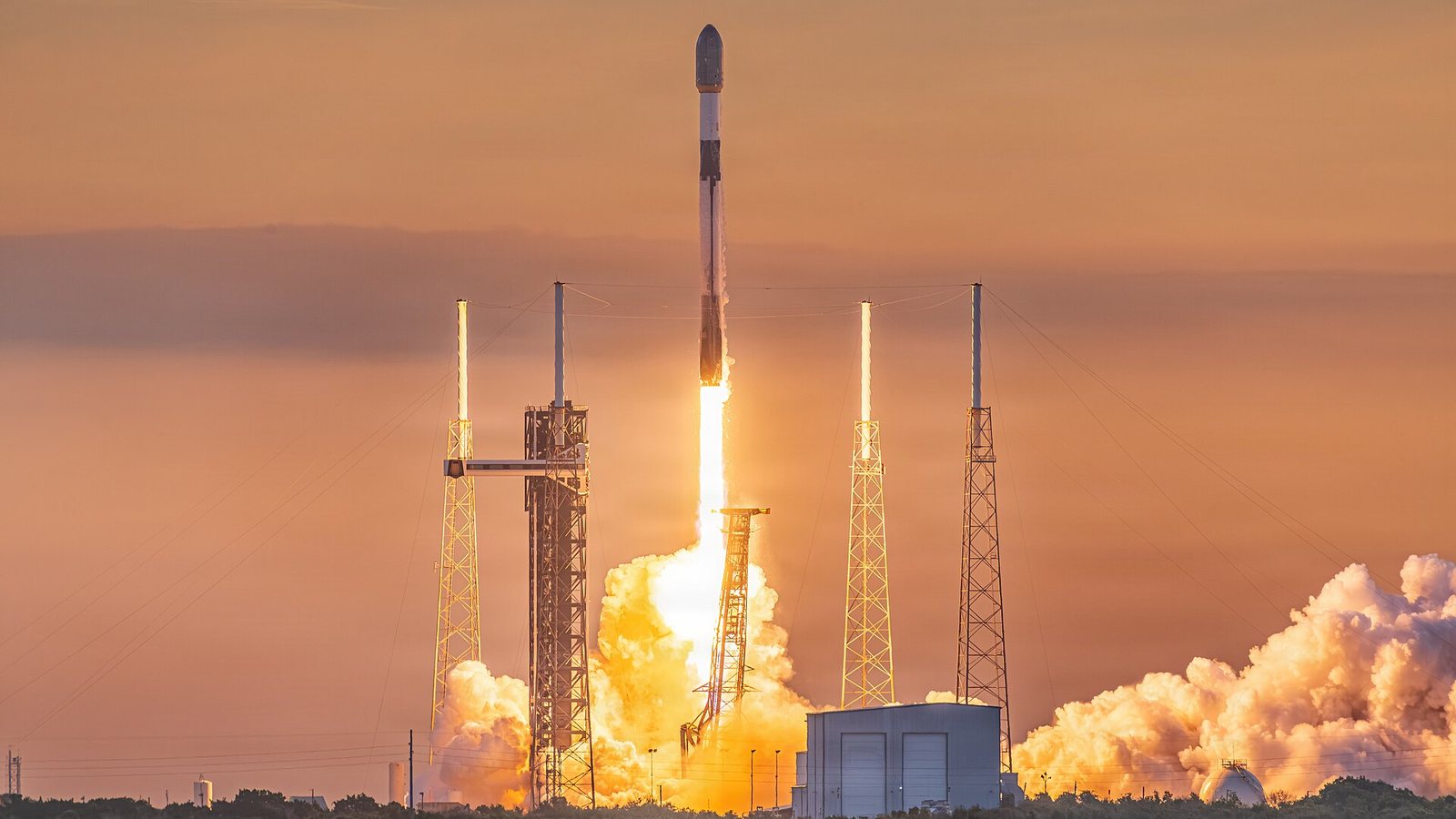

SpaceX lenders tried to write a ban on launching their collateral into space. The Financial Times reported on Nov. 20 that investors in the company’s Nvidia chip financing, known as Project Saturn, wanted terms that keep the pledged chips out of orbit. Their reason is simple: hardware in orbit can’t be repossessed after a default.
Whether that restriction reached the final documents is unclear, according to the FT’s account as summarized by Dealroom and other outlets. SpaceX says the chips will run on Earth. It did not respond to the FT, and Apollo, Goldman Sachs and Pimco declined to comment.
The worry is less far-fetched than it sounds. The chips in this deal are Nvidia’s Vera Rubin systems. Elon Musk has said SpaceX built a space version of exactly that hardware for its planned orbital data centers.
A lease on chips SpaceX doesn’t own
The deal began with a Form 8-K filed on Oct. 26. SpaceX said it signed a binding commitment on Oct. 24 for a master finance lease. An entity managed by Apollo Global Management buys “graphics processing unit pods and related equipment” and leases them to SpaceX.
SpaceX expects principal payments to total about $40 billion. Equipment arrives in tranches, each on a lease of five to five and a quarter years.
Quarterly rent covers one-twentieth of a tranche’s cost plus interest, which pays the debt off over the term. The lease should close before year end, and the schedules start in the first half of 2027 as GPUs arrive.
Apollo’s announcement the same day called it the largest GPU financing ever. Goldman Sachs was sole structuring agent, and BlackRock, Goldman Sachs Asset Management and KKR-advised accounts made anchor commitments.
The chips, Apollo said, are Vera Rubin units “for SpaceX’s terrestrial compute buildout.”
The bonds come from Saturn Funding Trust, a special-purpose entity owned by WHCO. KBRA says WHCO is an asset-backed lender unaffiliated with SpaceX.
On Nov. 16, KBRA gave preliminary A- ratings to about $27.2 billion of senior notes and $2.4 billion of subordinated notes. It called the lease triple-net and “hell-or-high-water”: SpaceX owes the rent whatever happens to the equipment.
Why the number keeps changing
Readers will see $32 billion, $40 billion and $43 billion attached to the same deal. They measure different things.
About $40 billion is SpaceX’s own estimate of lease principal, from the 8-K. The FT put the whole debt package at $43 billion.
Bloomberg, as cited by 24/7 Wall St., reported a $32 billion bond sale on Thursday, Nov. 19. That sale is part of a roughly $40 billion package that also includes bank loans.
Headlines describing “$43 billion worth of chips” get it backwards. That figure is debt, not the hardware’s value. No report says SpaceX planned to launch the financed chips.
The price tells its own story. The largest tranche, about $25 billion, yielded roughly 8.3%, or about 3.45 percentage points over Treasuries, the FT reported.
SpaceX’s own bonds due 2031 yield about 7.2%. Investors wanted more for the lease-backed notes than for SpaceX’s direct debt, even though Moody’s reportedly rated the notes A3, one notch above the company.
Starmind uses the same chips
Lenders didn’t conjure the orbital scenario. On Jan. 30, SpaceX asked the Federal Communications Commission to approve up to one million data center satellites, flying 500 to 2,000 kilometers up.
The FCC’s Space Bureau accepted the application for filing on Feb. 4 and asked for comment, which is not an approval.
The hardware link came in August, when Musk wrote on X that SpaceX and Nvidia had designed “a space-optimized Vera Rubin NVL72 system for launch to orbit in Q4 next year,” Light Reading reported.
That system powers Starmind AI1, the first satellite in the planned network. The Saturn collateral, per KBRA, is Vera Rubin NVL72 equipment.
Here is the gap a cautious lender would notice. The 8-K says the equipment is “for use at data centers selected by the Company.” It does not say those data centers are on the ground.
The “terrestrial” language sits in Apollo’s press release. Moody’s, too, describes US data centers that SpaceX majority-owns, controls and operates. Neither is a covenant.
A repossession clause is only as good as the lender’s reach. Lenders can seize a rack in a US data center and sell it to another AI company.
A rack in orbit is worth only what its owner can do with it from the ground. After a default, that is close to nothing.
AI now drives SpaceX’s revenue and its spending
The financing matters because AI is now most of SpaceX’s business. In the third quarter, its AI segment brought in $7.6 billion of $14.6 billion in revenue, TechCrunch reported.
That segment includes Grok, the Cursor coding tool and cloud compute. Capital spending hit nearly $20 billion, and SpaceX guided to $35 billion to $40 billion for the fourth quarter.
Chief Financial Officer Bret Johnsen cited “less than one year payback periods” on that infrastructure in October. Shareholders were less patient after the FT story.
SpaceX stock, listed on Nasdaq as SPCX, fell 5% to $131.16 on the morning of Nov. 20. That put it below its IPO price, according to 24/7 Wall St.
Building on the ground has its own limits. Data center projects lost 37 of the first 38 local ballot votes counted after the Nov. 3 elections.
That resistance feeds the case for orbit. Smaller companies make the same case, including one with a rocket stage designed to become a data center.
What lenders and shareholders watch next
The master lease is due to close by Dec. 31. The signed document should show whether lenders got their orbit ban. The first lease schedules start in the first half of 2027, when the GPUs arrive.
Musk’s Q4 2027 target for the first Starmind launch depends on Starship. The rocket is still in testing, including the first upper-stage catch attempt. Until the signed lease is public, the only written assurances that these chips stay on the ground come from a press release and a rating agency.