What was RaptureTok and why did it go viral?
Earlier this year, social media was abuzz with claims that the world would end on September 23, fueled by the viral hashtag #RaptureTok. South African pastor Joshua Mhlakela shared a YouTube video asserting that the Rapture—a moment when Christians would be taken up to heaven, leaving others behind—would occur on this date.
Some followers reportedly sold personal belongings, claiming they were “catching a flight to heaven.” The frenzy exemplifies how social media can amplify apocalyptic predictions, even when they come from a small subset of largely evangelical Christians.
The Rapture, according to these believers, is a time of trials and tribulations: Christians ascend to heaven while the rest of the world faces suffering. Yet, when September 23 arrived, the event did not occur. Believers acknowledge that the Bible does not assign a specific date for the Rapture, though they maintain it will happen eventually.
A new doomsday prediction: comet or asteroid in 2026
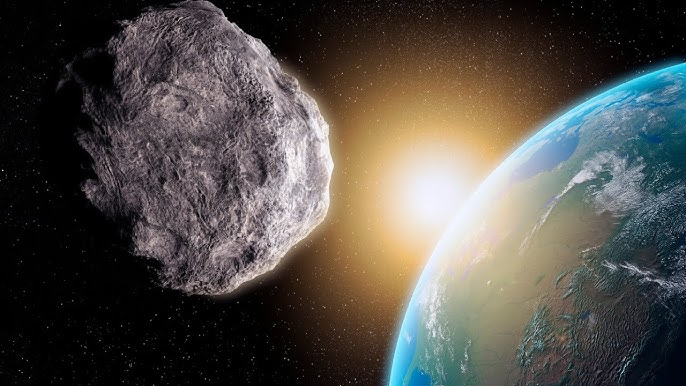
As the hype around September 23 fades, attention has shifted to another prediction, this time linked to a celestial event. Religious leader Riaz Ahmed Gohar Shahi claims in his book The Religion of God that a comet or asteroid will strike Earth in 2026, causing catastrophic destruction.
Shahi, born in Pakistan, founded the spiritual group RAGS International, now known as Messiah Foundation International (MFI). His teachings, which claim he is the Mahdi, Messiah, and Kalki Avatar—figures believed to arrive at the end of times—have been condemned as blasphemous by Muslim scholars, and his books are banned in Pakistan.
According to Shahi, the comet would bring “total destruction,” but its scale would be limited, as God intends only to intimidate humanity rather than annihilate it completely.
What science says about the 2026 asteroid claims
Despite these predictions, space agencies have not identified any imminent asteroid or comet threats to Earth. For context:
- Apophis, once thought to pose a danger in 2029, has a confirmed trajectory that will not bring it near Earth.
- Near-Earth asteroid 2024 YR4 was previously deemed a potential threat in 2032 but is now expected to miss Earth and possibly hit the Moon instead.
NASA and other agencies continuously monitor near-Earth objects (NEOs) to ensure public safety. As of now, there is no scientific evidence supporting a 2026 doomsday event.
Rapture and the Bible: why predictions keep coming
Apocalyptic predictions are not new. Throughout history, numerous individuals and groups have attempted to forecast the end of the world. The Rapture and the Shahi comet claims are just the latest examples.
- Rapture believers insist that the Bible does not provide a specific date, making any prediction speculative.
- Others report being exposed to such stories from childhood, often causing anxiety or fear.
- Previous predicted dates for the Rapture have come and gone without incident, yet the belief endures.
Experts suggest that social media has amplified the reach of these predictions, enabling them to gain followers quickly and sometimes result in real-world actions, like selling belongings or making extreme lifestyle changes.
The psychology of doomsday predictions
Why do people continue to believe in apocalyptic forecasts despite repeated failures? Psychologists point to several factors:
- Cognitive bias: People tend to remember hits and forget misses, reinforcing belief in prophecy.
- Social validation: Online communities create echo chambers where believers reinforce each other’s fears.
- Control in uncertainty: Apocalyptic predictions offer a sense of order in a chaotic world, giving adherents a feeling of foresight.
The recent RaptureTok craze and the 2026 asteroid prophecy illustrate how digital platforms can accelerate anxiety and spread misinformation rapidly.