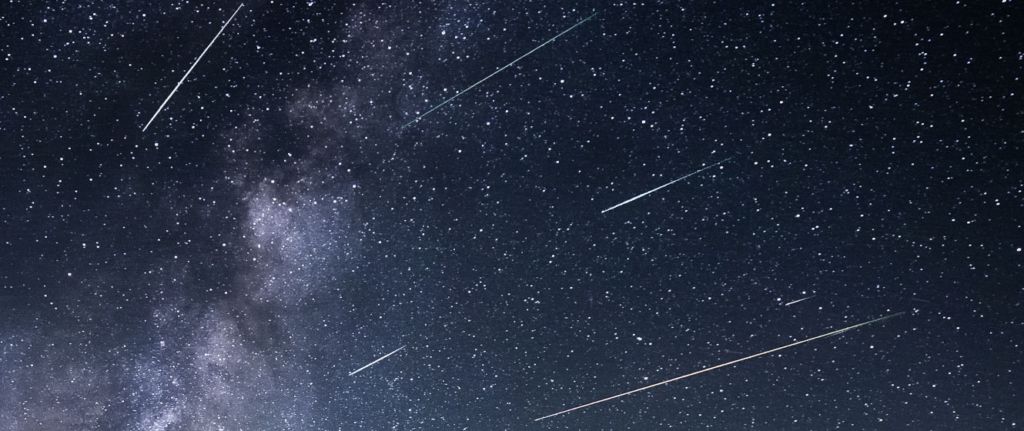
A wave of bright fireballs streaked across skies worldwide in March and early April, sparking confusion and, in some places, outright alarm. Now, a NASA researcher say those sightings were not random. They were part of a newly identified meteor shower, dubbed M2026–A1, created by an asteroid that is slowly breaking apart under the Sun’s intense heat. The bigger revelation: Earth is currently moving through the debris trail left behind, a kind of cosmic wake that’s still evolving.
What is the meteor shower M2026–A1?
Meteor shower M2026–A1 is a newly discovered stream of meteors identified by researchers analyzing global observation data. Unlike well-known showers that return like clockwork each year, this one appears to be relatively fresh, possibly formed in the recent past on astronomical timescales.
The key facts:
- Active window: March 16 to April 7 annually
- Identified from: A cluster of 282 meteors detected across global sky-monitoring networks
- Observations came from: Canada, Japan, Europe, and the United States
- Likely source: A disintegrating asteroid, not a traditional comet
This last point is what makes M2026–A1 especially interesting. Most meteor showers, like the Perseids or Orionids, originate from comets shedding icy debris. This one appears to come from something more unusual.
Why were so many fireballs seen in March?
The surge in fireball sightings likely comes down to timing and trajectory. Earth is currently passing through a dense portion of debris shed by the parent object.
What are fireballs, exactly?
Fireballs are exceptionally bright meteors. They occur when larger fragments of space debris enter Earth’s atmosphere and burn up, producing intense light and sometimes sonic booms.
In March and early April, sightings were reported across:
- Ohio and Texas in the U.S.
- Turkey
- Australia
- New York and surrounding regions
The geographic spread suggests a widespread debris field intersecting Earth’s orbit rather than isolated, local events.
Why now?
Researchers believe the debris field is relatively new and still compact. That increases the odds of Earth encountering concentrated clusters of material, resulting in more frequent and brighter meteor events.
How does a “rock–comet” create a meteor shower?
The parent object behind M2026–A1 falls into a rare category sometimes described as a “rock–comet.” It behaves like a hybrid between an asteroid and a comet.
The science behind it
Traditional differences:
- Comets: Made of ice and dust, form tails when heated
- Asteroids: Rocky, typically inert
But under extreme conditions, asteroids can act like comets.
What’s happening here:
- The asteroid moves very close to the Sun
- Intense heat cracks its surface
- Trapped gases escape
- The object begins to crumble
- Dust and fragments spread along its orbit
This process creates a debris stream similar to a comet’s tail, but without the icy composition.
Why haven’t scientists found the asteroid yet?
Despite identifying the debris stream, researchers have not yet pinpointed the exact parent asteroid. That might sound surprising, but it’s not unusual.
Possible reasons:
- The object may have already fragmented into smaller pieces
- Its orbit may keep it too close to the Sun for easy observation
- It could be faint or obscured by solar glare
In simple terms, scientists are tracking the breadcrumbs without yet seeing the loaf.
This is where follow-up observations and space-based telescopes become critical.
Why this discovery matters
At first glance, a new meteor shower might seem like a curiosity for stargazers. But the implications go deeper.
1. It reveals how asteroids break apart
This is a real-time example of thermal fragmentation, where solar heat physically destroys a rocky object. That helps refine models of how near-Sun objects behave.
2. It improves impact risk assessment
Understanding debris streams helps scientists:
- Predict future meteor activity
- Assess potential hazards from larger fragments
- Improve early warning systems
While most meteors burn up harmlessly, larger pieces can reach the ground.
3. It expands how we classify space objects
The idea of a “rock–comet” challenges traditional categories. Space doesn’t always fit into neat labels, and discoveries like this force scientists to rethink classifications.
Could more fireballs be coming?
Yes, at least in the short term.
Researchers suggest that as long as Earth continues to pass through this debris field, observers can expect:
- Increased meteor activity during late March to early April
- Occasional bright fireballs outside the peak window
- Potential annual recurrence as the debris spreads along the orbit
That said, the intensity may change year to year as the debris disperses.
If you’re watching the skies, the best viewing conditions remain:
- Dark, clear skies away from city lights
- Post-midnight hours when your location faces Earth’s direction of travel
How does M2026–A1 compare to famous meteor showers?
Here’s how it stacks up:
| Feature | M2026–A1 | Perseids | Orionids |
|---|---|---|---|
| Origin | Asteroid (“rock–comet”) | Comet Swift-Tuttle | Halley’s Comet |
| Predictability | Emerging | Highly predictable | Highly predictable |
| Brightness | High (fireballs reported) | Moderate to high | Moderate |
| History | Newly discovered | Known for centuries | Known for centuries |
What scientists will study next
The discovery opens several lines of investigation:
- Pinpointing the parent asteroid
- Measuring how quickly the debris field is expanding
- Determining whether larger fragments pose any risk
- Modeling how often similar events occur
Expect more updates as additional data comes in from sky-monitoring networks and space telescopes.
TL;DR
- Scientists have identified a new meteor shower, M2026–A1
- It likely caused the surge of fireballs seen in March and April
- The source is a disintegrating asteroid behaving like a comet
- Earth is currently passing through its debris field
- More meteor activity is expected in the coming weeks and in future years