
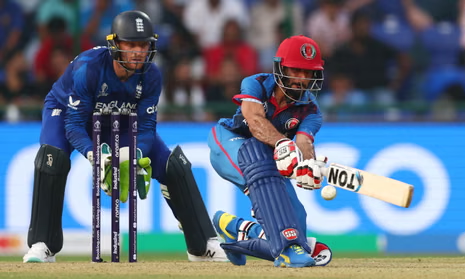
English cricketers registered for the Afghanistan Premier League have been urged to reconsider taking part in the men’s T20 tournament, as scrutiny grows over the treatment of women and girls under Taliban rule.
Ollie Pope and Luke Wood are among seven English players listed for the league’s draft, alongside Moeen Ali, Reece Topley, James Vince, Tom Kohler-Cadmore and Laurie Evans. The five-team Afghanistan Premier League is scheduled to begin in the United Arab Emirates on December 27, although the tournament still requires International Cricket Council approval.
The controversy stems from a distinction in the England and Wales Cricket Board’s policy. The ECB has refused to arrange bilateral men’s cricket against Afghanistan because of the Taliban’s treatment of women and girls, but that position does not automatically prevent English players from joining overseas franchise competitions.
The issue has now drawn criticism from British politicians and Amnesty International, turning the proposed franchise league into another test of how cricket should respond to Afghanistan’s political and human-rights situation.
What is the Afghanistan Premier League?
The Afghanistan Premier League, or APL, is a planned five-team men’s T20 franchise competition organized by the Afghanistan Cricket Board.
The league is being relaunched after Afghanistan’s earlier APL tournament, which was played in 2018. The new edition is scheduled to be staged in the UAE, allowing an international group of players to participate while Afghanistan remains the competition’s host cricketing board.
The ACB has applied to the ICC for approval. That approval is significant for the English players because the ECB is expected to consider their No Objection Certificates if the competition receives the necessary sanction.
Which English players have entered the APL draft?
Seven English players have registered for the October draft:
- Ollie Pope
- Luke Wood
- Moeen Ali
- Reece Topley
- James Vince
- Tom Kohler-Cadmore
- Laurie Evans
Pope and Wood are particularly notable because they are centrally contracted England players. Their possible participation has therefore attracted greater attention than the involvement of players operating outside the national setup.
Importantly, registration does not mean that any player has been selected by a franchise or will definitely appear in the competition.
Why is the ECB facing questions?
The ECB’s position creates a distinction between bilateral international cricket and franchise cricket.
England has declined to schedule bilateral men’s cricket against Afghanistan because of the Taliban’s restrictions on women and girls. The board has also publicly supported programs for Afghan women cricketers who were displaced after the Taliban returned to power in 2021.
At the same time, the ECB’s policy does not automatically extend to overseas franchise competitions. The board is therefore expected to treat the APL under its rules for overseas tournaments rather than automatically extending its bilateral policy to individual player participation.
The ECB’s No Objection Certificate system requires players to obtain approval before appearing in overseas competitions. That means the final decision on participation would involve more than simply entering the APL draft.
What are critics saying about English participation?
Labour MP Tonia Antoniazzi, who previously led calls for England to boycott its 2025 Champions Trophy match against Afghanistan, has urged players to think carefully about joining the APL.
She questioned what participation would communicate at a time when Afghan women and girls face severe restrictions. Antoniazzi has also called on the ICC not to sanction the tournament.
Her comments represent a political and human-rights criticism of the proposed event rather than a change in ECB policy.
Amnesty International has raised similar concerns.
Felix Jakens, Amnesty UK’s head of campaigns, argued that players and the ECB should consider the message participation could send to Afghan girls and women. His comments are part of Amnesty’s broader criticism of Taliban restrictions on women and girls.
What is the situation facing Afghanistan’s women cricketers?
The issue is particularly sensitive because Afghanistan’s women cricketers have been unable to maintain a conventional national setup inside the country since the Taliban returned to power in August 2021.
Former Afghanistan women’s players have instead continued their cricketing careers as a refugee group outside the country. The ICC, along with the cricket boards of England, India and Australia, has supported a development program for these players.
In July 2026, the ICC said it was continuing its development program for Afghan refugee women cricketers and had reconstituted a special task force to develop a roadmap aimed at enabling the team to participate in ICC qualification events in the future.
The ECB has also hosted the Afghan refugee women’s team in England, including training opportunities and T20 matches.
This creates a complicated backdrop for the APL. The same international cricket establishment that is supporting displaced Afghan women players is also considering the sanctioning and participation of a men’s competition organized by the Afghanistan Cricket Board.
Why does Afghanistan retain ICC full-member status?
Afghanistan became an ICC Full Member in June 2017, alongside Ireland, gaining Test status in the process.
Its status has remained a point of discussion because the country’s cricket administration operates under circumstances in which women’s cricket cannot function domestically in the conventional manner.
The ICC has nevertheless continued to support Afghanistan’s men’s team while creating a separate development pathway for displaced Afghan women cricketers.
The cricket body’s current approach therefore distinguishes between maintaining Afghanistan’s participation in international men’s cricket and trying to preserve opportunities for Afghan women players abroad.
Could English players actually play in the tournament?
That depends on two separate developments.
First, the ICC must determine whether to approve the APL. Second, individual players must obtain the required NOCs from their domestic teams and the ECB.
Reports indicate the ECB is likely to issue the necessary clearances if the competition receives ICC approval. That does not mean every registered player will ultimately take part.
The draft is therefore only one stage of the process.
The situation could still change depending on the ICC’s decision, player selections, contractual considerations, and any subsequent response from the ECB.
Why is this debate bigger than one cricket league?
The APL debate places several competing principles in the same frame.
For international cricket authorities, there is the question of how Afghanistan’s men’s cricket should be treated. For the ECB, there is a distinction between national-team policy and overseas franchise opportunities available to individual players. For human rights groups, participation can carry a symbolic message about the normalization of institutions operating under Taliban rule.
There is also a practical sporting dimension. Franchise cricket is an important source of opportunities and income for players around the world, and overseas leagues often operate independently of bilateral international schedules.
That is why the APL has become more than a routine draft announcement. The tournament sits at the intersection of professional cricket, international sports governance, and the continuing debate over the treatment of women and girls in Afghanistan.
What happens next?
The immediate question is whether the ICC will sanction the five-team competition scheduled to begin December 27 in the UAE.
If approval is granted, English players who are selected will still need the relevant clearances before taking part. The ECB’s existing distinction between bilateral cricket and overseas franchise competitions means the debate is unlikely to be settled simply by the board’s refusal to play Afghanistan in bilateral men’s series.
The controversy could therefore continue even after the ICC makes its decision.
For now, the facts are straightforward: several English players have entered the APL draft, the ECB’s bilateral policy remains in place, the ICC is considering the league’s approval, and critics are publicly urging players to reconsider participation because of the Taliban’s restrictions on women and girls.
The next phase will show how cricket’s governing bodies balance those competing considerations.