
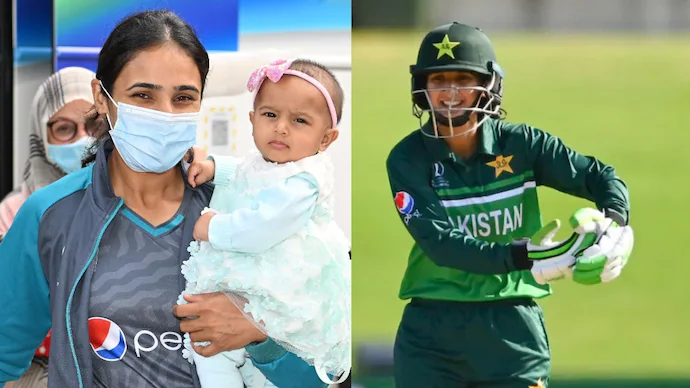
The International Cricket Council (ICC) has introduced a landmark set of post-pregnancy return-to-play guidelines aimed at supporting female cricketers through pregnancy, childbirth, and their return to elite competition.
As women’s cricket enters a new era of professionalism, more players are balancing international careers with motherhood. The ICC’s new framework seeks to ensure that pregnancy is no longer viewed as a barrier to a successful sporting career.
Developed by the ICC Medical Advisory Committee, the guidelines provide member boards with a structured roadmap for creating their own policies while prioritising player welfare, autonomy, and long-term health.
Why Has the ICC Introduced Post-Pregnancy Guidelines?
Women’s cricket has undergone a dramatic transformation in recent years, with increased professional contracts, expanded international calendars, and growing financial opportunities.
As the sport evolves, more athletes are choosing to start families during their playing careers rather than waiting until retirement.
The ICC says the new framework is designed to help cricket boards support players through every stage of pregnancy and motherhood while enabling a safe return to competition.
A Sign of Women’s Cricket Maturity
The introduction of formal pregnancy guidelines reflects a broader shift across women’s sports.
Leagues and governing bodies worldwide are increasingly recognizing that athletes should not have to choose between motherhood and their careers. Similar policies have emerged in sports such as soccer, basketball, athletics, and tennis, where several elite athletes have successfully returned to competition after giving birth.
For cricket, the guidelines represent an important step toward creating a more inclusive and sustainable professional environment.
What Do the ICC’s New Guidelines Include?
The framework was developed under the leadership of Dr. Philippa Inge and is intended to serve as a practical guide for national cricket boards.
While the recommendations are comprehensive, they are designed to remain flexible enough to comply with local laws and employment regulations.
The Six-Stage Return-to-Play Model
At the center of the framework is a structured six-stage progression designed to support players from pregnancy through their return to elite sport:
- Ready
- Review
- Restore
- Recondition
- Return
- Refine
The phased approach recognizes that every athlete’s recovery journey is different and allows medical professionals to tailor support according to individual circumstances.
Rather than focusing solely on physical fitness, the model considers overall health, wellbeing, and readiness for high-performance competition.
What Support Systems Are Recommended?
One of the key features of the guidelines is the recommendation that every player be assigned a dedicated case manager.
Dedicated Case Manager
The case manager—typically a doctor or physiotherapist—would serve as the primary point of contact throughout pregnancy, childbirth, recovery, and return to cricket.
This role is designed to help coordinate medical care, training adjustments, communication with team staff, and player welfare needs.
Multidisciplinary Support Team
The ICC also recommends establishing a broad support network around the athlete, including:
- Medical professionals
- Physiotherapists
- Strength and conditioning coaches
- Sports psychologists
- Dieticians
- Coaches
- Family support networks
The guidelines suggest holding regular player-management meetings at key stages to ensure everyone involved remains aligned on the player’s health and career goals.
How Do the Guidelines Protect Player Autonomy?
A major focus of the framework is ensuring that players maintain control over decisions relating to their pregnancy.
Pregnancy Disclosure Is the Player’s Choice
According to the recommendations, the decision to publicly announce a pregnancy should rest entirely with the player.
The ICC also states that cricket boards should not require pregnancy testing as a condition of participation.
This approach reinforces the principle that pregnancy is a personal matter and that athletes should retain control over how and when information is shared.
No Fixed Deadline for Competition
The framework encourages exercise and physical activity during pregnancy but emphasises that training and competition decisions must be made on an individual basis.
While the document recommends that players stop competing after the first trimester, it stops short of imposing a mandatory cut-off point.
Instead, decisions should be made collaboratively between:
- The player
- Her treating doctors
- Cricket medical staff
Importantly, the ICC notes that there is no universal gestational age at which participation must automatically end.
Why Could These Guidelines Be Significant for Women’s Cricket?
Historically, pregnancy has often interrupted or shortened sporting careers due to a lack of formal support structures.
The ICC’s framework aims to challenge that perception by demonstrating that motherhood and elite sport can coexist.
Changing the Conversation Around Motherhood in Sport
Speaking about the initiative, Dr. Inge said the objective is to reassure players that starting a family does not have to signal the end of their cricketing ambitions.
The guidelines are intended to provide both practical support and confidence for athletes considering motherhood during their careers.
This could prove particularly important as more women enter long-term professional cricket pathways and seek greater certainty regarding career planning.
Players Welcome the Move
Current and former players have already expressed support for the framework.
Among them is Afy Fletcher, who successfully returned to international cricket after giving birth in 2021.
Fletcher welcomed the guidelines, saying they provide players with reassurance that they can build a family and still return to the sport at the highest level.
Her experience reflects a growing reality in women’s sports: elite athletes are increasingly proving that motherhood and high-performance competition are not mutually exclusive.
What Happens Next?
The ICC’s recommendations are not mandatory regulations. Instead, they provide a blueprint that member boards can adapt when developing their own pregnancy and return-to-play policies.
Implementation will likely vary between countries depending on local employment laws, healthcare systems, and existing player welfare programs.
However, the publication of a global framework establishes a common standard and signals the ICC’s commitment to supporting female athletes throughout all stages of their careers.
As women’s cricket continues to expand globally, policies such as these could play a crucial role in attracting, retaining, and supporting the next generation of players.
TL;DR
- The ICC has launched new post-pregnancy return-to-play guidelines for female cricketers.
- The framework was developed by the ICC Medical Advisory Committee and led by Dr. Philippa Inge.
- A six-stage model outlines the journey from pregnancy through a return to elite cricket.
- Boards are encouraged to appoint a dedicated case manager and multidisciplinary support team.
- Players retain full control over pregnancy disclosures, and boards should not require pregnancy testing.
- Competition and training decisions during pregnancy should be individualised and medically guided.
- The ICC says the goal is to show that motherhood does not have to end a professional cricket career.