
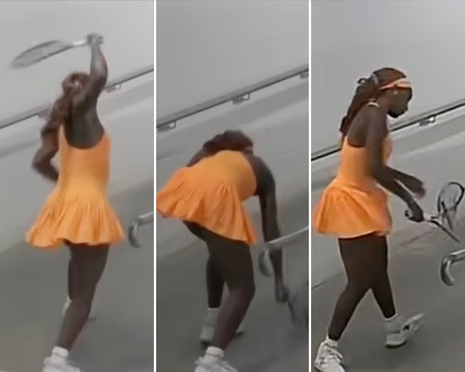
World number two Iga Swiatek has added her voice to growing concerns over player privacy at the Australian Open, after television cameras captured Coco Gauff during an emotional post-match moment that the American said should never have been made public.
The controversy followed Gauff’s 59-minute quarterfinal loss to Elina Svitolina, when the third seed retreated behind a wall near the match call area and repeatedly smashed her racket on the ground. Unaware she was being filmed, Gauff was later distressed to learn the footage had been broadcast worldwide.
Speaking after her own quarterfinal defeat to Elena Rybakina, Swiatek questioned whether players were being afforded any personal space away from competition.
“The question is, are we tennis players, or are we animals in the zoo, where they are observed even when they poop?” Swiatek told reporters.
“Okay, that was exaggerating, obviously, but it would be nice to have some privacy. It would be nice also to have your own process and not always be observed.”
Gauff later said the locker room was effectively the only place at Melbourne Park where players were not under constant surveillance.
Players Say Camera Coverage Has Gone Too Far
American Amanda Anisimova said players were well aware that privacy was limited at the tournament but acknowledged how difficult it could be after a loss.
“There are good moments obviously that people see, and that’s fun,” Anisimova said.
“Then, when you lose, there are probably not-so-good moments. The video of Coco that was posted—it’s tough, because she didn’t have a say in that.”
World number five Jessica Pegula echoed those concerns, calling the off-court camera presence excessive and saying it appeared to have intensified this year.
“I was like, ‘Can you just let the girls have a moment to themselves?’” Pegula said.
“Coco wasn’t wrong when she said the only safe place is the locker room, which is crazy.”
Pegula also criticized fans and broadcasters for scrutinizing players’ private behavior.
“I saw people online zooming in on players’ phones and stuff like that. That’s so unnecessary,” she said.
“It’s really an invasion of privacy.”
Swiatek Highlights Contrast With Other Grand Slams
Swiatek pointed out that other major tournaments take a more measured approach. She said events like Wimbledon and the French Open offer designated areas that are off-limits to cameras and fans, allowing players time to decompress.
“There are some spaces that you can at least go to when you need to,” she said.
“But there are some tournaments where it’s impossible, and you are constantly observed—if not by the fans, then by the cameras.”
The Polish star herself went viral earlier in the tournament after footage showed her being denied entry to a venue for forgetting her accreditation, a moment that quickly circulated online.
“It’s not our job to be a meme when you forget your accreditation,” Swiatek said.
“It’s funny, for sure. People have something to talk about, but for us, I don’t think it’s necessary.”
‘What’s the Point?’
Asked whether she had raised the issue directly with Australian Open organizers, Swiatek appeared skeptical that change was likely.
“What’s the point?” she said.
As scrutiny of athletes’ mental health and working conditions continues to grow across professional sports, the debate over how much access broadcasters and fans should have, beyond the court, appears far from settled.