
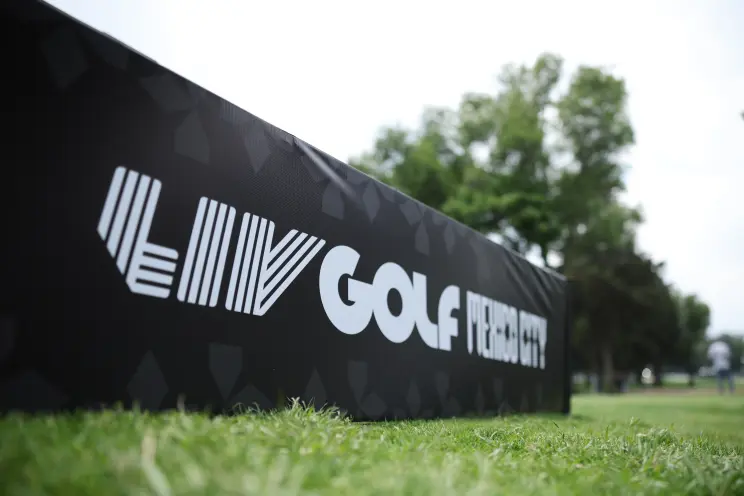
It’s been a defining week for Rory McIlroy—and not just because of his latest triumph at the Masters. As he celebrates another green jacket, the long-running battle that has reshaped professional golf may be nearing a turning point.
Fresh reports suggest that LIV Golf—the disruptive, big-money rival to the PGA Tour—could be facing an uncertain future. And if that’s true, it marks a dramatic shift in a conflict McIlroy has been at the center of for years.
What’s Happening With LIV Golf Right Now?
Speculation is mounting that Saudi Arabia’s Public Investment Fund (PIF), which bankrolls LIV Golf, may scale back or even end its investment in the league.
Why this matters:
- LIV has reportedly consumed billions in funding since launching in 2021
- Losses between 2022 and 2024 alone are estimated at over $1.1 billion
- Monthly operating costs are said to exceed $100 million
Recent reports of emergency meetings among LIV executives have only fueled speculation that the model may not be sustainable in its current form.
Even LIV leadership has hinted at tightening timelines, with funding potentially guaranteed only through 2026, rather than the previously suggested long-term horizon.
Why Rory McIlroy’s Role in This Matters
Few players have been as outspoken about LIV Golf as McIlroy.
At the height of the divide, he:
- Publicly criticized the league’s structure and motives
- Defended the PGA Tour in media appearances
- Became a de facto spokesperson for traditional golf
At one point, McIlroy even said he would rather retire than join LIV.
But that stance came at a cost.
He later described himself as a “sacrificial lamb,” acknowledging the personal and professional toll of being at the center of golf’s civil war.
Now, as momentum appears to shift back toward traditional tours, his position looks increasingly vindicated.
How LIV Golf Tried to Disrupt the Sport
From day one, LIV Golf set out to challenge golf’s status quo.
Its core innovations:
- 54-hole tournaments instead of 72
- Shotgun starts (all players begin simultaneously)
- Team-based competition formats
- Concert-style events with artists like Nelly and Backstreet Boys
And most importantly: massive financial incentives.
Player deals reportedly included the following:
- Jon Rahm: ~$300 million
- Phil Mickelson: ~$200 million
- The offer to Tiger Woods reportedly reached $800 million
In total, more than $1.3 billion has been spent on player contracts alone.
Why LIV Golf Struggled to Gain Traction
Despite its financial firepower, LIV has faced persistent challenges.
1. Traditional Fan Resistance
Golf audiences tend to favor the following:
- Established formats
- Legacy tournaments
- Historical continuity
LIV’s “Golf, But Louder” approach didn’t resonate widely with core fans.
2. Weak Media and Sponsorship Pull
Sports leagues rely on the following:
- Broadcast deals
- Corporate sponsorships
- Audience engagement
Without strong viewership, these revenue streams lagged.
3. Competitive Concerns
Some analysts argue LIV players have the following:
- Played fewer high-stakes rounds
- Faced less competitive depth
- Shown declining performance in majors
At recent Masters tournaments, only a handful of LIV players seriously contended.
Has Player Performance Actually Declined?
The data is mixed, but trends are raising eyebrows.
Players like:
- Bryson DeChambeau
- Cam Smith
- Dustin Johnson
has struggled to replicate their peak PGA Tour form.
Even high-profile signings haven’t consistently translated into major championship success.
That’s a problem for a league built on star power.
The Money Problem: Why PIF May Be Reconsidering
At its core, LIV’s biggest challenge may be financial sustainability.
Key pressures:
- Declining oil revenues are impacting Saudi budgets
- Massive domestic investments like Neom city
- Preparations for the 2034 FIFA World Cup
Saudi leadership, including Mohammed bin Salman, appears to be reallocating resources toward projects with clearer long-term returns.
There are even suggestions that geopolitical tensions—particularly involving Iran—could provide a convenient exit strategy from costly international ventures.
What Happens If LIV Golf Shuts Down?
The fallout would reshape professional golf.
For players:
- Some may return to the PGA Tour, but with conditions
- Others may rely on alternate routes like the DP World Tour
- Older players may not attempt a return at all
Notable examples:
- Brooks Koepka has already navigated a path back, reportedly at high financial cost
- Patrick Reed is working toward PGA reinstatement
For the sport:
- Talent consolidation back into traditional tours
- Potential easing of tensions between governing bodies
- A return to more unified competition
Could LIV Golf Survive in a Different Form?
A full shutdown isn’t the only possibility.
Alternative scenarios:
- Reduced schedule and budget
- Integration with existing tours
- Transition into a niche or exhibition-style league
However, each of these would require a fundamental shift from LIV’s original vision.
Why This Moment Matters for Golf’s Future
The LIV saga has been about more than just money.
It has raised deeper questions about the following:
- Tradition vs. innovation
- Loyalty vs. financial opportunity
- The role of global investment in sports
If LIV does fade, it won’t just be a failed league, it will be a case study in how difficult it is to disrupt a sport rooted in history and identity.
TL;DR
- LIV Golf may be facing financial uncertainty as Saudi funding priorities shift.
- Rory McIlroy, a longtime critic, appears increasingly vindicated.
- Despite billions in investment, LIV struggled with fan engagement and sustainability.
- Player performance and league economics remain key concerns.
- If LIV collapses, professional golf could return to a more unified structure.