
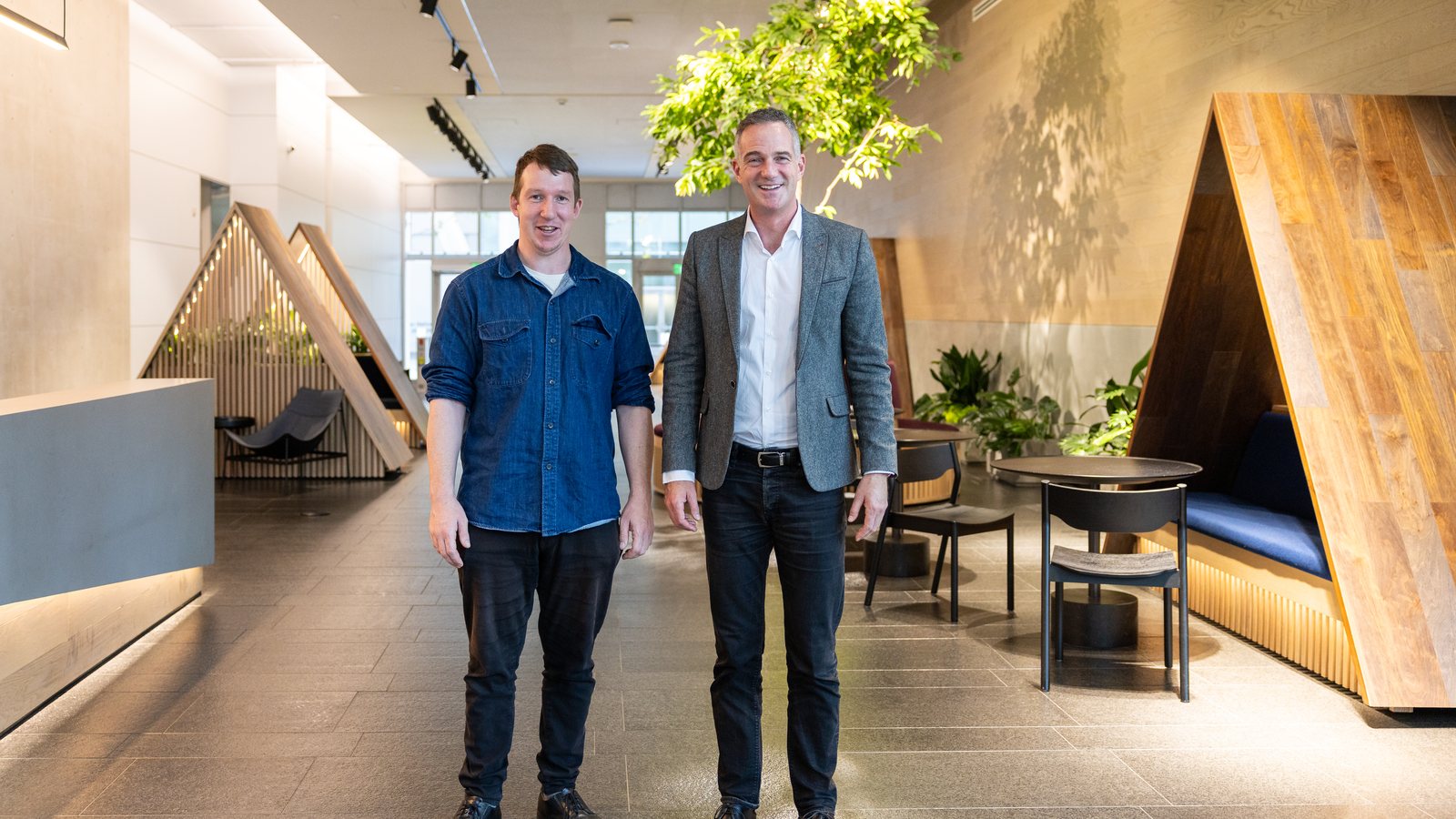

An Anthropic researcher says he thinks it very likely that “pretty much all humans on Earth will become permanently unemployable.”
Tao Lin said it on camera, in an hour-long interview Palisade Research published on YouTube on Saturday, Nov. 15. Lin works on safeguards at Anthropic, the team that blocks misuse of its Claude models. He has been there about 18 months.
He was also asked, directly, whether that happens within the next 15 months. He said no.
That gap between the claim and its timing is the whole story. Lin is forecasting, not reporting a result. The distance between his forecast and the economists now measuring the labor market is very large.
The interview comes from a group with a view of its own
The interview is part of “From Inside AI,” a series by Palisade Research. Palisade says on its site that it studies “the capabilities and motivations of AI agents today” and works to help institutions “avoid permanent disempowerment by strategic AI agents.” Its thirteen interviews feature current and former staff at Anthropic, OpenAI and Google DeepMind. The project’s page lists each by name and employer.
Lin’s section on jobs starts about 15 minutes in. Asked what he expects, he describes a sequence: everyone loses their current job, everyone moves to a different occupation briefly, and then people become “completely unemployable and needing to rely on the state.”
Asked whether he thinks that is very likely, he says yes. He then adds the line Palisade used as the video’s title. People will “need to strictly rely on government welfare to sustain themselves,” he says.
None of this is Anthropic’s position. Lin speaks as an employee giving a personal view, and says so.
His timeline is for the technology, not the unemployment
Separately in the interview, Lin gives a number for capability rather than for job losses. “I have timelines of something like 1.3 years to getting broadly superhuman AI,” he says, and when the interviewer puts that at some point in 2027, he answers: “Or like end of 2027, something like that.”
He defines the target precisely. He means AI “as good as or better than the best expert at almost every field,” and names programming, filmmaking and politics.
Then the interviewer asks whether human employment goes away within 15 months. Lin’s answer is flat. “No.”
The reason he gives is physical. He expects a long gap between AI being able to replace people and companies actually doing it. “There aren’t enough robots yet,” he says. Firms have to get good at building robots, then build them, and he talks in terms of billions of machines.
A Chinese handset maker claiming a single eight-hour factory shift from one humanoid is roughly where that industry has got to.
So the honest version of Lin’s forecast has two parts, on two clocks. Superhuman software by the end of 2027, on his estimate. Mass permanent unemployment at some unstated later date, gated by factories that do not exist yet.
What the labor-market data actually shows
Lin offers no evidence for the employment claim, and does not pretend to. It is a view about the future from someone who builds the technology.
The measurements point somewhere narrower. Erik Brynjolfsson, Bharat Chandar and Ruyu Chen of the Stanford Digital Economy Lab track payroll records from ADP covering millions of American workers. Their August 2026 revision reports “no evidence of widespread, economy-wide job displacement.”
What they do find is concentrated. Employment for workers aged 22 to 25 in AI-exposed occupations sits 19% below where it would be had it tracked their less-exposed peers. Experienced workers show no comparable gap, and the mechanism is reduced hiring rather than more firing. The authors call these early descriptive indicators, not causal estimates.
The Budget Lab at Yale, with Brookings, went wider and found less. Its October 2025 study concluded that measures of AI exposure, automation and augmentation “show no sign of being related to changes in employment or unemployment.”
Neither result settles Lin’s question, because he is talking about a technology that does not exist yet. But they do settle what is evidence and what is opinion.
Economists who model this get much smaller numbers
The closest thing to a competing forecast comes from Daron Acemoglu, the MIT economist who shared the 2024 Nobel prize. In The Simple Macroeconomics of AI, published in 2024, he works out that about 4.6% of all tasks can be profitably automated within ten years.
That gives a total factor productivity gain of “no more than a 0.71% increase” over the decade, and he argues even that is probably too high. The paper’s refined estimate is under 0.55%. Acemoglu’s objection is not that AI is weak. It is that the hard, judgment-heavy tasks come last, and that an economy adopts slowly.
Anthropic’s own chief executive sits between the two. Dario Amodei wrote in his January 2026 essay The Adolescence of Technology that AI could “disrupt 50% of entry-level white-collar jobs over 1-5 years.” That is a dramatic claim, and it is still a far smaller one than the end of paid work. We have checked another Amodei forecast against the evidence before.
He wants his own industry to slow to a quarter speed
The part of the interview that is hardest to dismiss is not the prediction. It is what Lin says should follow from it.
He wants AI companies to cut their rate of research to “one quarter of its current rate.” He blames a race that pushes firms to build, release and safety-test models too fast. He puts the chance that AI eventually removes humanity from the equation at roughly 20%, and the chance of AI taking over at under 50%. He does not think outright human extinction is the likeliest path.
Asked whether ordinary people are right to be angry at the people building this, he agrees. “People should be angry at me and everyone else developing AI,” he says. Asked whether he thinks he is doing something wrong, he says he does not.
Anthropic’s own filings carry some of the same tension. The company told the SEC this month that it may “imminently” hit the threshold it set for AI accelerating its own research, as our report on that disclosure sets out.
The next hard number on this will not come from an interview. The Stanford team updates its payroll series as new ADP data lands. Its next revision will show whether the 19% gap for young workers has widened again.
Disclosure: Anthropic makes Claude, which BreezyScroll uses to help draft articles.