
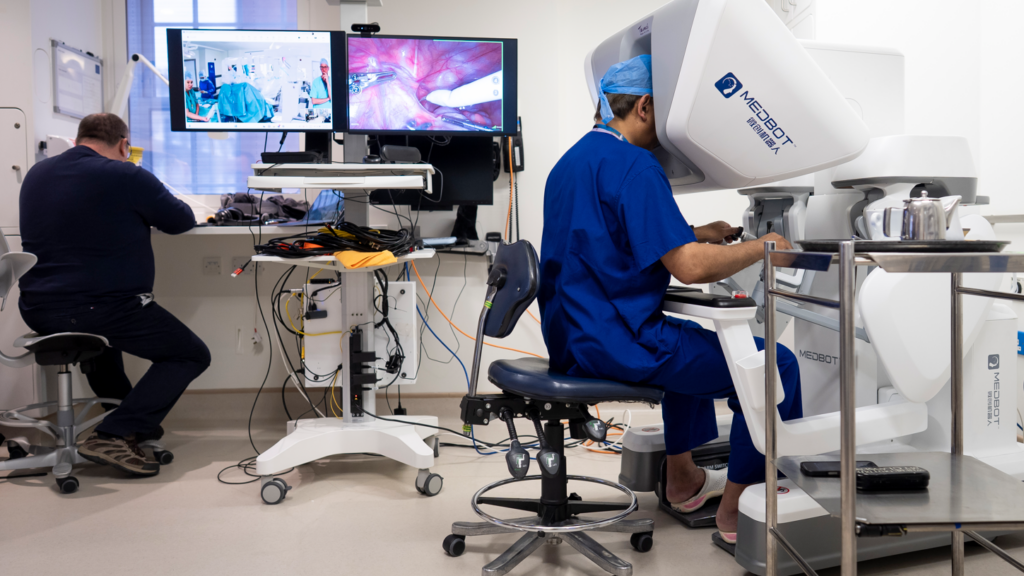
A pioneering case of remote robotic surgery has demonstrated how advanced medical technology could transform global healthcare. In a landmark procedure, a surgeon in London successfully removed a prostate tumor from a cancer patient located more than 1,500 miles away in Gibraltar.
The operation, carried out using a specialized surgical robot and high-speed connectivity, marks a major step forward in telesurgery, where doctors perform operations remotely using robotic systems.
The patient, 62-year-old Paul Buxton, said he felt “fantastic” just days after the procedure and described the experience as being part of medical history.
What Happened During the Remote Robotic Surgery?
The operation took place at St. Bernard’s Hospital, the only hospital in the British overseas territory of Gibraltar.
Inside the operating theater, a high-tech surgical robot performed the delicate procedure. Meanwhile, the surgeon controlling the operation was located roughly 1,500 miles away in London’s famous Harley Street medical district.
The surgery was conducted by Prokar Dasgupta, a leading urology specialist who heads the robotic surgery center at The London Clinic.
Using a console in London, Dasgupta guided the robotic system step-by-step to perform a prostatectomy, the surgical removal of the prostate gland.
The Technology Behind the Operation
The procedure relied on the Toumai Robotic System, a sophisticated surgical robot developed by MicroPort.
The robot features:
- Four robotic arms capable of precise surgical movement
- A 3D high-definition camera providing detailed views inside the body
- Advanced controls that translate a surgeon’s hand movements into micro-precision robotic actions
The connection between London and Gibraltar was enabled by Presidio technology, ensuring the data link remained stable and fast.
Perhaps the most remarkable technical achievement was the extremely low latency between surgeon and robot.
Latency during the procedure
- Delay between command and action: 0.06 seconds
That near-instant communication allowed the surgeon to operate almost as if he were physically present in the operating room.
Why This Surgery Is a Major Milestone
Remote robotic surgery has been researched for decades, but this operation demonstrates how the technology can finally become practical in real healthcare settings.
The implications are significant.
Potential benefits of telesurgery
Remote robotic surgery could:
- Allow top specialists to operate anywhere in the world
- Reduce travel for patients in remote regions
- Shorten waiting lists for complex procedures
- Improve access to advanced surgical expertise
For places like Gibraltar, which often sends patients abroad for major operations, the impact could be substantial.
Why Gibraltar Was an Ideal Test Case
Residents of Gibraltar frequently need to travel abroad for complex surgeries due to the territory’s small healthcare system.
Without the telesurgery option, Buxton would have needed to:
- Travel to London
- Join the NHS waiting list
- Stay in the UK for weeks during recovery
Instead, the surgery took place locally, eliminating travel and reducing disruption to his life.
Buxton told reporters that the decision was easy.
“If I hadn’t gone for the telesurgery in Gibraltar, I would have had to fly to London, go on the NHS waiting list and probably stay there for three weeks.”
The Patient’s Perspective
Buxton, originally from Burnham-on-Sea, has lived in Gibraltar for nearly four decades.
When he was diagnosed with prostate cancer, he did not expect to be part of a groundbreaking medical experiment. But when doctors offered the option of remote robotic surgery, he agreed.
Some people were skeptical about the idea.
“A lot of people actually said to me: ‘You’re not going to do it, are you?’”
But Buxton said he saw it as a chance to contribute to medical progress.
“It’s been a privilege to be part of medical history.”
He jokingly compared the achievement to a football club rising through the leagues.
“I love football – we’ve gone from being in the Championship to the Champions League as far as surgeons are concerned.”
How Robotic Surgery Works
Robotic surgery does not mean robots operate independently. Instead, surgeons remain fully in control.
The system works through three key components:
1. Surgeon Console
The doctor sits at a control station where they:
- View a magnified 3D surgical field
- Control instruments using hand controls
2. Robotic Arms
The robot’s arms replicate the surgeon’s movements with:
- Greater precision
- Smaller incisions
- Less hand tremor
3. Visualisation System
High-definition cameras provide surgeons with extremely detailed internal views of the patient’s body.
This combination allows procedures that require extreme precision, such as prostate surgery, to be performed safely.
What This Means for the Future of Surgery
Experts believe remote robotic surgery could transform healthcare delivery worldwide.
Possible future applications include:
- Remote operations in rural hospitals
- Surgical support during medical emergencies in remote locations
- Operations in war zones or disaster areas
- Even space medicine for astronauts on long missions
However, widespread adoption still requires:
- Reliable high-speed networks
- Extensive surgeon training
- Strict cybersecurity protections
- Regulatory approvals
Challenges and Risks of Remote Surgery
While promising, telesurgery also raises important challenges.
Key concerns include
- Network disruptions during surgery
- Data security risks
- High cost of robotic systems
- Legal and licensing issues across borders
Medical regulators will likely need to create new frameworks for international remote operations.
TL;DR
- A surgeon in London remotely operated on a cancer patient in Gibraltar using robotic technology.
- The procedure removed the patient’s prostate using the Toumai robotic system.
- The surgeon controlled the robot from 1,500 miles away with only 0.06 seconds of delay.
- The operation demonstrates the growing potential of remote robotic surgery.
- Experts say telesurgery could improve access to specialized care worldwide.