
TL;DR
In a world-first, Chinese doctors performed robotic liver surgeries from over 5,000 kilometers away using satellite communication, breaking barriers previously imposed by 5G-based telesurgery. This innovation opens the door for advanced surgical care in remote, rural, or conflict-stricken regions, once unreachable by traditional infrastructure.
What happened: A surgical milestone from space
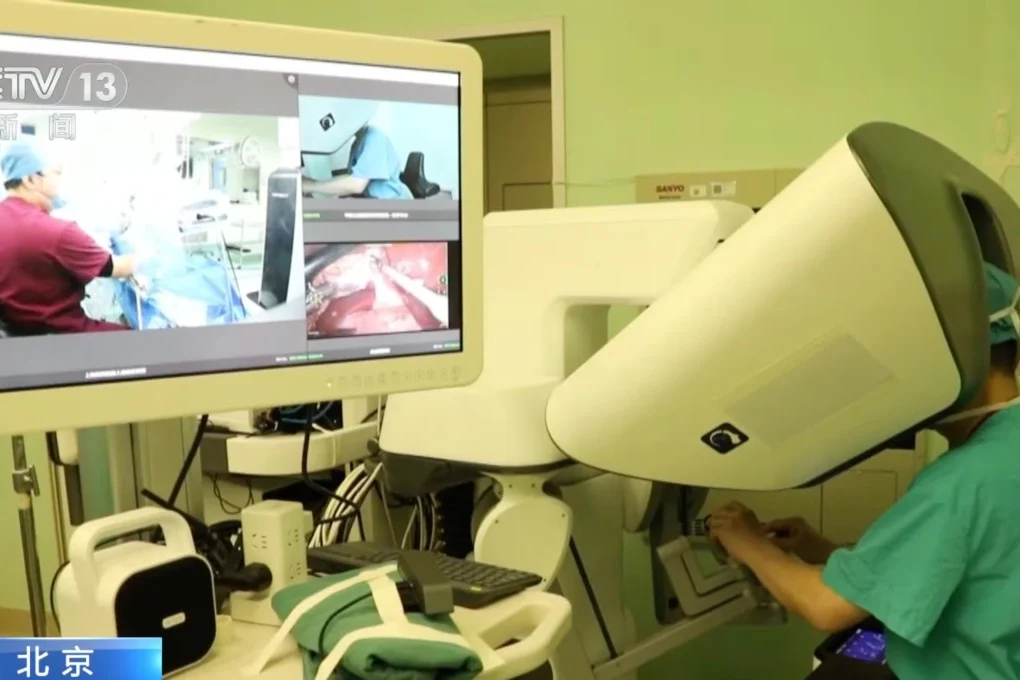
In a remarkable medical and technological achievement, a team of Chinese surgeons led by Professor Rong Liu from the PLA General Hospital successfully completed two long-distance robotic liver surgeries using satellite communication.
- The operations took place in Beijing, while the surgical team controlled the robot from Lhasa, over 5,000 kilometers away.
- This is the first time such complex procedures have been conducted using satellite technology, rather than ground-based 5G networks.
For context, 5G telesurgery—though groundbreaking—has typically been limited by:
- Distance caps (~5,000 km) due to signal degradation,
- Dependence on stable terrestrial infrastructure, and
- Inability to reach disaster zones, battlefields, or remote villages where high-speed 5G isn’t available.
This breakthrough eliminates those limits.
Why is satellite-based surgery such a big deal?
Going beyond 5G: Unlocking remote care at scale
Unlike 5G networks, satellites can offer global coverage—including mountains, deserts, islands, or post-disaster zones where no infrastructure remains.
- The team used the Apstar-6D, a communications satellite orbiting 36,000 km above Earth.
- With this technology, surgeons can operate from anywhere, provided they have access to a satellite uplink.
Consider an infographic here illustrating the satellite vs. 5G coverage capabilities across different geographies.
How did the team solve the satellite latency problem?
Satellite communication typically comes with a serious drawback: latency—the delay between command and execution. For surgery, even a few milliseconds can be the difference between success and fatal error.
Safe threshold:
- Real-time surgical systems require latency under 200 milliseconds (ms).
- Satellite delays can reach 600 ms or more.
Prof. Liu’s team pioneered three key innovations:
- Adaptive Latency Compensation
- This software predicted movement delays and adjusted the robotic arms in real-time.
- Result: Arm movement error was kept to just 0.32 mm, even with 500 ms delays.
- Dual-Link Redundancy
- If the satellite connection dropped, the system would instantaneously switch to 5G.
- This built-in safety net ensured zero downtime mid-surgery.
- Dynamic Bandwidth Allocation
- The team compressed video data while maintaining full HD quality, cutting bandwidth use by half.
- This preserved surgical visuals and system stability despite network constraints.
These combined innovations make real-time robotic surgery via satellite not just possible—but safe and replicable.
How did the surgeries go?
Two patients in Beijing were successfully operated on:
- A 68-year-old suffering from liver cancer
- A 56-year-old diagnosed with hepatic hemangioma (a benign liver tumor)
Surgery times:
- Procedures lasted between 105 to 124 minutes, comparable to in-person operations.
Recovery benchmarks:
- Both patients were discharged within 24 hours, hitting expected recovery metrics.
- No complications or surgical delays were reported.
These results suggest satellite telesurgery can match traditional surgical outcomes—even over vast distances.
Why this matters: The future of remote surgery
From 5,000km to 150,000km: A new surgical frontier
Previously, robotic surgery systems were effectively limited by the reach of 5G and fiber-optic networks. This new model:
- Extends the potential range to 150,000 km, factoring in multiple orbital relays.
- Opens up lifesaving care for:
- Military operations in war zones
- Natural disaster zones cut off from hospitals
- Isolated communities with no surgical infrastructure
What it means for global health equity
This technology could democratize access to world-class surgical care:
- A skilled surgeon in one country could perform procedures in another without flying in.
- Remote clinics with no local surgical staff could partner with urban hospitals virtually.
- Emergency response teams could deploy robotic systems into disaster-hit areas within hours.
What’s next?
While this achievement is groundbreaking, several challenges remain before widescale adoption:
- Infrastructure costs: Satellite uplinks and surgical robots are expensive.
- Training requirements: Surgeons must be trained to handle remote procedures with latency.
- Regulatory oversight: Medical boards and governments must develop protocols for cross-border surgeries.
However, China’s successful test sets a new benchmark—and could soon push countries and companies alike to invest in satellite-based medical systems.