
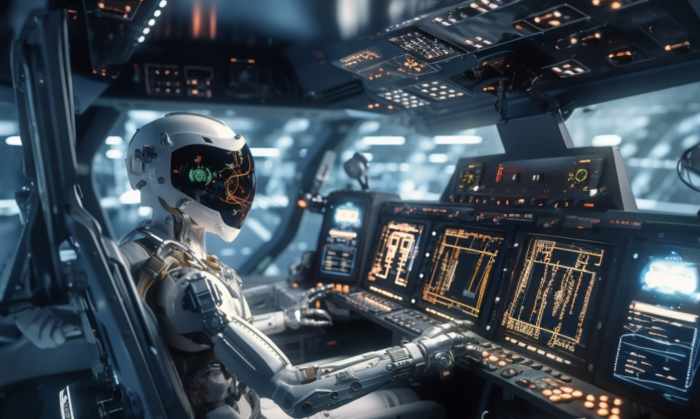
A recent demonstration by US startup Merlin Labs has pushed artificial intelligence deeper into one of the world’s most tightly regulated industries: commercial aviation.
During an experimental test flight this week, the company showcased an AI-powered flight system capable of handling several piloting tasks with minimal manual input from the human pilot onboard. The aircraft changed course, interpreted commands, and responded to instructions using artificial intelligence designed to assist cockpit operations.
For the aviation industry, the demonstration signals something larger than a single test flight. It highlights how AI is steadily moving from back-office automation into safety-critical, real-world transportation systems.
But despite the headlines, fully autonomous passenger planes are still far away — and the people who actually fly aircraft want to keep it that way.
TL;DR
- Merlin Labs demonstrated an AI-assisted flight system during an experimental aircraft test.
- The AI handled several piloting tasks while a human pilot supervised operations.
- The system uses natural language processing to interpret air traffic control communications.
- Merlin says the goal is to assist pilots, not replace them entirely.
- The aviation industry is exploring AI amid pilot shortages and pressure on air traffic systems.
- Pilot unions continue to oppose removing humans from commercial cockpits.
What Happened During Merlin Labs’ AI Flight Demonstration?
The demonstration flight involved an experimental aircraft equipped with Merlin Labs’ AI-powered “Merlin Pilot” system.
According to the company, test pilot Matt Diamond did not manually fly portions of the aircraft during the demonstration. Instead, the AI system carried out commands after receiving verbal authorization.
One of the key capabilities showcased was the AI’s ability to process air traffic control communications and respond accordingly.
That may sound routine, but it addresses one of the most demanding parts of aviation: managing continuous communication, navigation adjustments, and procedural compliance in crowded airspace.
How Merlin Labs’ AI Aviation System Works
The Merlin Pilot platform uses artificial intelligence and natural language processing (NLP) to interpret spoken air traffic control instructions.
In practical terms, the system can:
- Listen to ATC communications
- Interpret commands
- Suggest or execute flight adjustments
- Reduce pilot workload during operations
The technology is designed to function as an AI-assisted co-pilot rather than a fully autonomous replacement for human crews.
That distinction matters because modern commercial aircraft already use significant automation through:
- Autopilot systems
- Flight management computers
- Auto-throttle controls
- Terrain avoidance systems
Merlin Labs is attempting to push automation one step further by equipping aircraft systems to interpret and respond to language-based instructions in real time.
Why natural language matters in aviation
Air traffic control communication is highly standardised but still relies heavily on human interpretation.
Pilots must:
- Listen carefully
- Confirm instructions
- Adjust headings and altitude
- Respond rapidly in congested airspace
AI systems capable of reliably handling those tasks could potentially:
- Reduce workload
- Lower pilot fatigue
- Improve operational consistency
- Help airlines manage staffing shortages
Why the Aviation Industry Is Paying Attention to AI
The timing of Merlin’s demonstration is not accidental.
Global aviation is facing several converging pressures:
- Pilot shortages
- Increased air traffic
- Aging infrastructure
- Rising operational costs
- Demand for improved efficiency
The industry has been warning for years about a shortage of qualified pilots, particularly as older pilots retire and air travel demand rebounds globally.
At the same time, air traffic control systems in countries like the United States continue to face modernization challenges.
That combination has made AI-assisted systems increasingly attractive to airlines, regulators, and aerospace companies.
The US Government Is Also Exploring AI in Air Traffic Systems
The broader aviation modernisation push now includes growing political support for AI-assisted infrastructure.
US Transportation Secretary Sean Duffy recently backed the use of AI tools to modernise America’s aging air traffic control systems.
According to Duffy, AI could:
- Reduce controller workload
- Improve system efficiency
- Support modernisation efforts
But officials continue emphasising the same message: AI is intended to support humans, not replace them entirely.
That careful wording reflects the enormous sensitivity surrounding aviation safety.
Commercial aviation remains one of the most highly regulated industries in the world, and any move toward autonomous operations faces intense scrutiny from:
- Regulators
- Airlines
- Pilot unions
- Aircraft manufacturers
- Passengers
Why Pilot Unions Are Pushing Back Against Fully Autonomous Flights
Not everyone in aviation is enthusiastic about reducing human involvement in cockpits.
Air Line Pilots Association, which represents more than 79,000 pilots across the US and Canada, has made its position clear.
Capt. Jason Ambrosi, the union’s president, acknowledged that new technologies may improve aviation safety but argued they should never replace trained pilots.
The organization maintains that:
“Two well-trained and well-rested pilots remain the most important safety feature on commercial flights.”
That position reflects concerns extending beyond technology itself.
Key concerns among pilots include:
- AI system failures
- Cybersecurity vulnerabilities
- Unexpected weather conditions
- Ethical decision-making
- Passenger confidence
- Accountability during emergencies
Aviation history has repeatedly shown that human judgment remains critical during rare but dangerous edge-case scenarios.
Automation can reduce workload during routine operations. But emergencies often require improvisation, contextual understanding, and rapid decision-making beyond predefined parameters.
Could Airlines Eventually Operate With Fewer Pilots?
One of the aviation industry’s biggest long-term debates is whether airlines could eventually move from two pilots to one — especially on cargo flights or shorter regional routes.
That conversation is already happening quietly across aerospace and regulatory circles.
AI-assisted systems like Merlin Pilot could become stepping stones toward:
- Single-pilot operations
- Remote monitoring systems
- Increased cockpit automation
Cargo aviation may become the first testing ground because:
- It involves fewer passenger safety concerns
- Airlines already operate with leaner economics
- Regulators may view freight operations differently
Still, passenger aircraft without pilots on board remain highly unlikely in the near future.
Why are fully pilotless passenger planes still distant?
Several major barriers remain:
- Regulatory approval
- Public trust
- Technical reliability
- Cybersecurity protection
- Liability frameworks
- Emergency handling standards
Even self-driving car technology — operating on roads at lower speeds — continues to face major safety and legal challenges.
Commercial aircraft operate in far more complex safety environments.
Aviation Has Been Moving Toward Automation for Decades
While AI pilots sound futuristic, aviation automation is not new.
Modern commercial aircraft already rely heavily on computer systems during:
- Cruise flight
- Navigation
- Landing assistance
- Fuel optimization
- Stability control
In some cases, pilots manually control aircraft for surprisingly limited portions of long-haul flights.
What Merlin Labs represents is not the arrival of automation in aviation — but the next phase of it.
The shift is from:
“Machines following programmed instructions”
to:
“Machines interpreting and acting on dynamic information.”
That is a much bigger leap.
The Bigger Question: How Much Autonomy Will Passengers Accept?
Technology may not be the hardest challenge here. Public trust might be.
Passengers already accept autopilot systems because human pilots remain visibly responsible for the aircraft.
But acceptance could change if airlines eventually:
- Reduce cockpit crews
- Introduce AI co-pilots
- Automate more flight decisions
Public reaction will likely depend on:
- Safety records
- Transparency
- Regulatory oversight
- Airline communication
The aviation industry understands that one major AI-related incident could dramatically slow adoption.
That is why companies like Merlin Labs continue emphasising partnership between humans and machines rather than replacement.