
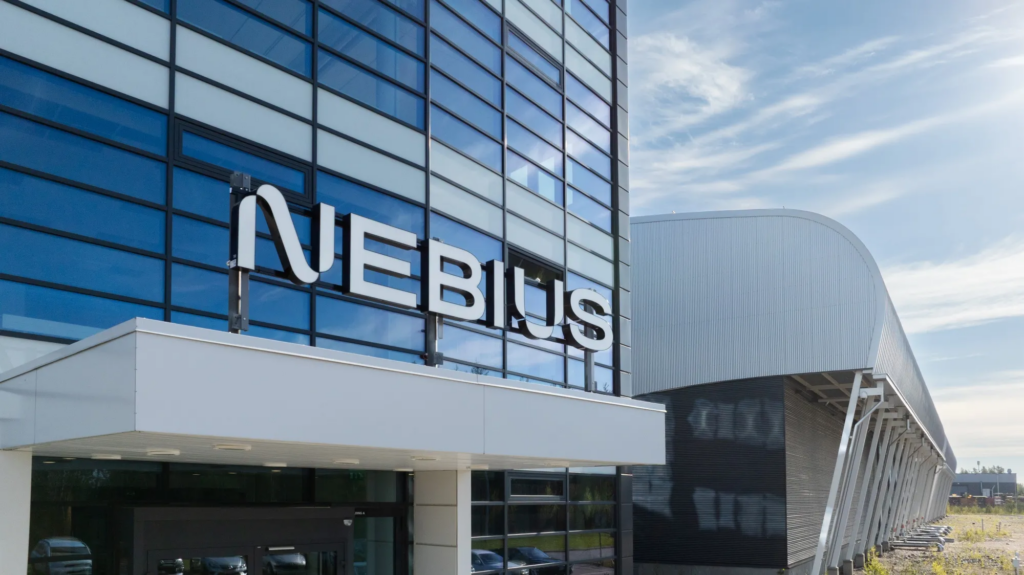
In the middle of a war, a market sell-off, and a looming recession, Big Tech just doubled down on artificial intelligence with one of the largest infrastructure deals in computing history. Meta’s $27 billion agreement with Nebius Group, announced the same week OpenAI launched GPT-5.4 and NVIDIA unveiled its Nemotron 3 Super, reveals an industry that sees the AI buildout as not just surviving geopolitical chaos but thriving because of it.
The Core Story: A Record-Breaking Infrastructure Deal
On Monday, March 16, Meta Platforms and Amsterdam-based Nebius Group announced a five-year AI infrastructure supply agreement worth up to $27 billion, as reported by Bloomberg, The Wall Street Journal, and Investopedia. Under the deal, Nebius will provide Meta with $12 billion of dedicated data center capacity across multiple global locations, leveraging one of the first large-scale deployments of NVIDIA’s next-generation Vera Rubin GPU platform. Deliveries are scheduled to begin in early 2027.
Meta is also committed to purchasing up to $15 billion in additional compute capacity from upcoming Nebius clusters over the contract period. The hybrid structure gives Meta the flexibility of cloud computing with the cost predictability of owned infrastructure, a model increasingly favored by hyperscalers locked in the race toward building frontier AI models.
Nebius, a so-called “neocloud” operator spun out of the Yandex ecosystem and led by founder Arkady Volozh, posted revenue of $530 million in 2025, a 479% surge year-over-year, though it remains unprofitable, with an operating loss of $596 million. The Meta deal instantly transforms Nebius from an emerging player into a cornerstone of Big Tech’s AI supply chain.
Shares of Nebius (NASDAQ: NBIS) soared 13% in Monday morning trading on the news.
Context & Global Impact: The Bigger Picture Behind the Billions
The Meta-Nebius deal does not exist in isolation. It lands during a week that has arguably reshaped the competitive landscape of artificial intelligence more than any since the launch of ChatGPT in late 2022.
- OpenAI launched GPT-5.4 on March 5, featuring configurable reasoning effort, a computer use API, and a 272K context window. The model is designed to close the benchmark gap with Anthropic’s Claude Opus 4.6 and represents OpenAI’s fifth major iteration in the GPT-5 family since August 2025.
- NVIDIA unveiled Nemotron 3 Super at its GTC 2026 conference on March 11, a 120-billion-parameter open-weight model that scored 60.47% on SWE-Bench Verified, making it the most compelling foundation for enterprise coding agents released to date. NVIDIA is also investing $26 billion over five years to develop open-weight models, signaling its push beyond chips into the software and model layers of AI.
- The neocloud sector is booming. Traditional cloud providers like AWS, Google Cloud, and Azure are capacity-constrained. The largest operators, Amazon, Alphabet, Microsoft, and Meta, are planning to spend nearly $700 billion on capital expenditure in 2026 alone, according to The Motley Fool. Neoclouds like Nebius, CoreWeave, and Lambda Labs are filling the gap by stockpiling next-generation GPUs and offering GPU-as-a-Service.
- India’s sovereign AI push is accelerating. Separately, Gorilla Technology Group announced a deal with India’s Yotta Data Services to deploy approximately 640 NVIDIA HGX B200 servers with over 5,000 GPUs, in a contract expected to generate more than $500 million in revenue over five years.
Why Meta Is Spending This Much
Meta’s AI ambitions have shifted dramatically in the past year. The company is training its Llama 5 and Llama 6 foundation models, which require exponentially more compute than previous generations. CEO Mark Zuckerberg has repeatedly stated that AI is Meta’s top strategic priority, and the company is competing head-to-head with OpenAI, Google DeepMind, and Anthropic for frontier model leadership.
The $27 billion Nebius deal is structured to support this ambition at scale. The dedicated $12 billion in capacity will be housed in Nebius facilities, including a new 1.2-gigawatt “AI Factory” in Missouri, while the flexible $15 billion tranche allows Meta to scale dynamically as its model training requirements evolve.
The Open-Source vs. Closed-Source Divide Deepens
NVIDIA’s Nemotron 3 Super and its broader open-source strategy are putting significant pressure on proprietary model providers. As one analyst at Your Everyday AI noted, “it’s going to put a lot of pressure on the OpenAIs, Anthropics, and Googles of the world to build better proprietary models.” Enterprises that cannot use cloud APIs due to regulatory constraints now have a compelling open-weight alternative that runs at 5x the throughput of previous models.
What’s Next: The AI Buildout Defies Gravity
Despite a slowing economy, rising inflation, and a war in the Middle East, the AI infrastructure buildout is accelerating rather than contracting. Morgan Stanley projects AI-focused data center construction could generate nearly $2.9 trillion in global investment by 2028. Gartner forecasts that worldwide AI spending will exceed $2 trillion in 2026.
The question is no longer whether the AI boom is sustainable; it is whether the physical infrastructure can be built fast enough to meet demand. Meta’s Nebius deal, NVIDIA’s open-model offensive, and OpenAI’s rapid model cadence all point in the same direction: the companies building AI believe the opportunity is so large that not even a global energy crisis can slow it down.
Frequently Asked Questions
What is Nebius Group? Nebius is an Amsterdam-based “neocloud” company that operates AI-focused data centers in partnership with NVIDIA. It was spun out of the Yandex ecosystem and is led by founder Arkady Volozh. Its stock trades on NASDAQ under the ticker NBIS.
Why is Meta spending $27 billion on external AI infrastructure? Meta is training increasingly large AI models (Llama 5 and Llama 6) that require massive computing power. Its existing data centers are capacity-constrained, and the Nebius deal provides both dedicated and flexible compute resources to support the next generation of frontier AI development.
What is NVIDIA’s Vera Rubin platform? Vera Rubin is NVIDIA’s next-generation GPU platform, succeeding the Blackwell architecture. The Meta-Nebius deal is one of the first large-scale commercial deployments of Vera Rubin, designed for AI training and inference workloads at hyperscale.