
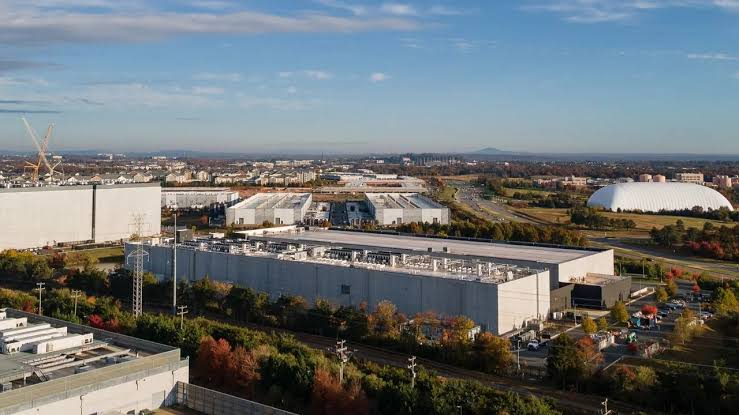
Meta-backed data center construction in Wyoming has come under scrutiny after local officials traced a rare, potentially dangerous bacterium to wastewater discharged from one of its facilities. The discovery has prompted Cheyenne authorities to suspend a key wastewater disposal practice for all data centers connected to the city’s municipal water system, highlighting growing concerns over the environmental impact of AI infrastructure.
The decision follows an investigation into wastewater released during the commissioning of a Meta-affiliated facility that is still under construction. Officials stressed that the contamination affected industrial wastewater, not the city’s drinking water supply.
Why did Cheyenne restrict wastewater discharge from data centres?
The Cheyenne Board of Public Utilities has prohibited “fill-and-flush” wastewater discharges from all data centres using municipal water services. Fill-and-flush is a standard process used to clean and test cooling systems before a data centre begins operations.
The move came after investigators linked wastewater from Goat Systems LLC, a company affiliated with Meta’s Cheyenne data center project, to the presence of Cupriavidus gilardii, a rare multidrug-resistant bacterium.
According to local officials, the company was found to be in “significant noncompliance” with the city’s industrial wastewater regulations following a months-long investigation.
What is Cupriavidus gilardii?
Cupriavidus gilardii is an uncommon bacterium that rarely infects humans but has attracted medical attention because of its resistance to multiple antibiotics.
Although infections are extremely rare, published medical literature has linked the organism to several severe illnesses, primarily among people with weakened immune systems.
Researchers have documented only a small number of confirmed human cases worldwide. A review of published infections found:
- Most patients had underlying health conditions or compromised immune systems.
- The bacterium is resistant to multiple commonly used antibiotics.
- Some reported cases resulted in fatalities, although the sample size remains very small.
Because of its rarity, many laboratories do not routinely test for the organism.
How was the bacterium discovered?
The bacterium was not the original target of testing.
Frank Strong, engineering and water resources division manager for the Cheyenne Board of Public Utilities, told local media that officials were conducting routine wastewater monitoring for fecal contamination when they noticed an unusual organism.
He said identifying the bacteria required additional laboratory analysis because it was not something the city typically screens for.
Once officials determined the organism’s identity and traced it to wastewater originating from the Meta-affiliated construction site, the discharge process was halted.
Was the public drinking water contaminated?
No.
Cheyenne officials and Meta both emphasised that the bacterium was detected in industrial wastewater, not in the city’s drinking water system.
Authorities also said there have been no reported illnesses connected to the incident.
The wastewater was associated with the commissioning process of the facility’s cooling systems rather than normal operations.
What did Meta say?
Meta said it is working with construction contractor Fortis to address the issue.
According to a company spokesperson, Fortis immediately stopped discharging industrial wastewater into the municipal system after being notified by city officials.
Instead, wastewater is now being transported offsite while the issue is investigated and resolved.
Meta also noted that the affected facility remains under construction.
Why are AI data centres under increasing scrutiny?
The incident comes as AI data centres face growing public attention over their environmental footprint.
Modern AI facilities require significant amounts of:
- Electricity to power high-performance computing hardware.
- Water for cooling large server clusters.
- Industrial infrastructure that can place additional demands on local utilities.
Communities across the United States have increasingly questioned whether rapidly expanding AI infrastructure places excessive pressure on local water supplies, power grids, and wastewater systems.
While the Wyoming incident did not contaminate drinking water, it has reinforced calls for stricter oversight of industrial waste management at large technology facilities.
What happens next?
Officials are continuing to investigate how Cupriavidus gilardii entered the wastewater system and whether it originated from equipment, construction activities, or another source inside the facility.
Meanwhile,
- Cheyenne’s temporary restrictions on fill-and-flush wastewater remain in place for municipal data centers.
- Meta and its contractor are working with local authorities to resolve the issue.
- The city’s investigation into the exact source of the bacteria is ongoing.
The outcome could influence how municipalities regulate wastewater disposal from the rapidly expanding AI data center industry.