

Disclosure: BreezyScroll uses Anthropic’s Claude to help draft articles.
Elon Musk’s superintelligence claim came as a one-line reply on X on Sunday, Nov. 22. “Unequivocal super intelligence has arrived. Welcome to the Singularity,” he wrote. Nine hours later, Yann LeCun answered him directly by pointing to a task most teenagers learn in about 20 hours.
What set Musk off matters more than the post. He was reacting to a claimed proof of the Riemann hypothesis, the most famous open problem in mathematics. An Anthropic mathematician produced it with Claude, and for now it exists mainly as computer code that mathematicians say they do not yet understand.
A reply to a joke about a trillion-dollar company
Musk’s post was not a standalone announcement. It was a reply to the poker player and science communicator Liv Boeree, sent at 6:26 a.m. ET. The previous afternoon, Boeree had joked about a 19th-century German’s “absurdly specific” question on where a function’s zeros sit. That question, she wrote, now “influences the market cap of a trillion dollar AI company”.
That company is Anthropic. On Friday, Nov. 20, its mathematician Levent Alpöge posted a short note. “I believe I have, working with Claude, discovered a proof of the Riemann Hypothesis,” he wrote. Alpöge is a number theorist on leave from Harvard.
The timing drew comment. Nature reported that the claim came days after Anthropic’s stock market debut, which first valued it at $1.5 trillion. The shares then fell on Nov. 19. “There is an obvious cynical view, to do with the timing, but it is false,” Alpöge wrote. We broke down the listing in the Anthropic IPO in numbers.
Musk has used the word before. On Jan. 4 he told engineers praising AI coding tools, “We have entered the Singularity.” He followed up with “2026 is the year of the Singularity,” Benzinga reported. The November post goes further, because it names one result as the evidence.
What LeCun actually wrote
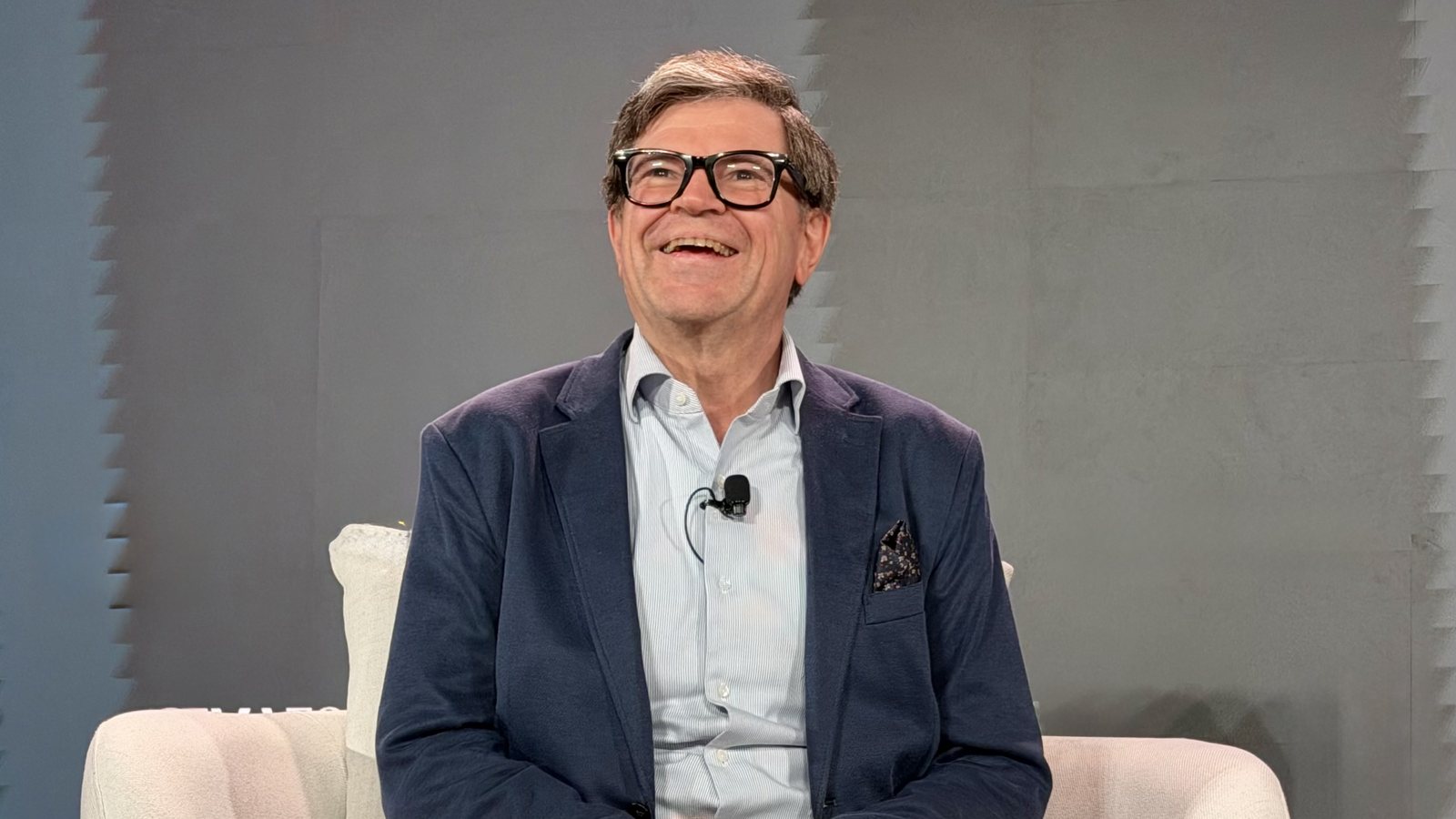
LeCun posted at 3:45 p.m. ET on Nov. 22, as a reply under Musk’s own post. It is a fresh response, not a quote recycled from their older fights. It reads in full:
“TIL: We have superintelligence but we still don’t have level-5 autonomous driving. A task that most 17 year olds can learn in 20 hours of practice. And we have (you have) billions of hours of training data. We don’t have robots that can come close to doing what an 8 year old can do with no prior training. And let’s not talk about cats. That’s a rather strange kind of superintelligence.”
The “(you have)” points at Tesla, whose cars feed it driving data. Level 5 is the top tier of automation: a car that drives itself anywhere, with no conditions. LeCun left Meta to found AMI Labs, a Paris-based startup building AI that learns from the physical world. He is its executive chairman and still teaches at NYU, according to TechCrunch.
The same day, Musk posted in a separate thread about Tesla’s chips. AI5 would go to the Optimus robot, he said. “Cars will remain at AI4. That’s enough to solve superhuman driving.” Humanoids Daily and The Hans India reported that post. We found no direct reply from Musk to LeCun.
The proof nobody has read yet
Musk’s claim rests entirely on the Riemann result, and that is its weak point today. Alpöge released a four-page note plus a version of the proof in Lean. Lean is a programming language that lets a computer check each logical step.
The Lean code runs to about 17 million lines, Imperial College London mathematician Kevin Buzzard told Al Jazeera. “At the minute, we don’t even know why the theorem is true,” Buzzard said.
The mathematicians quoted so far differ on the note, but none has dismissed the result. Oxford’s James Maynard, a Fields Medal winner, told Nature: “If this fully checks out, it is clearly a historic milestone in mathematics.” He also said he suspects it will turn out to be correct. The University of Montreal’s Andrew Granville took a harsher view of the write-up. “What he released is garbled,” he said.
The Clay Mathematics Institute’s $1 million Millennium Prize has strict terms. A proof must appear in a peer-reviewed journal and survive two years of scrutiny, AFP noted. There is a race question too. Hours after Alpöge’s post, Stanford’s Ravi Vakil released a rival proof by Alessandro Maria Masullo that he says is entirely human.
Credit is also shared. Alpöge describes a collaboration, not a machine working alone. In August, Anthropic said an earlier Claude result raised the known share of zeros on the critical line from 41.6% to 67.2%. Its own mathematicians checked that work. The company said then that it did not expect those techniques to prove the hypothesis.
Two different tests for intelligence
Side by side, the two posts measure different things. Musk takes one result at the top of human mathematics as the test. LeCun takes ordinary physical skill, the kind a teenager has, as his.
LeCun’s claim is the easier one to check. Nobody disputes that level-5 cars do not exist yet, and neither do robots that match an 8-year-old. Even Musk’s AI4 post talks about solving driving in the future tense. His own claim depends on a proof that, by Buzzard’s account, no person yet understands. It also credits “super intelligence” for work that Alpöge presents as joint.
The stronger version of Musk’s argument is about speed. Anthropic has already told investors it may soon reach its own threshold for AI that speeds up AI research. That is closer to the original meaning of “singularity” than any single proof. Buzzard told Al Jazeera he expects mathematicians to understand the Riemann proof “in a matter of weeks”. That reading, and a human-readable version from Alpöge, will settle whether Musk’s evidence holds up.