
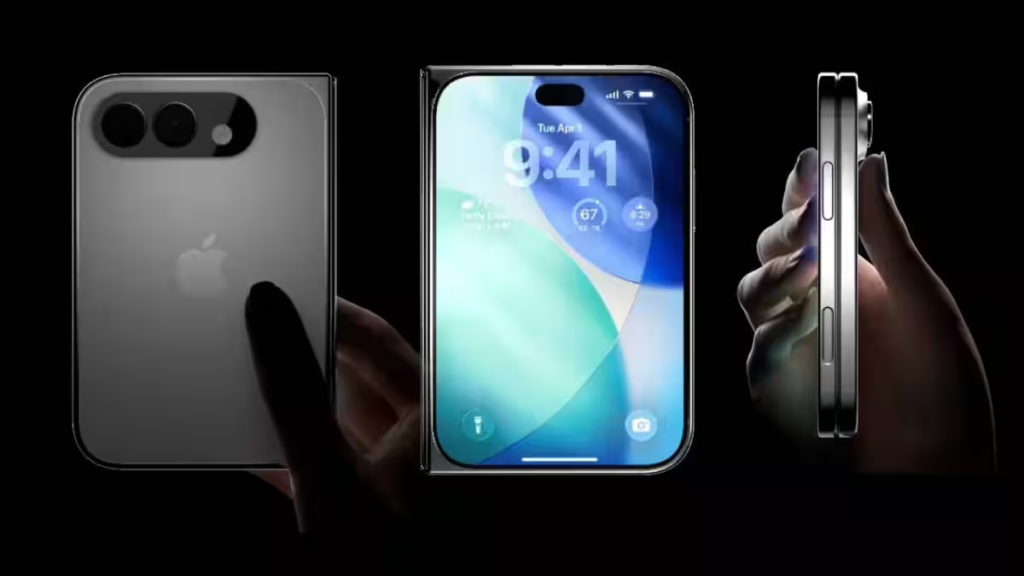
Apple could be on the verge of its biggest iPhone redesign in years.
The company is widely expected to unveil its first foldable iPhone at its “Surprise and shine” event, with the launch reportedly scheduled for 10:30 p.m. IST. If the long-running rumors prove accurate, the device could introduce a completely new form factor to Apple’s flagship smartphone lineup.
The foldable iPhone is expected to carry a starting price of around $2,000, while higher-storage configurations could approach $3,000.
The device has reportedly been in development for years, with Apple said to have accelerated its foldable ambitions around 2020 after CEO Tim Cook observed consumers in Asia using foldable phones from Samsung and Huawei.
The launch would put Apple into direct competition with Samsung, Google and other manufacturers that have already spent years refining foldable smartphones.
What will Apple’s foldable iPhone look like?
The biggest change will be the display.
According to reports, Apple’s first foldable iPhone will feature a 7.8-inch internal display when unfolded. That would give it a substantially larger screen than a conventional iPhone while maintaining a relatively compact footprint when closed.
The reported design is closer to a book-style foldable than a traditional flip phone.
When folded, the device is expected to be roughly the size of a passport. Once opened, its proportions are reportedly closer to a small tablet or Apple’s Magic Trackpad than to a conventional smartphone.
That could give Apple a particularly strong selling point: a phone that can function as a large-screen device without requiring users to carry a separate tablet.
The outer display could be 5.5 inches
The cover display is reportedly much smaller at around 5.5 inches.
That shorter outer screen could make the folded phone easier to grip and more comfortable to use one-handed. It could also help keep the device relatively narrow when closed.
The trade-off is obvious: users who want to do extensive tasks on the phone would likely need to unfold it.
Apple could therefore be betting that people will use the smaller exterior screen for quick interactions and the larger internal display for video, gaming, multitasking and productivity.
Why does Apple’s foldable design matter?
Foldable smartphones have existed for years, but Apple has stayed out of the category.
Samsung launched the original Galaxy Fold in 2019, giving it a substantial head start. Huawei and other Chinese manufacturers subsequently developed increasingly sophisticated foldable designs.
Apple’s absence has been notable because the company often waits until a product category has matured before entering it.
That strategy could work particularly well with foldables.
Early foldable phones faced criticism over bulky designs, visible creases, fragile hinges, limited software optimization and high prices. Manufacturers have gradually improved those areas.
Apple’s challenge will be to convince consumers that its version solves enough of those problems to justify a premium price.
How big will the foldable iPhone’s screen be?
The reported display configuration is:
| Feature | Reported specification |
|---|---|
| Internal display | 7.8 inches |
| Outer display | 5.5 inches |
| Form factor | Book-style foldable |
| Folded size | Approximately passport-sized |
| Rear cameras | Two |
| Processor | A20 Pro |
| Manufacturing process | TSMC 2nm |
| Expected starting price | Around $2,000 |
| Higher-end price | Potentially close to $3,000 |
These specifications remain based on reports and leaks rather than Apple’s official confirmation.
What cameras will the foldable iPhone have?
The foldable iPhone is reportedly expected to feature a dual-camera system on the rear.
The setup is said to include a main camera and a wide-angle camera.
That would represent a more streamlined camera arrangement than the multi-camera systems found on Apple’s Pro models.
The reason may be space.
Foldable phones have to accommodate hinges, two display sections, batteries and other components within a relatively thin body. Camera hardware therefore has to be balanced against the mechanical requirements of the folding design.
Apple may also rely heavily on computational photography to compensate for having fewer physical cameras.
What chip will Apple’s foldable iPhone use?
The device is expected to be powered by an A20 Pro chip, reportedly manufactured using TSMC’s 2nm process technology.
If accurate, that would place the foldable iPhone among Apple’s most technologically advanced mobile devices.
A smaller chip manufacturing process can potentially deliver improvements in performance and power efficiency, although real-world gains depend on the chip’s architecture and Apple’s implementation.
Power efficiency could be particularly important for a foldable iPhone because the device will have to power a significantly larger internal display.
Why is Apple entering the foldable market now?
Apple’s timing is particularly interesting.
The company reportedly began exploring foldable technology well before Samsung introduced the first Galaxy Fold. However, development accelerated around 2020 after Tim Cook reportedly saw consumers across Asia using foldable devices from Samsung and Huawei.
That suggests Apple was not simply responding to a sudden market trend.
Instead, the company may have spent years working on the engineering challenges associated with a foldable display, hinge system and compact internal components.
Apple’s approach has historically been to enter emerging categories after the technology becomes sufficiently mature.
The Apple Watch, AirPods and Vision Pro all followed versions of this strategy, although their commercial outcomes have differed significantly.
How expensive will Apple’s foldable iPhone be?
Price could be the biggest obstacle.
The foldable iPhone is expected to start at approximately $2,000, putting it well above Apple’s conventional flagship smartphones.
The highest-storage versions could reportedly approach $3,000.
That would transform the device from a premium smartphone into a luxury technology product.
For comparison, buyers at that price would be entering territory where a foldable phone could cost as much as—or more than—some laptops.
Apple would therefore need to offer more than a folding screen.
The company would need to demonstrate clear advantages in durability, software, battery life, camera performance and overall usability.
Will the foldable iPhone replace the regular iPhone?
Probably not immediately.
The foldable model is more likely to become an additional premium tier in Apple’s lineup rather than replace the standard iPhone.
Its extremely high expected price would make it inaccessible to most iPhone buyers.
Instead, Apple could position it as an Ultra product aimed at consumers willing to pay substantially more for a new form factor.
That strategy would also allow Apple to continue selling conventional iPhones while gradually learning how consumers respond to foldable devices.
What could the foldable iPhone be used for?
The larger internal screen could fundamentally change how people use an iPhone.
Potential use cases include:
- Watching movies and television on a larger display
- Running multiple apps side by side
- Editing documents
- Gaming
- Video calls
- Photo and video editing
- Reading
- Using the phone as a compact tablet
Multitasking could be particularly important.
A 7.8-inch screen provides considerably more space for two applications to operate simultaneously than a conventional smartphone display.
Apple could therefore market the device not simply as a phone that folds, but as a hybrid between a smartphone and a small tablet.
What does the foldable iPhone mean for Apple?
The launch would be significant because the iPhone remains the central product in Apple’s hardware ecosystem.
A foldable model would represent one of the most substantial physical changes to the iPhone since its introduction in 2007.
The iPhone accounts for roughly half of Apple’s sales, making any major redesign strategically important to the company.
It would also be one of the first major product tests for Apple’s new leadership era.
John Ternus became Apple’s CEO on September 1, according to the information surrounding the reported launch, making the foldable iPhone potentially one of the earliest defining products of his tenure.
That makes the timing particularly consequential.
If the product succeeds, Apple could establish a new premium smartphone category just as it previously helped redefine smartphones with the original iPhone.
If it fails, the enormous development costs and reported $2,000-plus price could make the product a cautionary example of Apple’s willingness to enter a category late.
Can Apple make foldable phones mainstream?
That may ultimately be the biggest question.
Foldables have been available for several years, but they remain a relatively small part of the overall smartphone market.
Apple’s enormous installed base gives it an advantage that smaller manufacturers do not have.
Millions of iPhone users already understand Apple’s software ecosystem, services and accessories. If Apple can make the transition to a foldable design feel seamless, existing customers could provide a substantial audience.
But price remains a major barrier.
A $2,000 starting price could limit the product to enthusiasts and wealthy early adopters rather than the mass market.
The first generation may therefore be less about selling hundreds of millions of devices and more about establishing Apple’s technology, software experience and position in the foldable market.
The bigger test for Apple
The reported foldable iPhone represents more than another addition to Apple’s product catalog.
It is a test of whether the company can take a technology that competitors have been refining for years and make it feel distinctly Apple.
The hardware has to be thin enough, durable enough and powerful enough. The software has to make the larger display genuinely useful. And the price has to make sense to consumers who can already buy a conventional iPhone for considerably less.
If Apple gets those pieces right, the device could help redefine what consumers expect from a premium smartphone.
If it does not, the foldable iPhone could become an expensive experiment.
For now, the greatest details—including the final name, price and specifications—remain subject to Apple’s official announcement.
But after years of watching Samsung, Google and Chinese manufacturers experiment with folding screens, Apple may finally be ready to enter the foldable smartphone race.
And given the reported price, it is betting consumers will pay a premium to see the iPhone in a completely new shape.
TL;DR
Apple is widely expected to unveil its first foldable iPhone, reportedly called the iPhone Ultra, at its “Surprise and shine” event. The device is rumored to feature a 7.8-inch internal display, a 5.5-inch outer screen, two rear cameras and an A20 Pro chip built using TSMC’s 2nm process.
The reported starting price is around $2,000, with premium versions potentially approaching $3,000.
If launched as expected, it would represent Apple’s biggest iPhone design change in years and could become an important early test of the company’s new leadership under CEO John Ternus.