
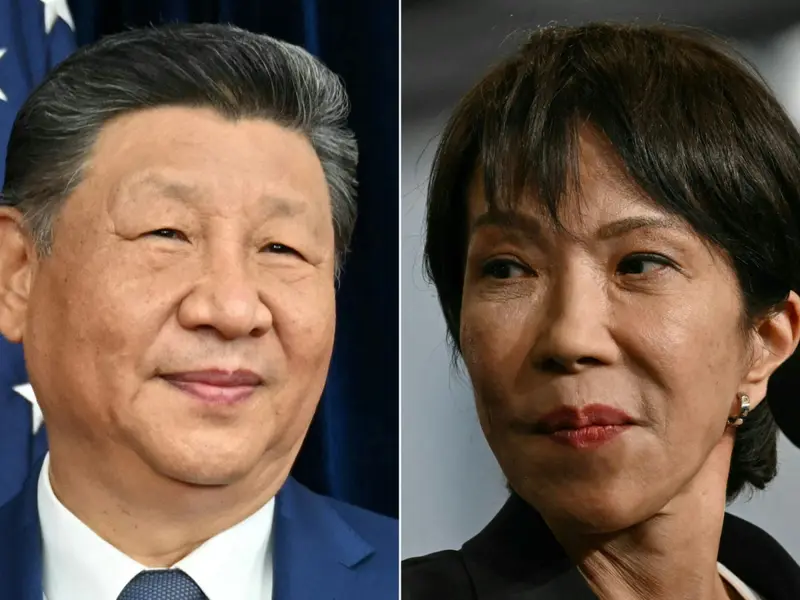
China and Japan are entering one of their most volatile phases in years, with new military movements pulling regional powers into the dispute. A joint China–Russia air patrol near South Korea and Japan has heightened anxieties across Northeast Asia and triggered diplomatic protests in Seoul and Tokyo.
The coordinated flights, conducted as Beijing escalates pressure on Japan over Taiwan, have renewed fears that the simmering standoff could spiral into a wider regional confrontation.
TL;DR
- China and Russia conducted joint air patrols near Japan and South Korea, prompting both nations to scramble fighter jets.
- Seoul protested after Russian and Chinese aircraft entered South Korea’s KADIZ; Tokyo warned of “intensified military pressure.”
- The flights follow a political storm sparked by Japanese PM Sanae Takaichi’s remarks on Taiwan.
- China has retaliated with diplomatic protests, increased military activity, and travel advisories targeting Japan.
- Analysts warn the standoff marks the most serious China–Japan friction in years, with Taiwan becoming the central flashpoint.
What Triggered the Latest China–Russia Air Patrol?
China and Russia carried out what they described as a routine annual strategic patrol, but the timing and location were anything but ordinary. According to Japanese and South Korean officials:
- Seven Russian and two Chinese military aircraft entered South Korea’s Air Defense Identification Zone (KADIZ).
- Both Seoul and Tokyo scrambled fighter jets in response.
- South Korea filed a diplomatic protest, while Japan issued a stark warning that the flights “intensify military pressure on Japan.”
Beijing and Moscow insist the mission complied with international law. Still, the joint patrol symbolically reinforces China’s message: Japan’s recent political stance—especially on Taiwan—will not go unanswered.
Why China–Japan Relations Are at Their Worst Point in Years
The spark: a statement on Taiwan
Tensions escalated after newly appointed Japanese Prime Minister Sanae Takaichi made remarks suggesting that a Chinese attempt to forcibly take Taiwan could constitute a “survival-threatening situation” for Japan.
In Japan’s security doctrine, such a classification could justify the use of force in limited, collective self-defense scenarios.
This analogy deeply angered Beijing, which accused Tokyo of:
- Interfering in China’s internal affairs
- Undermining Chinese sovereignty
- Laying groundwork for military involvement in the Taiwan Strait
China–Japan’s escalating response
Beijing has retaliated on multiple fronts:
- Increased aerial and naval drills around Japan’s periphery
- Formal complaints to the United Nations, warning that Japanese military involvement in Taiwan would be “aggression”
- Cancellation of bilateral cultural meetings
- A travel advisory warns Chinese nationals against visiting Japan
- Suspension of the China–Japan ferry route Jian Zhen Hao, which connects Shanghai with Kobe and Osaka
Each step signals that Beijing intends to widen diplomatic and economic pressure, not just military signaling.
Why Russia Is Entering the Picture Now
China and Russia have steadily expanded joint military cooperation in recent years, but the latest patrol comes at a politically sensitive moment.
What Russia gains
- Leverages tensions between Tokyo and Beijing
- Demonstrates its operational reach in the Asia-Pacific
- Reinforces alignment with China amid strained relations with the West
What China gains
- Shows it is not isolated
- Presents a united front to Japan and the United States
- Forces Japan to stretch its defense resources across multiple threats
The optics are unmistakable: China is willing to bring in partners to pressure Japan when needed.
How South Korea Is Dragged Into the Dispute
South Korea lodged a formal protest after the joint patrol entered KADIZ, an area South Korea monitors for security threats. While an ADIZ is not sovereign airspace, such incursions are taken seriously.
Why is Seoul uneasy
- It faces growing Chinese military activity near its borders.
- Relations with Japan, though improving, are historically fragile.
- Russia’s involvement adds unpredictability in the region.
- The Korean Peninsula already manages the persistent threat from North Korea.
South Korea, therefore, views these flights as part of a broader pattern of military pressure from China, but also as an unwanted complication in its delicate security environment.
What’s Driving China’s Aggressive Posture Toward Japan?
Beijing sees Japan’s openness to discussing Taiwan as a direct challenge to its sovereignty. Historically, China-Japan relations have been shaped by:
- Territorial disputes over the Senkaku/Diaoyu Islands
- Japan’s expanding defense budget
- Japan’s closer coordination with the United States
- Public sentiment in both countries is shaped by unresolved historical tensions
Takaichi’s remarks crossed what China considers a red line: any indication that Japan might intervene in a Taiwan scenario.
This is why Beijing has amplified both military and diplomatic pushback, aiming to force Tokyo to retract or soften the comments.
Could This Escalate Into a Larger Conflict?
Why the risk is real
- Taiwan is becoming the central fault line in Asia-Pacific geopolitics.
- Japan has identified Taiwan’s security as directly linked to its own survival.
- China sees foreign involvement in Taiwan as intolerable interference.
- Russia’s participation broadens the geopolitical stakes.
Military analysts note that while none of the countries want direct conflict, miscalculation is now the greatest risk, especially with overlapping air patrols, shadowing aircraft, and heightened political rhetoric.
What Happens Next?
Tokyo is under pressure to show strength without escalating the situation further. Observers expect Japan to:
- Increase surveillance near the Taiwan Strait
- Strengthen defense coordination with the U.S., Australia, and South Korea
- Continue raising concerns at international forums
Meanwhile, China is unlikely to scale back military activities. On the contrary, joint patrols with Russia may become more frequent as Beijing signals that Japan’s Taiwan stance has consequences.
The international community, including ASEAN nations and the EU, has called for restraint, but neither Beijing nor Tokyo appears ready to back down from their positions.