
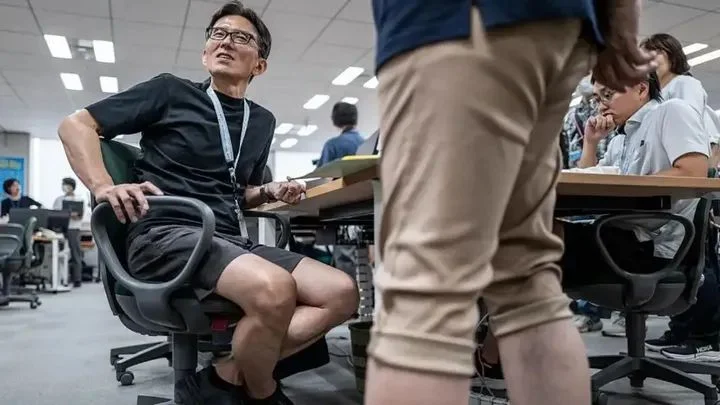
Tokyo’s push to help workers beat the summer heat has unexpectedly ignited a nationwide conversation about workplace fashion, gender expectations and body hair. As part of the Tokyo Metropolitan Government’s Cool Biz campaign, male employees are being encouraged to wear shorts to work during the hot summer months. While many see the move as a practical response to rising temperatures, others argue it has exposed double standards in Japanese office dress codes.
The discussion has even given rise to a new online term: “sunehara,” or “leg hair harassment.”
Why is Tokyo encouraging men to wear shorts to work?
The recommendation is part of the Tokyo Cool Biz initiative, which promotes lighter clothing to reduce reliance on air conditioning during Japan’s increasingly hot summers.
The program encourages employees to choose more comfortable attire while maintaining professional standards.
Tokyo Metropolitan Government environmental official Noboru Watanabe defended the initiative, telling the BBC:
“We want to give people more options in the severe heat, not tell them what to wear.”
He added that lighter clothing should not be controversial as long as workplace attire remains appropriate and respectful.
What is ‘sunehara’?
The debate has centered less on shorts themselves and more on what comes with them.
Some women on social media coined the term “sunehara,” combining the Japanese word for shin (“sune”) with “harassment”, to describe discomfort over seeing men’s visible leg hair in professional settings.
The term reflects broader conversations about workplace appearance standards rather than any formal policy or legal concept.
Supporters of the discussion argue that if men are allowed to dress more casually, expectations surrounding women’s office attire should also evolve.
Why are some women criticising the policy?
Critics say the new recommendation highlights unequal workplace expectations.
Many women in traditional Japanese offices are still expected to wear:
- Tights or stockings.
- Formal skirts or dresses.
- More restrictive business attire.
Some argue that encouraging men to wear shorts while women continue to face stricter dress codes creates an imbalance rather than promoting workplace comfort for everyone.
The debate has therefore expanded beyond men’s clothing to broader questions of gender equality in office fashion.
What does the survey show?
A survey conducted by Gorilla Clinic found mixed public opinion regarding the recommendation.
According to the survey:
- 53.5% of respondents opposed wearing shorts at work during summer.
- 46.5% supported the policy.
The survey also found that women significantly outnumbered men among those expressing opposition, suggesting female respondents were generally less comfortable with the idea of male colleagues wearing shorts in professional environments.
Has the debate affected grooming trends?
The conversation has reportedly influenced men’s grooming habits.
Akifumi Funatsu, director of Gorilla Clinic, said the clinic has seen growing interest in laser hair removal treatments for men’s legs.
According to Funatsu, some male clients believe reducing visible leg hair is becoming part of workplace etiquette, particularly if they plan to wear shorts in professional settings.
What is the Cool Biz initiative?
Cool Biz is Japan’s long-running government campaign to promote lighter summer clothing as a way to reduce energy consumption.
The initiative was first launched nationally in 2005 by Yuriko Koike, then Japan’s environment minister, as an energy-saving measure that encouraged businesses to reduce air conditioning use.
As Tokyo governor, Koike expanded the campaign, promoting more relaxed summer dress codes across government offices and private workplaces.
This year’s guidance encouraging shorts has been particularly embraced by startups and technology companies, where casual workplace attire is already more common.
Why does this debate matter?
While the discussion began with shorts, it reflects broader workplace trends in Japan.
The debate touches on several issues:
- Workplace comfort during extreme heat.
- Gender expectations in professional attire.
- Personal grooming and appearance norms.
- The balance between professionalism and practicality.
As climate change contributes to hotter summers, employers around the world are increasingly reassessing traditional office dress codes, making Japan’s conversation part of a wider global shift.
TL;DR
- Tokyo is encouraging men to wear shorts to work as part of its Cool Biz initiative.
- The recommendation aims to improve comfort and reduce energy use during hot summers.
- The move has sparked online debate over workplace appearance and gender equality.
- The term “sunehara,” meaning “leg hair harassment,” has emerged in discussions about visible leg hair in offices.
- A survey found 53.5% of respondents opposed wearing shorts at work, while 46.5% supported the idea.
- The debate has also reportedly increased demand for men’s laser leg hair removal treatments.