
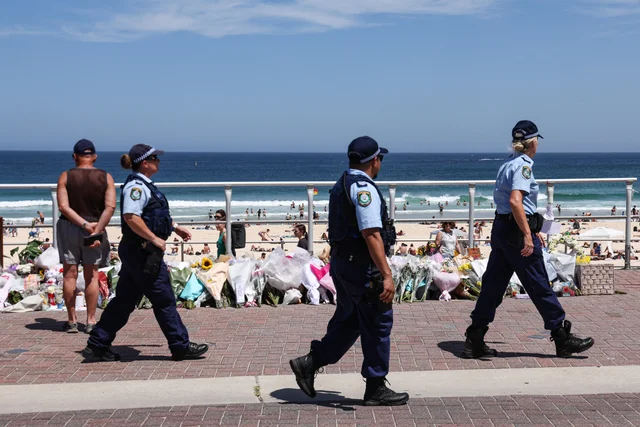
Just days after the deadly Bondi Beach attack rattled Australia, Sydney police say they disrupted another potential act of violence following a dramatic car interception that led to multiple arrests. Authorities insist the two cases are not linked—but the timing has intensified public anxiety and renewed scrutiny of Australia’s counterterrorism posture.
This article breaks down what happened, why police moved when they did, and what it signals about security operations in Sydney right now.
What Happened in Sydney on Thursday?
On Thursday, New South Wales (NSW) Police carried out a high-risk operation in a Sydney suburb after receiving what they described as “specific intelligence” suggesting a violent act was possibly being planned.
Key details confirmed by police
- Officers intercepted two vehicles on George Street.
- A dramatic car chase preceded the arrests.
- Seven men were detained during the operation.
- Armed police were seen restraining suspects in public view.
The incident unfolded just hours after Australian Prime Minister Anthony Albanese addressed the nation, adding to the sense of urgency surrounding the operation.
Police have not disclosed what type of violence may have been planned, citing the ongoing nature of the investigation.
Is This Connected to the Bondi Beach Attack?
This is the question many Australians are asking—and one police have addressed repeatedly.
NSW Police stance
Authorities have clearly stated they have not identified any connection between:
- The men arrested after Thursday’s vehicle interception, and
- The deadly Bondi Beach attack is currently under investigation.
Police emphasized that the operation was intelligence-led and preventative, rather than reactive to Bondi Beach.
Why Did Police Act So Quickly?
The speed and visibility of the operation point to a broader policing strategy: intervene early, even if details cannot yet be made public.
How intelligence-led policing works
Police typically act when intelligence meets certain thresholds, such as
- Credible indicators of imminent harm
- Surveillance or communications suggesting planning
- Movement patterns consistent with preparatory acts
In this case, NSW Police said they moved after being alerted that “a violent act was possibly being planned,” a phrase often used when intelligence is serious but not yet courtroom-ready.
Why Are Tensions So High in Australia Right Now?
The Bondi Beach attack has left the country on edge, especially in major cities like Sydney.
Contributing factors
- The randomness and brutality of the Bondi incident
- Extensive media coverage and graphic footage circulating online
- Heightened police presence in public areas
- Political pressure on authorities to reassure the public
When another police operation occurs so soon after a national tragedy, it can feel like confirmation that danger is everywhere—even when cases are unrelated.
What We Know and Don’t Know: About the Arrests
At this stage, police have released limited information.
What is confirmed
- Seven men were detained.
- Two vehicles were intercepted.
- No explosives or weapons have been publicly disclosed.
- No charges have been announced yet.
What remains unclear
- The nature of the suspected violent act
- Whether terrorism-related offenses are being considered
- The legal status of the detainees following questioning
These gaps are typical in developing investigations, especially when intelligence sources or surveillance methods are involved.
How Do These Operations Affect Public Safety?
From a security perspective, operations like this serve two purposes:
- Disruption: Preventing potential violence before it occurs.
- Deterrence: Signaling that police are actively monitoring threats.
However, there is also a downside.
Public impact considerations
- Visible armed arrests can heighten fear rather than calm it.
- Lack of details can fuel speculation on social media.
- Communities may feel unfairly scrutinized if rumors spread.
For police, the challenge is balancing operational secrecy with public reassurance—a balance that becomes harder after mass-casualty events.
What Happens Next in the Investigation?
Police have described the situation as ongoing, meaning several next steps are likely:
- Continued questioning of those detained
- Forensic examination of the vehicles
- Review of the intelligence that triggered the operation
- Possible charges or release without charge
If charges are filed, more details will emerge through court documents. If not, police may remain tight-lipped to protect intelligence sources.
Why This Story Matters Beyond Australia
For US readers, this case offers a familiar pattern:
- A major attack creates heightened alertness
- Law enforcement disrupts another suspected plot
- Officials stress there is no direct link
- The public debates security versus transparency
These dynamics mirror post-attack policing in cities like New York, London, and Paris. The Sydney operation underscores how modern counterterrorism often happens out of sight, until it suddenly doesn’t.
TL;DR
- Sydney police detained seven men after intercepting two vehicles over fears of a possible violent act.
- Authorities say there is no link to the recent Bondi Beach attack.
- The operation was driven by specific intelligence and aimed at prevention.
- Details remain limited as investigations continue.
- The incident highlights the tension between public safety, transparency, and fear after major attacks.