
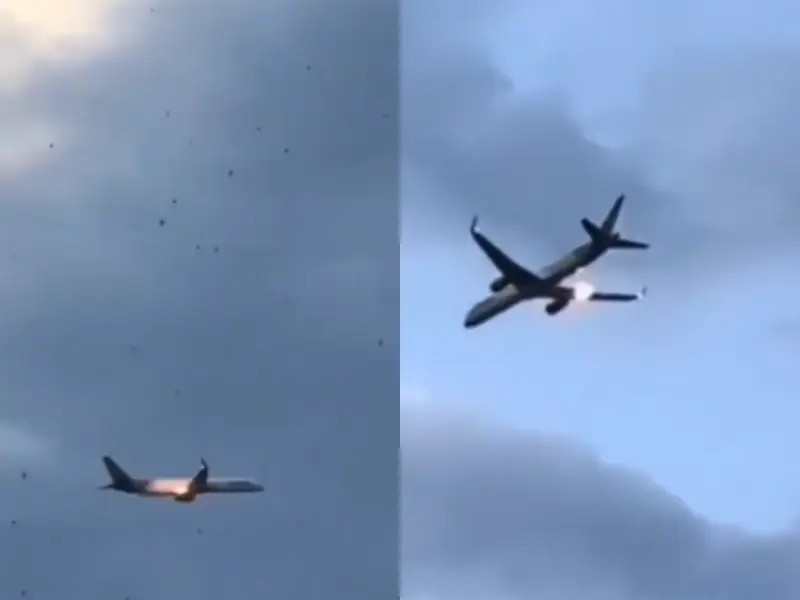
A Condor flight carrying 273 passengers from Corfu, Greece, to Düsseldorf, Germany, faced a terrifying mid-air scare when flames were seen coming out of its engine. Panic spread quickly, with several passengers sending “goodbye” messages to loved ones, fearing the worst.
The Boeing 757-300 eventually made an emergency landing in Brindisi, Italy. No injuries were reported, but the incident reignited questions about aviation safety, Boeing’s aircraft reliability, and airport readiness during emergencies.
TL;DR
- Condor flight DE 3665 from Corfu to Düsseldorf emitted visible flames from one engine.
- Passengers panicked, many sending final texts and goodbye messages.
- Pilots shut down the engine and diverted safely to Brindisi, Italy.
- No injuries, but hotel shortages left passengers overnight at the airport.
- The incident adds to mounting scrutiny of Boeing aircraft safety.
What Happened on the Condor Flight
Condor flight DE 3665, a Boeing 757-300, departed from Corfu on August 18, 2025, bound for Düsseldorf. About 40 minutes into the flight, passengers noticed bursts of fire visibly shooting from the right engine.
Videos shared online showed flickering flames, sparking fear and chaos in the cabin. One passenger told reporters:
“It was incredibly horrible. I already sent goodbye texts because I thought, ‘It’s over now.’”
The aircraft carried 273 passengers and 8 crew. At cruising altitude, the engine anomaly prompted the pilots to shut down the right engine as a precaution. They diverted to Brindisi Airport in Italy, where the plane landed safely.
Why the Engine Emitted Flames
While passengers feared the worst, Condor later clarified that the incident was not a full engine fire, but rather a combustion chamber disruption.
- A turbine airflow disturbance caused excess fuel combustion near the chamber, resulting in visible flames.
- The system reacted as designed, shutting down the engine and keeping the aircraft controllable.
- Pilots followed safety protocol, prioritizing passenger safety with a diversion landing.
This explanation highlights both the complexity of modern jet engines and the importance of immediate crew response.
Passenger Panic: The Human Side of the Incident
From an engineering standpoint, the situation was under control. But inside the cabin, the story was very different.
- Fear and Chaos: Flames visible through the windows triggered panic. Many believed the engine was on fire and that a crash was imminent.
- Goodbye Messages: Passengers later admitted they sent farewell texts to family, convinced they might not survive.
- Psychological Stress: Even though the plane landed safely, the traumatic memory will likely impact some passengers long after the incident.
This duality—technical safety vs. human perception, shows why communication in emergencies is as critical as engineering.
Emergency Landing in Brindisi: A Safe but Strained Response
The pilots diverted to Brindisi, Italy, landing safely within 40 minutes of the incident. No injuries occurred, but the aftermath highlighted logistical challenges:
- Hotel Shortage: With limited capacity in Brindisi, many passengers could not find hotel rooms. Condor distributed blankets and meal vouchers for those stranded overnight at the airport.
- Replacement Aircraft: The airline arranged another plane, transporting passengers to Düsseldorf the next day.
While safety was preserved, the situation exposed infrastructure gaps at smaller airports that suddenly face hundreds of stranded travelers.
Why This Incident Matters
This event matters beyond one flight—it underscores wider themes in aviation safety and global travel.
- Aviation Safety Protocols Work
The aircraft was designed to withstand single-engine operation. The crew acted swiftly, proving how training and systems save lives. - Passenger Trust Is Fragile
Even when technically safe, visible signs like flames trigger panic. Passenger confidence in Boeing planes is already strained, and such incidents worsen perception. - Operational Readiness
Diversion airports must be prepared for large inflows of passengers. Accommodation shortages highlight a need for coordinated emergency logistics. - Boeing Under Pressure
The Boeing 757 involved is an older but widely used aircraft. With recent safety controversies around Boeing, this adds further scrutiny on its legacy fleet.
A Quick Breakdown of the Incident
| Element | Details |
|---|---|
| Airline | Condor (German leisure carrier) |
| Aircraft | Boeing 757-300 |
| Flight Number | DE 3665 |
| Route | Corfu, Greece → Düsseldorf, Germany |
| Onboard | 273 passengers, 8 crew |
| Incident | Combustion chamber disruption, visible flames |
| Response | Engine shut down, diversion to Brindisi |
| Outcome | Safe landing, no injuries |
| Aftermath | Passengers stranded overnight, replacement aircraft arranged |
Lessons from the Condor Flight Emergency
This incident demonstrates the fine balance between aviation engineering and human experience.
For Passengers: Understanding that modern planes are engineered to fly safely even with one engine may reduce fear during such rare events.
For Airlines: Ensuring passengers receive calm, clear communication during emergencies could reduce panic.
For Airports: Building stronger contingency infrastructure for stranded travelers is essential.
For Boeing & Regulators: As scrutiny intensifies, transparency on safety checks and incident investigations is key to restoring public trust.
How Incidents Like This Can Help Improve Aviation Safety and What You Should Do
Air travel remains the safest mode of transportation, with redundancy and strict safety checks built into every flight. But events like the Condor incident serve as a wake-up call for the industry:
- Airlines should continue to invest in crew training for both technical response and passenger communication.
- Passengers should stay calm, follow instructions, and remember that engines are designed with fail-safes.
- Regulators must hold aircraft manufacturers accountable for transparent safety reporting and timely upgrades.
For travelers, the key takeaway is this: incidents like these are extremely rare, but they also drive improvements that make future flights even safer.