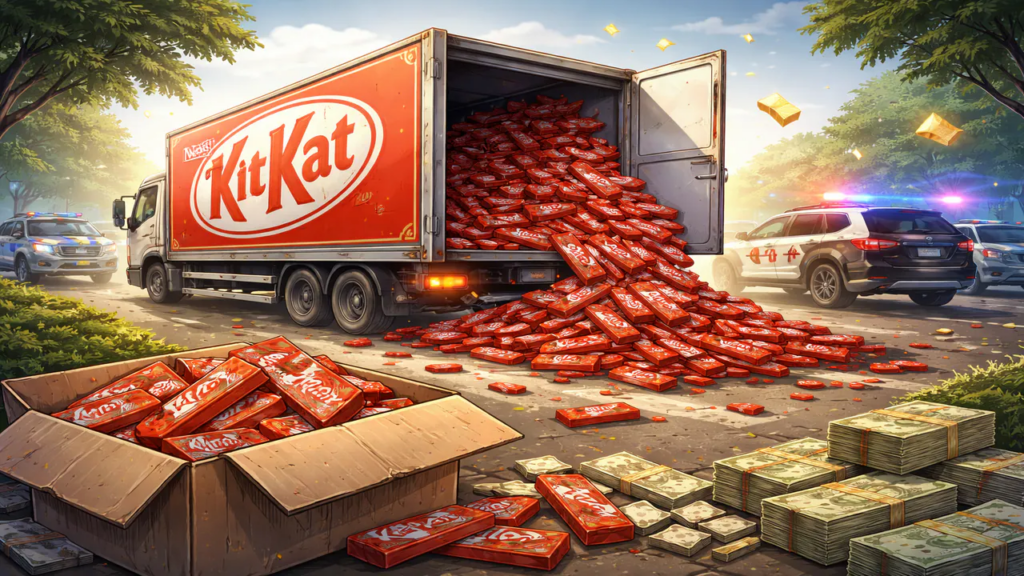
It sounds like a plot cooked up in a candy-coated thriller, but it’s real. In what may be Europe’s most unusual cargo theft in recent memory, more than 400,000 KitKat bars disappeared en route from Italy to Poland.
The shipment, owned by Nestlé, never made it to its destination. Instead, it vanished somewhere along the supply chain, leaving behind a mystery that blends organized crime with confectionery cravings.
What happened in the KitKat chocolate heist?
The facts read like a logistics nightmare. A truck carrying roughly 12 tons of KitKat chocolate bars left a factory in central Italy, bound for distribution hubs in Poland. It never arrived.
According to company statements, the shipment included around 413,793 individual bars, many from a newly introduced product line.
Somewhere between departure and destination, both the truck and its sugary cargo disappeared.
Key facts at a glance
- Total stolen: ~12 tons of chocolate
- Estimated count: Over 400,000 bars
- Route: Central Italy to Poland
- Owner: Nestlé (KitKat parent company)
- Status: Truck and goods still missing
No location of the theft has been publicly disclosed, adding to the intrigue.
Why would criminals steal chocolate at this scale?
It may sound whimsical, but cargo theft is a serious and growing issue across Europe. And chocolate, surprisingly, is prime target material.
Why is chocolate valuable to thieves
- High resale value with steady demand
- Easy to distribute in informal markets
- Non-perishable over short periods
- Minimal traceability compared to electronics
Unlike luxury goods, chocolate doesn’t raise suspicion when resold in bulk. It melts into everyday commerce, quietly and profitably.
Can the stolen KitKat bars be traced?
Here’s where the story gets a modern twist.
Nestlé has confirmed that the stolen bars are embedded with unique batch codes. These codes can be scanned, potentially allowing the company to identify and track the products if they re-enter legitimate retail channels.
How the tracking works
- Each batch carries a unique identifier
- Scanning the code can flag the product as stolen
- Instructions are triggered to report the item
It’s not quite a GPS tracker hidden in chocolate, but it adds a digital fingerprint to an otherwise analog product.
That said, if the bars are sold through informal or underground markets, detection becomes significantly harder.
How are authorities responding?
Nestlé says it is working with law enforcement and supply chain partners across Europe. Investigations into cargo theft often involve multiple jurisdictions, especially when goods cross borders.
Challenges investigators face
- Lack of precise theft location
- Cross-border legal complexity
- Potential involvement of organized crime networks
- Rapid redistribution of goods
Without knowing where the truck disappeared, authorities are effectively chasing a moving target that may already be dispersed.
Is this part of a bigger trend in cargo theft?
Yes. While this case stands out for its sheer novelty, cargo theft itself is on the rise globally.
Food and beverage shipments, in particular, have become more attractive due to inflation and supply chain disruptions in recent years.
Common targets in cargo theft
- Packaged foods (like chocolate, coffee, alcohol)
- Consumer electronics
- Pharmaceuticals
- Luxury goods
What makes this case unique is not the crime itself, but the scale and symbolism. Chocolate is comfort food, not contraband. That contrast is what captured public attention.
Internet reacts: “Someone really needed a break”
If the crime baffled investigators, it delighted the internet.
Social media users quickly turned the heist into meme material, riffing on KitKat’s iconic slogan: “Have a break.”
One viral reaction summed it up: someone clearly took that message very seriously.
Others speculated whether the incident was accidental marketing genius, suggesting the brand might gain more visibility from the theft than from a traditional campaign.
Will this impact KitKat supply?
For consumers, the answer is simple: no.
Nestlé has reassured customers that supply chains remain stable and that there are no safety concerns related to the missing products.
What the company says
- No risk to consumers
- No significant supply disruption
- Ongoing investigation with authorities
In other words, your next chocolate fix is safe, even if 400,000 bars are currently off the grid.
Why this story matters beyond the headlines
At first glance, this is a quirky headline, the kind that invites a chuckle. But underneath, it highlights serious vulnerabilities in global logistics.
Cargo theft is not just about lost goods. It affects:
- Supply chain reliability
- Insurance costs
- Retail pricing
- Brand security
For companies like Nestlé, incidents like this are both financial setbacks and operational warnings.
TL;DR
- Over 400,000 KitKat bars were stolen during transit in Europe
- The shipment disappeared between Italy and Poland
- Nestlé is working with authorities to investigate
- The chocolate can be traced using batch codes
- The incident highlights rising cargo theft trends