
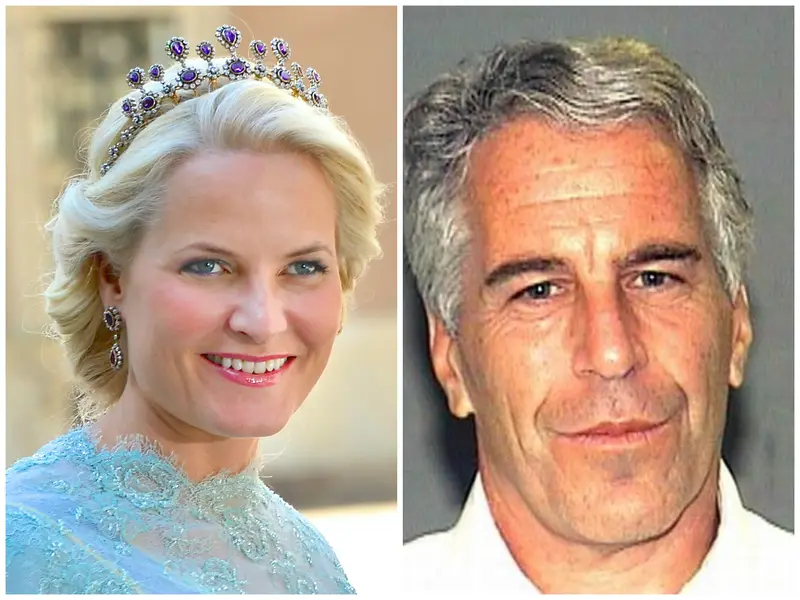
Norway’s Crown Princess Mette-Marit has publicly addressed her past association with convicted sex offender Jeffrey Epstein for the first time, describing herself as “manipulated and deceived.”
The emotional interview, aired on national television, was meant to close a chapter. Instead, it has reopened debate around judgment, accountability, and the optics of timing, especially as it followed closely after legal proceedings involving her son.
What did Mette-Marit say about her Epstein links?
The Crown Princess did not deny the association. Instead, she leaned into acknowledgment and regret.
Taking responsibility, but drawing a line
She admitted:
- She had contact with Epstein between 2011 and 2014
- She visited his residence in Palm Beach, Florida
- She failed to properly vet his background
At the same time, she insisted:
- She did not know he was a sex offender or predator
- She was misled and manipulated
- She regrets ever meeting him
Her framing walks a careful line between accountability and lack of awareness.
The “manipulation” argument
“I feel so manipulated,” she said, describing a situation where trust clouded judgment.
This defense raises a critical question:
How much responsibility lies with individuals who had access to public information about Epstein at the time?
What do the Epstein files suggest?
Recently released U.S. Justice Department documents added new context.
Key revelations
- Hundreds of emails were exchanged between Mette-Marit and Epstein
- Communication spanning several years
- Evidence that she had at least briefly researched him
One 2011 email reportedly included her remark:
“Googled u… didn’t look too good.”
Why this matters
This detail complicates her claim of ignorance. It suggests:
- Some awareness of reputational concerns
- A decision to continue contact despite red flags
How close was the relationship?
Mette-Marit characterized Epstein as a limited, private connection.
Her version
- He was a “private contact”
- Introduced through mutual acquaintances
- Not someone she widely discussed publicly
A notable contradiction
Despite describing the relationship as distant, she:
- Stayed at his residence
- Maintained communication over multiple years
This gap between description and documented interaction is central to public skepticism.
The uncomfortable incident she referenced
One of the most striking parts of the interview was her mention of an uneasy experience.
What she revealed
- An incident at Epstein’s home made her feel unsafe
- She contacted her husband, Haakon, at the time
- She later cut off contact with Epstein
What remains unclear
- The nature of the incident
- Why contact continued afterward, even if temporarily
This ambiguity has fueled further questions rather than closing the issue.
Why is the timing of the interview under scrutiny
The interview did not happen in a vacuum. Its timing is now part of the story.
The key context
The broadcast came shortly after proceedings concluded in a rape case involving her son, Marius Borg Høiby.
Why critics are questioning it
Some observers believe:
- The delay may have been strategic
- The interview could be an attempt to manage public perception
- It allowed the separation of two sensitive issues
Why timing matters in public life
For royal figures, timing can shape interpretation as much as content:
- Immediate responses signal transparency
- Delayed responses can appear calculated, even if justified
Public and political reaction in Norway
The response in Norway has been mixed and, at times, critical.
Political response
Jonas Gahr Støre and other officials have weighed in, reflecting broader concern about judgment at the highest levels of public life.
Public sentiment
Criticism has centered on:
- The appropriateness of the relationship
- The adequacy of her explanation
- Whether accountability has gone far enough
At the same time, some have expressed sympathy for her position and her acknowledgment of mistakes.
Health concerns and future role
The interview also touched on a deeply personal factor shaping her future.
Living with a chronic illness
Mette-Marit disclosed ongoing challenges with pulmonary fibrosis, a serious lung condition.
She acknowledged:
- Her ability to continue royal duties is uncertain
- Her health will ultimately determine her public role
A shared royal responsibility
Crown Prince Haakon emphasized their partnership, describing their royal responsibilities as a joint effort spanning more than two decades.
Why this story matters beyond Norway
This is not just a royal controversy. It reflects broader themes that resonate globally.
The Epstein ripple effect
Years after his death, Epstein’s network continues to surface:
- Revealing connections across politics, business, and royalty
- Forcing public figures to revisit past associations
- Raising questions about accountability and due diligence
Reputation in the digital age
In today’s environment:
- Past relationships are permanently documented
- Public scrutiny is immediate and global
- Explanations are dissected in real time
The challenge of credibility
Mette-Marit’s interview highlights a difficult balance:
- Acknowledging mistakes without admitting wrongdoing
- Expressing regret while maintaining credibility
- Addressing facts that may not fully align with memory
What should readers take away?
The interview answers some questions but leaves others unresolved.
Key takeaways
- Mette-Marit admits to contact with Jeffrey Epstein and regrets it
- She claims she was unaware of his crimes and was manipulated
- Documents suggest she had at least partial awareness of concerns
- The timing of her interview has added another layer of scrutiny
- Public trust hinges on how convincingly these contradictions are addressed
TL;DR
- Norway’s Crown Princess addressed her Epstein links publicly for the first time
- She said she was “manipulated and deceived” and regrets the association
- Emails suggest she had some awareness of concerns about Epstein
- The timing of the interview, after her son’s trial, has raised questions
- The controversy underscores ongoing scrutiny of Epstein’s global connections