
Quick Summary
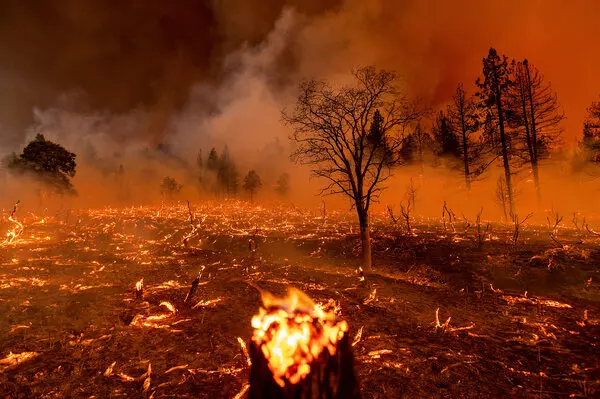
Spain and Portugal are enduring their worst wildfire season on record, with over 559,000 hectares burned across both countries. Fueled by heatwaves and drought, the fires have killed at least six people, forced mass evacuations, and triggered international aid. Experts warn the crisis is part of a larger climate trend that makes Europe increasingly vulnerable to “mega-fires.”
Record-breaking devastation across the Iberian Peninsula
Spain and Portugal are facing their most destructive wildfire season on record, with flames consuming hundreds of thousands of hectares and forcing mass evacuations. Fueled by relentless heatwaves and prolonged drought, the blazes are stretching firefighting resources to the limit and intensifying Europe’s climate crisis reckoning.
In Spain alone, more than 343,000 hectares (848,000 acres) of land—an area nearly the size of Rhode Island—have been destroyed this year, according to the European Forest Fire Information System (EFFIS). That surpasses the previous record set just three years ago, underscoring the growing severity of wildfires in southern Europe.
Across the border, Portugal has seen 216,000 hectares (534,000 acres) scorched since January. Both nations now top Europe’s wildfire charts, accounting for some of the continent’s worst fire damage in recent decades.
Human toll and forced evacuations
The disaster has already claimed lives. Two firefighters, one in each country, died in road accidents linked to the emergency response. Spain has reported a total of four wildfire-related deaths so far, while Portugal has confirmed two.
Tens of thousands of people have been displaced, with entire villages in Spain’s Galicia, Castile and Leon, and Extremadura regions emptied as flames advanced. In Portugal, the central town of Arganil has become a frontline of the crisis, with 2,000 firefighters deployed across the country, half concentrated in that area alone.
Spanish Civil Protection chief Virginia Barcones warned that 23 fires remain at “operational level two,” the second-highest emergency classification, meaning they threaten communities and require military support.
International aid and firefighting challenges
Recognizing the scale of the disaster, several European nations have stepped in to provide assistance.
- Spain has received firefighting aircraft from France, Italy, Slovakia, and the Netherlands.
- Portugal has gained air support from Sweden and Morocco.
Despite reinforcements, conditions remain dire. Spanish Defense Minister Margarita Robles admitted that thick smoke and the scale of the blazes are making airborne water-bombing operations “extremely difficult.”
Climate extremes fueling the crisis
The root cause of this destructive wildfire season lies in Europe’s shifting climate. Prolonged drought, combined with successive heatwaves, has turned vast swaths of land into tinderboxes. Temperatures have climbed to 45°C (113°F) in parts of Spain, while Portugal endured what Prime Minister Luis Montenegro called “24 days of unprecedented severity,” marked by extreme heat and fierce winds.
Montenegro declared, “We are at war, and we must triumph in this fight,” framing the fires as a national emergency requiring extraordinary mobilization.
Why this wildfire season stands out
Europe has long battled wildfires, particularly in Mediterranean regions. But several factors make this year’s fires alarming:
- Record scale: Spain has already broken its all-time wildfire damage record before the season ends.
- Cumulative impact: Repeated years of extreme heat have left soils drier, forests more brittle, and firefighting resources strained.
- Geopolitical distraction: With much of Europe focused on the Ukraine war and economic pressures, climate resilience measures may not be receiving adequate urgency.
Experts warn that such “mega-fires” are no longer exceptional events but increasingly predictable outcomes of climate change.
Is relief in sight?
There is a sliver of hope. Spain’s meteorological agency reports that the latest heatwave is easing, with temperatures set to drop in coming days. Cooler and more humid conditions could slow fire spread and give firefighters a chance to regain control.
Still, recovery will be long and arduous. Burned land—equivalent to nearly half a million football fields in Spain alone—will take years, if not decades, to regenerate. And for the families who lost homes, farms, or livelihoods, the scars go far beyond statistics.
The bigger picture: Europe’s wildfire future
Scientists consistently warn that southern Europe is on the frontline of climate-driven wildfire risk. Hotter summers, shrinking rainfall, and expanding droughts are likely to make devastating fire seasons more common.
Policy experts say governments must move from reactive firefighting to proactive strategies, including:
- Forest management and controlled burns to reduce fuel loads.
- Investments in water infrastructure and early warning systems.
- Cross-border cooperation, as fires rarely stop at political boundaries.
The crisis in Spain and Portugal is not just a regional disaster—it is a warning signal for the continent. As wildfires intensify, Europe will need to rethink how it prepares for a hotter, drier, more fire-prone future.