
Milan prosecutors probe shocking “sniper safari” allegations
Italian prosecutors have opened a criminal investigation into allegations that Italian citizens paid to take part in “sniper safaris” during the Bosnian war, shooting at civilians in the besieged city of Sarajevo in the early 1990s.
The case was triggered by a complaint from Italian journalist and novelist Ezio Gavazzeni, who alleges that wealthy foreign visitors travelled to Serb-held hills overlooking Sarajevo and paid large sums to kill defenseless men, women, and even children for sport.
Gavazzeni’s complaint, filed in Milan, is being examined by counter-terrorism prosecutor Alessandro Gobbis. The formal charge under review is murder.
Allegations of “human hunting” from Serb positions
According to Gavazzeni, the so-called safaris were organized during the 1992–1995 siege of Sarajevo, when Bosnian Serb forces surrounded the city and subjected it to years of sniper attacks and shelling.
Reports suggest that participants paid different rates depending on their targets, men, women, or children, and were transported from Trieste, Italy, to the hills above Sarajevo.
A Bosnian military intelligence officer reportedly informed Gavazzeni that Bosnian forces discovered these “safaris” in late 1993 and relayed the information to Italy’s Sismi military intelligence agency in early 1994. Sismi’s reply, received months later, allegedly stated, “We’ve put a stop to it, and there won’t be any more safaris.”
Within a few months, the officer said, the trips had ceased.
Evidence from journalist and eyewitnesses
Gavazzeni, known for his reporting on terrorism and organized crime, said he began investigating after watching Sarajevo Safari, a 2022 documentary by Slovenian director Miran Zupanič, which revived old allegations of foreign “war tourists.”
The journalist’s 17-page report includes testimonies from a Bosnian intelligence officer and former Sarajevo mayor Benjamina Karić, among others.
While similar stories have circulated for decades, this marks the first time Italian judicial authorities have officially opened a case.
The investigation aims to identify who may have organized or participated in the alleged killings, with prosecutors said to have compiled a list of witnesses.
“Indifference of evil”: crimes committed for thrill and money
In interviews with Italian media, Gavazzeni said the participants were “very wealthy people with a passion for weapons” who “paid to be able to kill defenseless civilians.”
Speaking to La Repubblica, he added that “many” took part, possibly around a hundred individuals, paying up to €100,000 (US$108,000) in today’s terms.
“These were not soldiers or ideologues,” he said. “It was the indifference of evil, people who came for the thrill of killing.”
Echoes of other war crimes and infamous figures
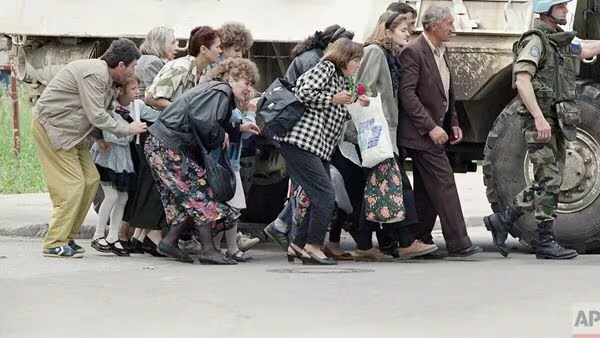
The allegations echo scenes long associated with the brutal siege of Sarajevo, where more than 11,000 civilians were killed between 1992 and 1995.
The story also recalls the infamous footage of Russian nationalist Eduard Limonov, filmed firing a heavy machine gun into Sarajevo in 1992 alongside Bosnian Serb leader Radovan Karadžić, later convicted of genocide.
Limonov did not pay for the experience; he participated as a supporter of the Serb cause, telling Karadžić: “We Russians should take an example from you.”
Bosnia’s stalled investigation and search for accountability
While the Milan investigation gains momentum, local inquiries in Bosnia-Herzegovina appear to have stalled. Survivors and activists have repeatedly called for greater accountability for war crimes that have remained unpunished for decades.
If prosecutors confirm the allegations, Italy could be the first country to criminally pursue citizens for paid killings during the Bosnian war — a conflict that tore apart the former Yugoslavia and left deep scars across the Balkans.
As investigators work to verify evidence and witness accounts, the case highlights both the atrocities of the 1990s war and the enduring struggle to bring those responsible to justice.
TL;DR
- Italian prosecutors are investigating claims that citizens paid to shoot civilians during the Bosnian war.
- The allegations involve “sniper safaris” organized from Serb-controlled hills above Sarajevo.
- Journalist Ezio Gavazzeni filed the complaint, citing testimony from Bosnian intelligence.
- Participants allegedly paid up to €100,000 for the chance to kill.
- The case revives long-standing claims of foreign “war tourists” during the 1992–1995 siege.