Quick Summary
Trump suggests U.S. tariffs on India’s Russian oil imports helped push Putin toward Alaska peace talks. India, once Russia’s second-largest oil buyer, has been forced to scale back purchases, potentially hitting Moscow’s war funding. This economic shift, Trump claims, was a probable factor in Russia’s request for talks.
India’s unexpected role in a high-stakes geopolitical shift
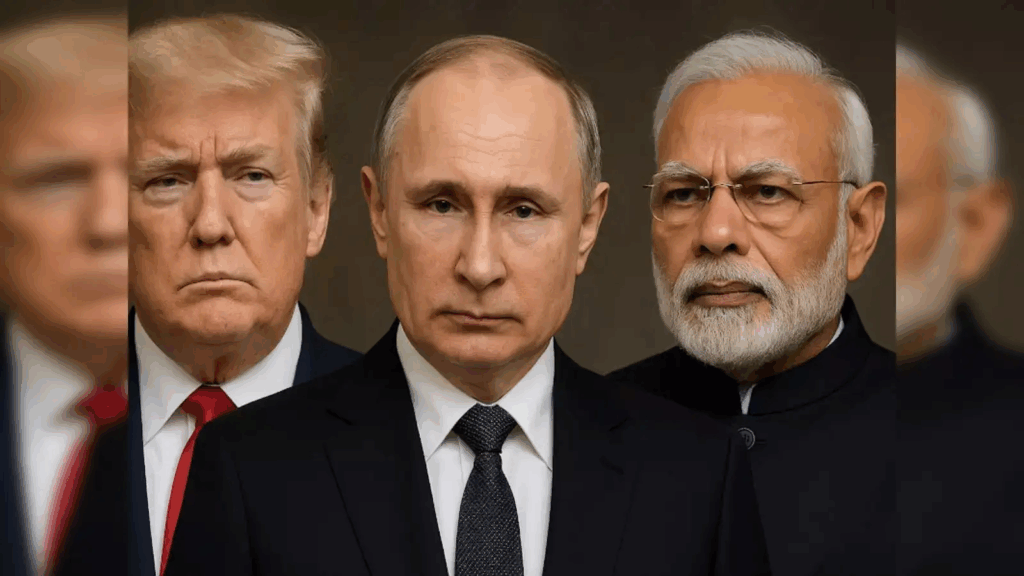
US President Donald Trump has suggested that recent tariffs on India, aimed at curbing its purchase of Russian oil, may have played a key role in bringing Russian President Vladimir Putin to the negotiating table for talks in Alaska.
Speaking to Fox News Radio on August 14, Trump called the link “probable,” noting that “everything has an impact” in international diplomacy. His comments point to India’s energy ties with Russia as a potential pressure point in the broader Ukraine conflict.
The tariff move that shook India’s oil imports from Russia
Earlier this month, Trump imposed steep tariffs on India in response to its continued import of Russian crude despite the ongoing Ukraine war.
- Initial levy: 25%
- Subsequent hike: 50%
The measure, according to Trump, “essentially took [India] out of buying oil from Russia,” targeting Moscow’s second-largest crude buyer after China. Before the tariffs, India’s discounted oil imports from Russia had surged following Western sanctions against Moscow.
Why India’s oil trade mattered to Russia
Russia’s energy exports are its economic lifeline, funding both domestic spending and military operations. Losing India — a fast-growing economy and major oil consumer, could significantly hit Moscow’s revenue stream.
Trump explained the chain reaction:
“When you lose your second largest customer and you’re probably going to lose your first largest customer, I think that probably has a role.”
If China were also to reduce its Russian oil purchases, the impact on the Kremlin’s finances would be severe, potentially limiting its ability to sustain the war effort.
From economic pressure to diplomatic opening
Soon after the tariff announcement, Trump claims, Moscow reached out seeking a meeting. The Alaska talks, now confirmed, will be the first high-profile face-to-face between Trump and Putin since the escalation of the Ukraine war.
While Trump stopped short of saying India was the sole reason for Putin’s willingness to engage, he strongly implied it was a factor. This aligns with a broader U.S. strategy of using secondary sanctions and tariffs to influence third-party trade with adversary states.
Trump’s message: America is respected again
In the same interview, Trump contrasted his administration with President Biden’s tenure, asserting that “Russia respects the US now” and framing the current moment as a “golden age of America.”
He cited a resurgence in domestic investment:
- Car manufacturers returning production to the U.S.
- Artificial intelligence companies are opening new facilities domestically
- Broader industrial expansion
According to Trump, this renewed economic momentum strengthens America’s bargaining power on the world stage.
Why this matters for India’s foreign policy
India has walked a delicate line between maintaining strategic autonomy and balancing relations with major powers.
- It has deep defense and energy ties with Russia.
- It also seeks closer trade and technology cooperation with the U.S.
Trump’s tariff move forces New Delhi to re-evaluate its reliance on Russian crude, potentially accelerating a pivot toward Middle Eastern suppliers or domestic energy expansion.
This incident also underscores the risks for countries engaging in trade with states under Western sanctions — especially when such trade intersects with U.S. geopolitical goals.
What to watch next
- Outcome of Alaska talks: Will the meeting lead to a ceasefire roadmap or remain a symbolic gesture?
- India’s energy diversification: Will New Delhi formalize long-term deals with alternative suppliers?
- China’s stance: Could similar U.S. pressure tactics be aimed at Beijing’s Russian oil purchases?
If the Alaska talks yield progress, they could mark a rare example of economic measures indirectly facilitating diplomatic breakthroughs.