
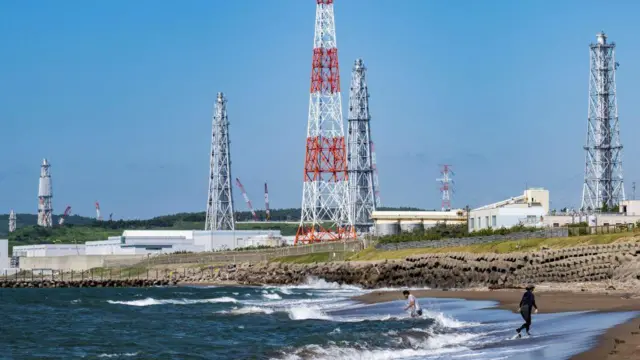
Just hours after restarting operations at the world’s biggest nuclear power plant, Japan halted the process following an alarm during startup procedures. While the pause raised fresh questions about nuclear safety and public trust, the operator insisted there was no danger beyond the plant’s walls and no radioactive release.
The incident unfolded on Thursday (Jan 22) at the Kashiwazaki-Kariwa nuclear power plant in Niigata prefecture, a facility central to Japan’s long and complicated effort to revive nuclear energy more than a decade after Fukushima. The reactor remains “stable,” according to the operator, Tokyo Electric Power Company (TEPCO), but the setback underscores how fragile and politically sensitive Japan’s nuclear restart remains.
What happened at Japan’s largest nuclear power plant?
Operations to restart one of Kashiwazaki-Kariwa’s seven reactors began late Wednesday after Japan’s nuclear regulator approved. The move immediately drew protests from local groups and anti-nuclear activists, reflecting persistent public unease.
Early Thursday, however, the process was suspended.
Why was the restart halted?
According to TEPCO spokesperson Takashi Kobayashi, an alarm was triggered during reactor startup.
“An alarm from the monitoring system sounded during the reactor startup procedures, and operations are currently suspended,” Kobayashi told AFP.
Key points confirmed by TEPCO:
- The reactor is stable
- There is no radioactive impact outside the plant
- An internal investigation has been ordered
- There is no timeline yet for resuming operations
At this stage, officials have not disclosed what specifically triggered the alarm—a detail that will be closely scrutinised by regulators, local authorities, and the public.
Why does Kashiwazaki-Kariwa matter so much?
The Kashiwazaki-Kariwa plant is not just another nuclear facility. It is the largest nuclear power plant in the world by potential capacity, capable of generating 8.2 gigawatts when all seven reactors are operational.
A plant with enormous potential—and limits
- Location: Niigata prefecture, northwest of Tokyo
- Operator: Tokyo Electric Power Company (TEPCO)
- Total reactors: 7
- Reactors currently restarted: 1
- Other reactors:
- One not expected back until around 2030
- Five could be decommissioned altogether
Even at partial capacity, the plant plays an outsized role in Japan’s energy strategy, especially as the country looks to reduce fossil fuel use.
How does this fit into Japan’s nuclear comeback?
Before the Fukushima disaster in 2011, nuclear power supplied nearly 30% of Japan’s electricity, with government plans to raise that share to 50% by 2030.
That plan collapsed overnight.
What changed after Fukushima?
In March 2011, a massive earthquake and tsunami triggered meltdowns at the Fukushima Daiichi nuclear plant, about 220 kilometers northeast of Tokyo. The disaster caused radioactive leaks, mass evacuations, and a profound loss of public trust.
In response, Japan:
- Shut down all 54 nuclear reactors
- Introduced some of the world’s strictest nuclear safety rules
- Shifted heavily toward imported fossil fuels
As a result, nuclear power’s share dropped dramatically.
Where does Japan stand now?
As of 2023:
- Nuclear accounts for just 8.5% of Japan’s electricity
- Fossil fuels dominate the energy mix
- Energy imports remain high and costly
Looking ahead, Japan aims for:
- 20% nuclear power by 2040
- Carbon neutrality by 2050
Restarting reactors like those at Kashiwazaki-Kariwa is essential to hitting those targets—but each step comes with political, technical, and social risk.
Why was there opposition to the restart?
Despite regulatory approval, the restart faced protests even before the alarm sounded.
Local concerns driving resistance
Opposition is rooted in several unresolved issues:
- Trust deficit: TEPCO’s handling of Fukushima still looms large
- Seismic risk: Japan remains one of the world’s most earthquake-prone countries
- Emergency preparedness: Local governments worry about evacuation plans
- Transparency: Critics argue that safety disclosures are still inadequate
For residents of Niigata, the restart is not just about energy policy—it’s about daily risk.
Does this incident pose a safety risk?
According to TEPCO and regulators, the answer—for now—is no.
What we know so far
- The alarm occurred during startup, not active power generation
- The reactor remains in a stable condition
- No radiation leak has been detected
- Safety systems functioned as designed by halting operations
That said, nuclear experts emphasize that public confidence hinges on transparency, not just technical assurances. The longer the investigation takes, or the less information shared, the harder it becomes to reassure skeptics.
What happens next?
The restart will remain on hold until TEPCO completes its investigation and regulators review the findings.
Possible next steps include:
- Identification and correction of the system fault
- Additional safety inspections
- Revised restart timelines
- Renewed consultations with local authorities
Any further delays could complicate Japan’s broader energy planning, especially as electricity demand rises and pressure mounts to cut carbon emissions.
Why this moment matters beyond Japan
The suspension is being closely watched far outside Japan.
Countries weighing nuclear power as part of their clean energy transition—including the U.S., France, and parts of Asia—are paying attention to how Japan balances:
- Safety vs. speed
- Public consent vs. climate goals
- Legacy risk vs. future energy security
Japan’s experience offers a real-time case study in how hard it is to reboot nuclear power once public trust has been broken.
TL;DR
- Japan suspended the restart of the world’s biggest nuclear power plant hours after launch
- An alarm during startup prompted the halt; no radiation leak was detected
- The reactor remains stable, but the restart timeline is unclear
- The incident highlights Japan’s ongoing struggle to revive nuclear energy post-Fukushima
- Public trust, safety, transparency, and energy security remain in tension