
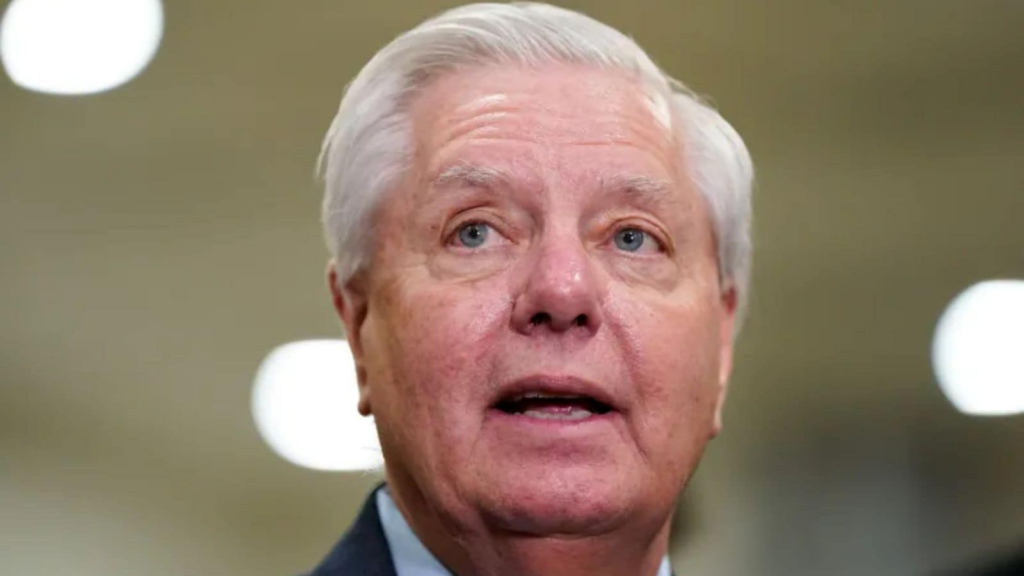
The death of longtime Republican Senator Lindsey Graham has renewed attention to one of the more controversial aspects of his foreign policy legacy: his criticism of India’s continued purchase of Russian oil during the Russia-Ukraine war. While Graham was a close ally of President Donald Trump and one of Washington’s most influential foreign policy hawks, his comments about India often drew sharp reactions because they contrasted with the United States’ broader effort to strengthen strategic ties with New Delhi.
His repeated calls for economic pressure on countries buying discounted Russian crude—including India, China, and Brazil—placed him at the center of one of the most contentious diplomatic debates between Washington and New Delhi in recent years.
Why did Lindsey Graham criticize India?
Lindsey Graham argued that countries purchasing discounted Russian crude were indirectly helping finance Russia’s military campaign in Ukraine.
As Western sanctions reduced Moscow’s access to traditional energy markets, Russia increased discounted oil exports to countries willing to continue buying its crude. India emerged as one of the largest purchasers, significantly increasing imports after the war began.
According to Graham, those purchases generated export revenue that helped sustain Russia’s war effort.
India, however, consistently maintained that its energy purchases were driven by national interest, energy security, and market economics rather than geopolitical alignment.
What did Lindsey Graham mean by “blood money”?
One of Lindsey Graham’s most widely discussed remarks came during a television interview in which he criticized countries continuing to buy Russian oil.
He said:
“If you keep buying cheap Russian oil… what you’re doing is blood money.”
The phrase reflected his belief that oil revenues earned by Russia were directly supporting its military operations.
He specifically mentioned India, China, and Brazil while urging stronger economic measures against countries maintaining energy trade with Moscow.
The comments received significant attention because India was simultaneously expanding strategic cooperation with the United States across defense, technology, and the Indo-Pacific.
Why did Lindsey Graham threaten tariffs?
Lindsey Graham became one of the strongest supporters of imposing secondary sanctions and punitive tariffs on countries purchasing Russian energy.
Among the measures he advocated were:
- Steep tariffs on imports from countries buying Russian crude.
- Secondary economic sanctions.
- Increased financial pressure on governments maintaining trade with Moscow.
His objective was to reduce Russia’s energy revenues by discouraging third countries from purchasing discounted oil.
Although these proposals generated considerable political discussion, they were separate from official U.S. government policy and remained part of broader legislative debates.
How did India respond?
Indian officials consistently defended the country’s energy policy.
New Delhi maintained that:
- Energy procurement decisions are sovereign matters.
- Affordable energy is essential for India’s economic growth.
- Purchases are based on commercial considerations.
- India continues to diversify its energy imports.
Indian leaders also emphasized that many European countries continued purchasing Russian energy for extended periods after the Ukraine conflict began, arguing that developing economies should not be held to a different standard.
Throughout the dispute, India reiterated its long-standing policy of strategic autonomy in foreign affairs.
Why was the issue so sensitive?
The disagreement highlighted a broader tension within U.S.-India relations.
On one hand, Washington views India as:
- A key Indo-Pacific security partner.
- An important member of the Quad.
- A major defense and technology partner.
- A counterbalance to China’s growing influence.
On the other hand, India has traditionally maintained an independent foreign policy that includes longstanding defense and energy ties with Russia.
This strategic balancing has occasionally created friction despite the overall strengthening of bilateral relations.
Was Lindsey Graham considered anti-India?
Supporters and critics viewed his comments differently.
Supporters argued that:
- His criticism focused on Russian oil purchases rather than India itself.
- He applied similar criticism to China and Brazil.
- His primary objective was increasing pressure on Russia.
Critics, however, argued that:
- His rhetoric toward India was unusually confrontational.
- Threatening economic punishment against a strategic partner risked damaging bilateral ties.
- His comments overlooked India’s legitimate energy security concerns.
Whether Graham was “anti-India” remains a matter of political interpretation rather than established fact.
What were his broader foreign policy positions?
India was only one aspect of Graham’s outspoken foreign policy approach.
Throughout his Senate career, he consistently advocated strong U.S. involvement abroad.
His positions included:
- Strong military support for Ukraine.
- A hardline approach toward Iran.
- Expanded sanctions against U.S. adversaries.
- Close strategic cooperation with NATO allies.
- Aggressive deterrence against China and Russia.
He also made headlines for controversial comments regarding Iran and Pakistan, reinforcing his reputation as one of Washington’s most hawkish foreign policy voices.
Why does this matter?
Graham’s remarks illustrate the challenges facing modern U.S.-India relations.
Although both countries have significantly deepened cooperation in defense, trade, technology, and regional security, differences remain over issues such as:
- Relations with Russia.
- Energy security.
- Sanctions policy.
- Strategic autonomy.
His comments also underscored a broader debate within U.S. foreign policy over how allies and strategic partners should respond to international conflicts while protecting their own economic interests. Leaders from across Europe, Ukraine and Israel paid tribute to Graham, praising his unwavering support for NATO, Ukraine and the US-Israel alliance. Ukrainian President Volodymyr Zelenskyy, NATO Secretary General Mark Rutte and Israeli Prime Minister Benjamin Netanyahu remembered him as a steadfast ally. In contrast, Iranian state television reported his death in sharply critical terms.
TL;DR
- Senator Lindsey Graham repeatedly criticized India for purchasing discounted Russian oil during the Ukraine war.
- He argued those purchases amounted to “blood money” because they generated revenue for Russia.
- Lindsey Graham advocated stronger tariffs and secondary sanctions against countries continuing to buy Russian crude.
- India rejected the criticism, saying its energy policy is based on affordability, national interest, and strategic autonomy.
- His remarks became one of the most controversial aspects of his foreign policy positions concerning India.