
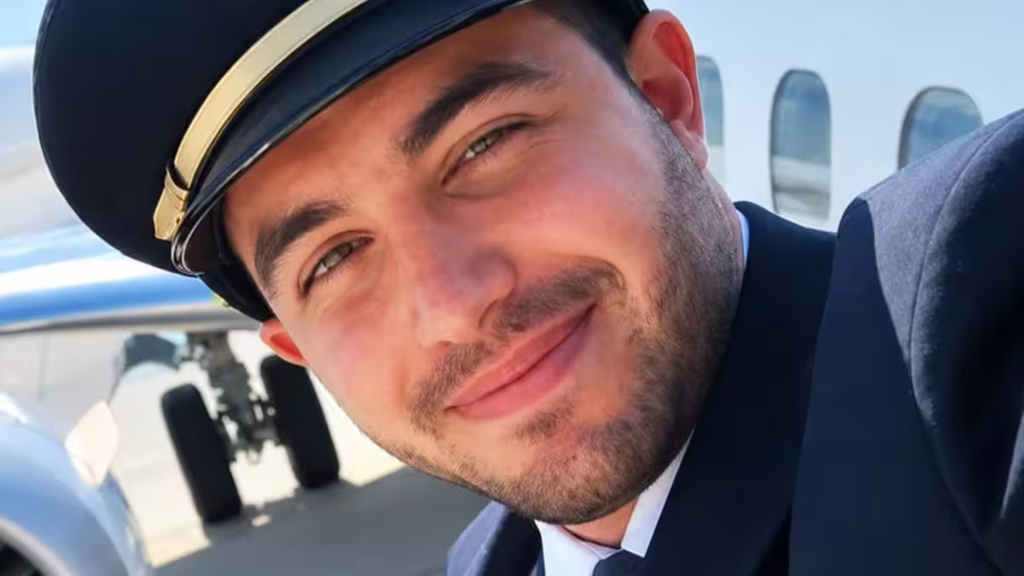
Fresh details about the Omani co-pilot accused of attacking Captain Smit Machchhar aboard Flydubai Flight FZ1073 have raised new questions about his background, previous aviation employment and how he was cleared to fly for the airline. The co-pilot has been identified by multiple reports as Hamam al-Hammami, a 28-year-old Omani national. His identity has been reported by CNN, Saudi state media and an Israeli official, while the United Arab Emirates has confirmed that the co-pilot was the subject of a criminal investigation following the September 30 incident.
According to CNN, two sources familiar with the matter said al-Hammami had previously been removed from a flying role at Oman Air after concerns about alleged extremist views. He was reportedly moved into another position at the airline rather than continuing in the same flying role.
Those claims are now central to the investigation because al-Hammami later obtained employment with Flydubai. Authorities are examining how his previous history was assessed during subsequent aviation employment and whether relevant information was available to the companies involved.
Who is Hamam al-Hammami?
Reports identify al-Hammami as an Omani citizen who was born in the United Arab Emirates to an Omani father and Syrian mother.
He reportedly spent part of his early life in the UAE before pursuing an aviation career.
A LinkedIn profile bearing his name indicated that he had worked for Oman Air for several years before leaving in February 2025. The profile also listed a subsequent period at Royal Air Maroc beginning in June 2025 and ending in January 2026. The profile has since been deleted.
The employment history has not been independently authenticated in full, and authorities have not publicly released a detailed biography of the suspect.
Why was he reportedly removed from flying duties at Oman Air?
According to CNN’s reporting, a regional diplomat said al-Hammami was removed from flight training or flying duties at Oman Air because of concerns about alleged radical views.
The source said he was subsequently assigned another role within the airline.
The allegation is significant, but it remains an attributed claim rather than a publicly released official finding by Oman Air. The airline has not, in the reporting currently available, provided a detailed public explanation of why the pilot was moved from a flying position.
Israeli Prime Minister Benjamin Netanyahu has separately said that investigators believe the suspect underwent “Islamist radical indoctrination.” That statement is part of the ongoing investigation into motive and does not by itself establish the allegations about al-Hammami’s earlier employment.
How did he later become a Flydubai pilot?
This is one of the biggest unanswered questions.
An Israeli official told CNN that al-Hammami had worked for Flydubai for around eight months before the September 30 attack.
If the previous reports about his employment history and concerns at Oman Air are confirmed, investigators will need to establish what information was available when he subsequently moved between airlines.
That could include employment records, background checks, aviation-security assessments and any information shared between regulators or airlines.
Flydubai has said it cannot comment on specific details while the investigation is underway.
What happened aboard Flight FZ1073?
Flight FZ1073 was traveling from Dubai to Tel Aviv when the co-pilot allegedly attacked Captain Machchhar inside the cockpit.
The aircraft subsequently went into a steep descent, losing more than 16,000 feet in roughly 30 seconds before the situation was brought under control.
Machchhar, despite sustaining serious injuries, managed to open the cockpit door. Passengers then entered the flight deck and helped subdue the attacker.
A reserve Flydubai pilot who was traveling as a passenger subsequently helped the crew regain control, and the aircraft landed safely at Tabuk Airport in Saudi Arabia.
The United Arab Emirates has since described the incident as an attempted terrorist attack and said investigations are continuing into the circumstances, motive and any possible connections.
Was a crash axe used in the attack?
Investigators now say the weapon was the aircraft’s crash axe.
The United Arab Emirates’ attorney general said the co-pilot attacked the captain with a crash axe and attempted to seize control of the aircraft.
That detail is important because a crash axe is emergency equipment carried aboard commercial aircraft. It is not an object that would ordinarily have to pass through passenger security screening.
The allegation that the attacker used the aircraft’s own emergency equipment therefore shifts part of the security focus toward cockpit procedures and access to emergency equipment rather than airport screening.
What do the alleged social media posts show?
Additional attention has fallen on social media accounts reportedly linked to al-Hammami.
CNN reported that posts appeared on a LinkedIn account bearing his name after the incident. It was unclear who uploaded the material or whether the posts had been scheduled in advance.
Some of the posts reportedly contained cockpit footage from Boeing 737 MAX aircraft, including videos showing Israeli airline aircraft.
One video reportedly included the flight number OMA624 and footage geolocated to Dubai International Airport.
Other material allegedly included photographs of former al-Qaeda leader Ayman al-Zawahiri and Humam Khalil Abu-Mulal al-Balawi, the Jordanian doctor who carried out the 2009 suicide bombing at a CIA base in Afghanistan.
The presence of such material could become relevant to investigators, but social-media content alone does not establish the account owner’s intent, ideology or involvement in a particular attack.
What did the reported posts say about religion and gender?
CNN also reported that a now-deleted account bearing al-Hammami’s name contained posts about religion, marriage and gender roles.
One post from 2022 reportedly discussed his difficulty finding a prospective wife who would accept conditions including wearing a niqab and leaving employment after marriage.
Other posts allegedly criticized mixed-gender workplaces and expressed conservative views about women’s employment.
CNN said it analyzed nearly 3,000 deleted posts from 2021 and 2022 using an AI-powered semantic search system.
Again, attribution is important. The existence and authenticity of every deleted post should be established independently before it is treated as evidence in the criminal investigation.
What did Netanyahu say about the suspect?
Israeli Prime Minister Benjamin Netanyahu has said investigators believe al-Hammami underwent Islamist radicalization and may have been suicidal.
Netanyahu also said authorities were examining whether there was any connection to Iran.
He has stopped short of saying that an Iranian link has been established, and investigators have not publicly released evidence proving that the attack was directed or organized by a foreign group.
The motive remains an active part of the investigation.
What is the significance of his reported aviation education?
A university background has also emerged in reporting about the suspect.
Buckinghamshire New University in the United Kingdom confirmed that a man with the same name completed a three-year distance-learning course in aviation management and graduated in 2023.
The university confirmation establishes that someone with the same name attended the course. It does not, by itself, establish every other biographical detail being attributed to the suspect.
Investigators will ultimately have to match educational records, employment records and identity documents to establish a complete and verified timeline.
Could earlier security concerns have been missed?
That is one of the most important questions facing investigators.
If Oman Air did remove al-Hammami from flying duties because of genuine security concerns, authorities will likely want to know what information existed at the time, how it was documented and whether it was available to any later employers or aviation regulators.
The issue becomes especially significant because pilots occupy positions requiring access to secure areas, flight controls and highly sensitive operational systems.
However, it would be premature to conclude that any earlier concerns were ignored or that a later airline knowingly hired an individual considered a security threat.
Those are questions investigators must answer using employment and security records.
How are pilots normally vetted?
Commercial pilots undergo several layers of screening before they are permitted to operate passenger aircraft.
Those checks can include identity verification, employment history, licensing requirements, medical certification and security or background assessments. The exact process varies between countries and airlines.
Additional scrutiny can be applied to pilots with access to sensitive areas or aircraft systems.
The Flydubai investigation could therefore lead authorities to examine not just airline hiring procedures but also the communication of security information between regulators and aviation companies.
Why is the case significant for aviation security?
The incident presents an unusual combination of risks.
The alleged attacker was not a passenger who breached airport security with a prohibited object. He was a member of the flight crew with legitimate access to the cockpit.
That changes the nature of the security problem.
Aviation security systems are designed to prevent unauthorized people from entering restricted areas, but cockpit attacks involving authorized crew members raise different questions about insider threats, psychological or security screening, information sharing and cockpit access procedures.
The case could therefore have implications beyond Flydubai and the UAE.
What remains unknown?
Several major questions are still unresolved.
Investigators have not publicly established the full motive for the attack or confirmed whether anyone else was involved.
It also remains unclear exactly what information was available to Flydubai when al-Hammami was hired and whether concerns previously raised in Oman were formally shared with other aviation authorities.
The authenticity and context of the reported social-media material will also need to be established.
Most importantly, investigators will have to connect the suspect’s documented history with the events aboard FZ1073 without relying solely on anonymous sources or online material.
What happens next?
The United Arab Emirates is leading an investigation into the incident in cooperation with other authorities, while Saudi Arabia has been involved because the aircraft diverted to Tabuk and the suspect was initially detained there.
Investigators are expected to examine physical evidence from the aircraft, digital records, employment histories, cockpit data and communications made during the emergency.
They will also need to determine whether the attack was an isolated act or part of a wider plan.
For now, the reported history of Hamam al-Hammami raises significant questions, but some of the most serious claims remain unproven. Reports that he was previously removed from flying duties over extremist concerns, that his social-media accounts contained extremist material and that he underwent radicalization should remain clearly attributed until authorities publish verified findings.
The investigation will ultimately determine whether those pieces form a coherent warning history or whether some of the claims circulating online prove incomplete, misidentified or misleading.