
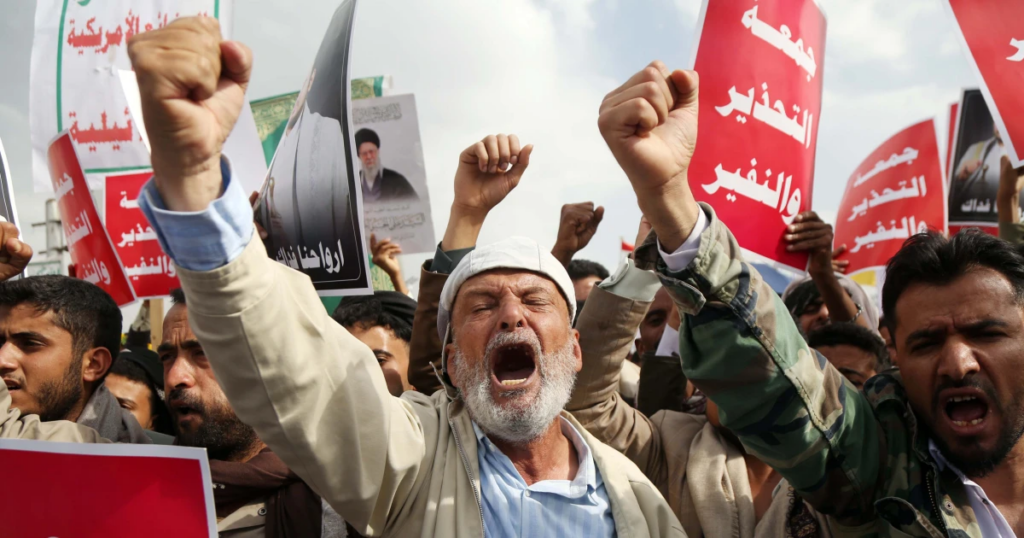
Yemen’s Iran-backed Houthi rebels have declared an immediate maritime embargo against Saudi Arabia, renewing concerns about security in one of the world’s most strategically important shipping lanes. The announcement puts the Bab el-Mandeb Strait back at the center of global attention, as the narrow waterway serves as a vital link between the Red Sea and the Gulf of Aden, carrying a significant share of the world’s trade and energy supplies.
The Houthis say the move is a response to what they describe as Saudi Arabia’s decade-long blockade of Yemen. While the practical impact of the announcement remains uncertain, any escalation around the Bab el-Mandeb Strait could have far-reaching consequences for global shipping, oil markets, and supply chains.
TL;DR
- Yemen’s Houthi rebels announced an immediate maritime embargo against Saudi Arabia.
- The group says ships linked to Saudi Arabia will face restrictions in the Bab el-Mandeb Strait.
- The Houthis claim the move is retaliation for Saudi Arabia’s blockade of Yemen.
- The Bab el-Mandeb is one of the world’s busiest maritime chokepoints, connecting the Red Sea with the Gulf of Aden.
- Any disruption could affect global trade, shipping costs, and energy markets.
Why did the Houthis announce a maritime embargo?
The announcement came in a televised statement by Houthi military spokesperson Yahya Saree, who said the maritime embargo against Saudi Arabia would take effect immediately.
Describing the move as an “eye for an eye” response, Saree framed the embargo as retaliation against Saudi policies toward Yemen.
Separately, Nasruddin Amer, deputy head of the Houthi media office, wrote on X that the Bab el-Mandeb Strait would be closed to Saudi-linked shipping because of what he called Saudi Arabia’s “unjust blockade on Yemenis for over 10 years”.
The Houthis have not publicly released detailed operational guidelines explaining how the embargo will be enforced or which vessels may be targeted.
Why is the Bab el-Mandeb Strait so important?
The Bab el-Mandeb Strait is one of the world’s most critical maritime chokepoints.
Located between Yemen on the Arabian Peninsula and Djibouti and Eritrea in the Horn of Africa, it connects:
- The Red Sea
- The Gulf of Aden
- The Arabian Sea
- The Indian Ocean
- The Suez Canal shipping route
Because of its strategic location, the strait serves as a gateway for trade moving between Europe, Asia, and the Middle East.
Why global markets pay attention
The route carries:
- Around 12% of global trade
- Approximately 25% of the world’s container traffic traveling through the Suez Canal
- Significant volumes of crude oil, petroleum products, and liquefied natural gas (LNG)
Even temporary disruptions can force shipping companies to reroute vessels around the Cape of Good Hope in southern Africa, a detour that adds thousands of miles, higher fuel costs, and several extra days to voyages.
What does the embargo actually mean?
At this stage, many questions remain unanswered.
The Houthis have not clarified the following:
- Which ships will be considered Saudi-linked.
- Whether foreign vessels carrying Saudi cargo could also be affected.
- How the embargo will be enforced.
- Whether neutral commercial shipping faces additional risks.
In previous Red Sea operations, the Houthis have targeted vessels they alleged were linked to Israel, the United States, or allied countries through missile and drone attacks.
Whether this new embargo represents a symbolic political declaration or the start of broader military operations remains to be seen.
How have the Houthis affected Red Sea shipping before?
The Houthis have repeatedly targeted commercial and military vessels in the Red Sea since regional tensions escalated following the Israel-Hamas war.
Past attacks have included:
- Anti-ship missile launches.
- Armed drone strikes.
- Seizure of commercial vessels.
- Threats against shipping linked to countries supporting Israel.
These attacks prompted many major shipping companies to suspend Red Sea transit, diverting vessels around Africa instead.
The disruptions increased:
- Shipping costs.
- Insurance premiums.
- Delivery times.
- Freight rates.
Although international naval coalitions have increased patrols in the region, sporadic attacks have continued.
Why does this matter for Saudi Arabia?
Saudi Arabia relies heavily on maritime trade for exports and imports.
Although the kingdom has invested in pipelines and infrastructure designed to reduce dependence on vulnerable shipping routes, the Red Sea remains an important corridor for:
- Energy exports.
- Imports of manufactured goods.
- Commercial shipping through western Saudi ports.
An extended disruption could complicate logistics while increasing transportation costs for regional businesses.
Could global trade be affected?
Potentially, yes.
The Bab el-Mandeb Strait sits alongside other critical maritime chokepoints, such as:
- The Strait of Hormuz.
- The Suez Canal.
- The Strait of Malacca.
- The Panama Canal.
When one of these routes faces instability, the effects often ripple across international supply chains.
Possible consequences include the following:
- Higher shipping costs.
- Delayed cargo deliveries.
- Rising insurance rates.
- Increased fuel transportation expenses.
- Greater volatility in global oil markets.
The scale of any disruption will largely depend on whether commercial shipping is actually interrupted or whether the announcement remains primarily political.
How are governments likely to respond?
The latest announcement is expected to draw close attention from the following:
- Saudi Arabia.
- The United States.
- European allies.
- International shipping companies.
- Maritime security organisations.
Western naval forces have maintained an increased presence in the Red Sea in recent months to protect commercial vessels from missile and drone attacks.
If the Houthis attempt to enforce the embargo through military action, international patrols could expand further to safeguard freedom of navigation.
What happens next?
For now, the Houthis have announced the embargo but have provided few operational details.
Key developments to watch include:
- Whether commercial ships alter their routes.
- Any military response from Saudi Arabia or coalition partners.
- Changes in insurance guidance for vessels entering the Red Sea.
- Statements from international maritime organisations.
- The reaction of global oil and shipping markets.
Much will depend on whether the declaration translates into sustained action at sea or remains part of the group’s broader political messaging.
The bigger picture
The Houthis’ announcement underscores how conflicts in the Middle East can quickly affect global commerce. The Bab el-Mandeb Strait is far more than a regional waterway—it is one of the world’s essential trade arteries.
Even the threat of disruption can influence shipping decisions, freight costs, and energy prices worldwide. While it remains unclear how the Houthis intend to implement the maritime embargo, the declaration is another reminder that maritime security in the Red Sea remains closely tied to both regional conflicts and the health of the global economy.