
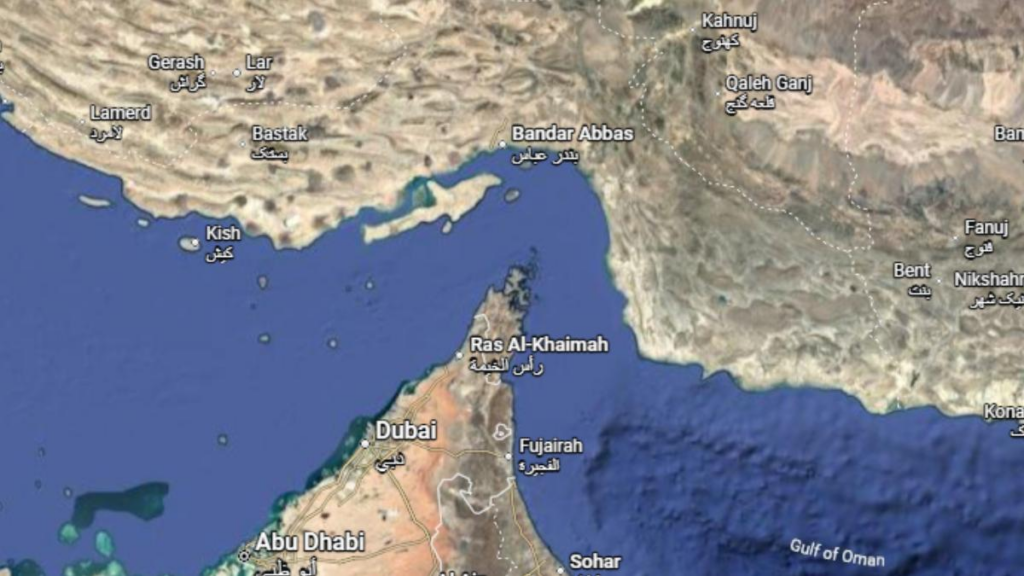
Iran’s decision to reimpose restrictions on the Strait of Hormuz has once again placed one of the world’s most critical energy chokepoints at the center of global attention. The move, announced on April 18, follows Tehran’s accusation that the United States breached a ceasefire understanding and failed to ease restrictions on Iranian shipping.
At first glance, this looks like another episode in a long-running geopolitical standoff. But the details matter. Iran is not just restricting passage. It is proposing a new maritime regime that could reshape how vessels transit through the strait, with implications for oil prices, shipping insurance, and regional stability.
What are the new Iran Strait of Hormuz restrictions?
Iran’s latest measures go beyond a simple closure or warning. Officials have outlined a structured framework governing vessel movement through the Strait of Hormuz.
Key conditions for vessel passage
Under the proposed system:
- Only commercial vessels authorized by Iran’s Islamic Revolutionary Guard Corps (IRGC) Navy can pass
- Ships must follow the designated maritime routes defined by the Iranian authorities
- Transit is subject to toll payments
- The system will remain in place until US restrictions on Iranian shipping are lifted
Iran’s military leadership has emphasized that control of the strait is now back under “strict management” by its armed forces. That language signals a shift from reactive enforcement to proactive regulation.
Why is this different from past actions
Iran has previously threatened to block the Strait of Hormuz or harass tankers during periods of tension. What stands out this time is the attempt to formalize control:
- A quasi-regulatory regime instead of ad hoc disruption
- Explicit financial requirements through tolls
- Centralized authorization via military command
This suggests Iran is trying to convert geopolitical leverage into a structured system of control, rather than relying solely on unpredictability.
Why does the Strait of Hormuz matter so much?
To understand the gravity of the situation, it helps to look at the scale of what moves through this narrow waterway.
A global energy artery
Roughly one-fifth of the world’s oil supply passes through the Strait of Hormuz. It connects the Persian Gulf to international markets, making it indispensable for major exporters like Saudi Arabia, the UAE, Iraq, and Kuwait.
Any disruption, even temporary, can trigger the following:
- Sharp spikes in oil prices
- Increased shipping costs
- Volatility in global financial markets
A bottleneck with few alternatives
Unlike other trade routes, there are limited viable alternatives:
- Pipelines exist, but cannot fully replace tanker capacity
- Rerouting ships adds significant time and cost
- Insurance premiums surge in high-risk zones
This makes the Strait uniquely sensitive to geopolitical friction.
What triggered the latest escalation?
The current situation stems from a breakdown in expectations between Iran and the United States.
The ceasefire dispute
Iran claims that it reopened the strait earlier under the assumption that US restrictions on Iranian shipping would ease. When that did not happen, Tehran reversed course.
From Iran’s perspective:
- The US failed to uphold its side of an informal understanding
- Continued blockades undermine Iran’s economic recovery
- Reimposing control is a form of leverage
From the US perspective, maintaining pressure on Iran is tied to broader strategic goals, including nuclear policy and regional security.
A warning of further escalation
Iranian officials have made it clear that any interference with Iranian vessels could lead to additional measures. That raises the risk of:
- Direct naval confrontations
- Seizures of commercial vessels
- Expanded restrictions beyond the current framework
What did Trump say about the Iran conflict?
President Donald Trump has framed Iran’s latest move as a sign of progress rather than escalation. In public a remark suggested that the broader conflict was close to resolution.
Mr. Trump also claimed in a phone interview with CBS that Iran had “agreed to everything.” But Iran’s top negotiator, Mohammad Bagher Ghalibaf, quickly denied Iran had agreed to any of their adversaries’ core demands.
How could this impact global oil markets?
Even without a full blockade, the new Iranian Strait of Hormuz restrictions could ripple across energy markets.
Short-term effects
- Increased oil price volatility
- Higher freight and insurance costs for tankers
- Delays in shipments due to compliance checks
Markets tend to react quickly to perceived risk, not just actual disruption.
Medium-term risks
If the situation persists:
- Energy-importing countries may seek alternative suppliers
- Strategic reserves could be tapped to stabilize prices
- Shipping companies may avoid the region altogether
What does this mean for global shipping and trade?
Shipping companies now face a complex decision matrix.
Compliance vs. risk
Operators must decide whether to:
- Comply with Iranian authorization and toll requirements
- Avoid the strait entirely
- Wait for diplomatic clarity
Each option carries financial and operational consequences.
Legal and insurance complications
The introduction of tolls and mandatory authorization raises questions:
- Are these measures recognized under international maritime law?
- Will insurers cover vessels operating under these conditions?
- Could companies face sanctions for compliance?
Is this a long-term shift or temporary pressure tactic?
That remains the central question.
Signals pointing to a tactical move
- Iran has historically used the strait as leverage during negotiations
- The conditions are explicitly tied to US policy changes
- The framework could be reversed quickly if demands are met
Signals suggesting a broader strategy
- Formalization of control mechanisms
- Institutional involvement of military command
- Economic components like toll collection
If sustained, this could mark a shift from episodic disruption to managed control.
What should readers watch next?
Several indicators will determine how this situation evolves:
- US response to Iran’s conditions
- Movement of oil prices over the next few weeks
- Shipping traffic data through the strait
- Statements from major energy exporters in the Gulf
TL;DR
- Iran has reimposed restrictions on the Strait of Hormuz, introducing a new authorization and toll system
- The move follows a dispute with the US over ceasefire expectations and shipping restrictions
- The strait is a critical global oil route, making any disruption highly consequential
- Markets may see increased volatility even without a full blockade
- The situation could either de-escalate quickly or evolve into a longer-term shift in maritime control