
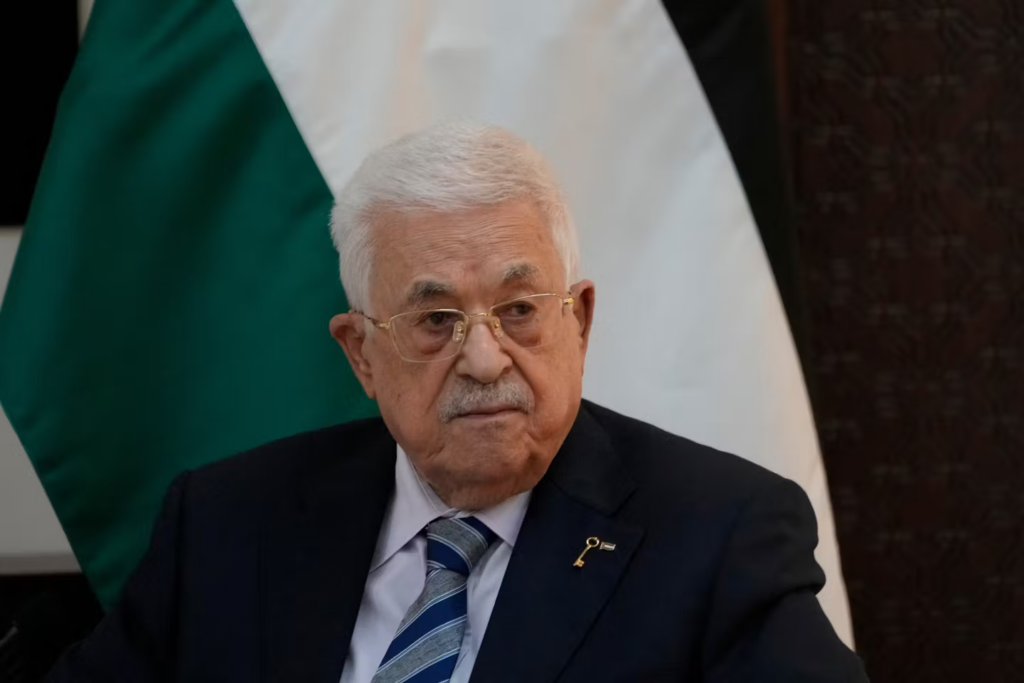
Palestinians are scheduled to vote in their first legislative election in nearly two decades after Palestinian Authority President Mahmoud Abbas issued a decree setting November 28, 2026, as the election date. If the vote proceeds as planned, it will mark the first election for the Palestinian Legislative Council (PLC) since 2006.
The announcement is being viewed as a significant political milestone, but major questions remain over whether the election can be held across the West Bank, Gaza, and East Jerusalem—and whether Hamas will be allowed to participate under newly introduced electoral rules.
Why is Palestine holding its first legislative election in 20 years?
The Palestinian Legislative Council has effectively been inactive since 2007 following the political split between Fatah and Hamas.
The last parliamentary election took place in 2006, when Hamas won a majority of seats, defeating the Fatah movement led by Mahmoud Abbas.
The election result triggered a prolonged political crisis that eventually left:
- Hamas governing the Gaza Strip.
- The Palestinian Authority administering parts of the West Bank.
- The Palestinian legislature unable to function.
Since then, no legislative elections have been held.
What has President Mahmoud Abbas announced?
President Mahmoud Abbas has signed a decree calling for legislative elections on November 28, 2026.
According to the decree, Palestinians in:
- East Jerusalem
- The West Bank
- The Gaza Strip
will be called upon to elect members of the Palestinian Legislative Council.
The announcement addresses only parliamentary elections.
A separate decree issued earlier reportedly schedules presidential elections for 2027.
Why are elections being held now?
The decision comes amid growing domestic and international pressure for political reform.
Several factors have increased calls for elections:
- Nearly two decades without a functioning legislature.
- Questions surrounding the legitimacy of Palestinian institutions.
- Pressure to renew political leadership.
- Ongoing financial challenges facing the Palestinian Authority.
Mahmoud Abbas was elected president in 2005 for a four-year term, but no subsequent presidential election has taken place.
In the absence of elections, governance has largely continued through presidential decrees.
Can Hamas participate in the election?
That remains one of the biggest unanswered questions.
A recently approved election law reportedly requires all candidates to accept the political program of the Palestine Liberation Organization (PLO).
That program includes:
- Recognition of Israel.
- Support for a two-state solution.
- Commitment to existing political agreements.
Hamas has historically rejected several of these positions.
As a result, legal observers say the new rules could prevent Hamas—or candidates affiliated with the group—from participating.
No final decision on candidate eligibility has yet been announced.
Why does Hamas’ participation matter?
Hamas remains one of the most influential political and military organizations in Palestinian politics.
Its victory in the 2006 legislative election fundamentally reshaped Palestinian governance.
The aftermath led to:
- Hamas assuming control of Gaza.
- Fatah retaining authority in parts of the West Bank.
- The suspension of normal legislative activity.
Whether Hamas is permitted to contest the election could significantly affect both voter participation and the credibility of the electoral process.
What has Hamas said recently?
According to recent reports, Hamas has announced plans to dissolve its governing administration in Gaza as part of preparations for a possible transfer of authority to a technocratic committee established under a U.S.-brokered ceasefire agreement reached in late 2025.
However, the committee has not yet assumed administrative control in Gaza.
Whether these developments influence Hamas’ role in the election remains uncertain.
What challenges could delay the election?
Although a date has now been announced, several practical and political hurdles remain.
These include:
- Conducting voting in Gaza, the West Bank, and East Jerusalem.
- Determining Hamas’ eligibility.
- Coordinating election administration across politically divided territories.
- Addressing security concerns.
- Ensuring international observation.
Previous attempts to hold Palestinian elections have been postponed amid disagreements over voting arrangements and political participation.
Why is the election significant?
If held successfully, the election would represent the first opportunity in nearly 20 years for Palestinians to elect a new legislature.
Political analysts say a functioning parliament could:
- Restore legislative oversight.
- Improve institutional legitimacy.
- Renew political representation.
- Lay the groundwork for broader governance reforms.
At the same time, unresolved questions surrounding candidate eligibility and territorial administration mean the election’s outcome—and even whether it proceeds as planned—remains uncertain.
What happens next?
Election authorities are expected to begin preparations in the coming months, including candidate registration and logistical planning.
Observers will closely watch:
- Whether Hamas is permitted to participate.
- Arrangements for voting in East Jerusalem.
- Security conditions in Gaza and the West Bank.
- Whether the announced timetable remains on schedule.
The coming months are likely to determine whether the planned vote becomes a historic democratic milestone or joins previous election efforts that were ultimately postponed.
TL;DR
- Palestine has scheduled its first legislative election since 2006 for November 28, 2026.
- The vote would elect members of the Palestinian Legislative Council.
- A new election law requiring candidates to accept the PLO’s political program could complicate Hamas’ participation.
- The election comes after nearly two decades without a functioning legislature and amid growing calls for political reform.
- Significant logistical and political challenges remain before the vote can take place.